
10 High-Protein Lunch and Dinner Ideas for Women Over 40

TL;DR
- Women over 40 need approximately 1g of protein per pound of bodyweight daily, distributed as 35–40g per meal, to overcome anabolic resistance caused by estrogen decline.
- Leucine content matters as much as total protein grams—each meal should contain at least 3g of leucine to trigger muscle protein synthesis; dairy, eggs, meat, and fish reliably clear this threshold.
- The 10 meals in this guide combine complete amino acid profiles with perimenopause-specific micronutrients (calcium, iron, omega-3s, isoflavones) that support both muscle repair and hormonal health.
- Plant-based eaters should add 15% to their daily protein target to account for lower amino acid bioavailability, and pair complementary proteins (lentils + tempeh, quinoa + legumes) to ensure all nine essential amino acids.
- Consistency across three to four protein-rich meals per day builds muscle more effectively than front-loading or back-loading protein; batch-prepping meals removes the largest barrier to adherence.
Building muscle after 40 requires more protein than most general guidelines suggest — and the right meals to deliver it consistently. This article focuses on high-protein lunch and dinner ideas, with specific attention to what women in perimenopause and beyond actually need to maintain strength, metabolic health, and bone density.
The standard dietary protein recommendation of 0.8g/kg was designed to prevent deficiency in sedentary adults, not to support an active body navigating hormonal change. Dr. Stacy Sims recommends women over 40 target approximately 2.2g/kg of bodyweight daily — simplified as roughly 1g per pound — with each meal providing at least 35–40g of protein. That higher per-meal threshold matters because estrogen decline reduces the muscle-building response to protein (anabolic resistance), a process driven by blunted mTOR activation and reduced muscle protein synthesis, meaning you need more per sitting to stimulate the same effect.
The ten lunch and dinner ideas in this article are built around that target. Each includes a protein count, notes on leucine content (the amino acid that triggers muscle protein synthesis, with a minimum of 3g per meal), and where relevant, details specific to perimenopause — including how omega-3-rich proteins help manage the low-grade inflammation common in this life stage, why Mediterranean-pattern meals support insulin sensitivity, and how specific micronutrients (calcium, iron, phosphorus) address the accelerated bone and metabolic shifts that accompany estrogen decline.
Both omnivore and plant-based meals are included. Plant-based eaters should add roughly 15% to their daily target to account for lower amino acid bioavailability in most plant proteins.
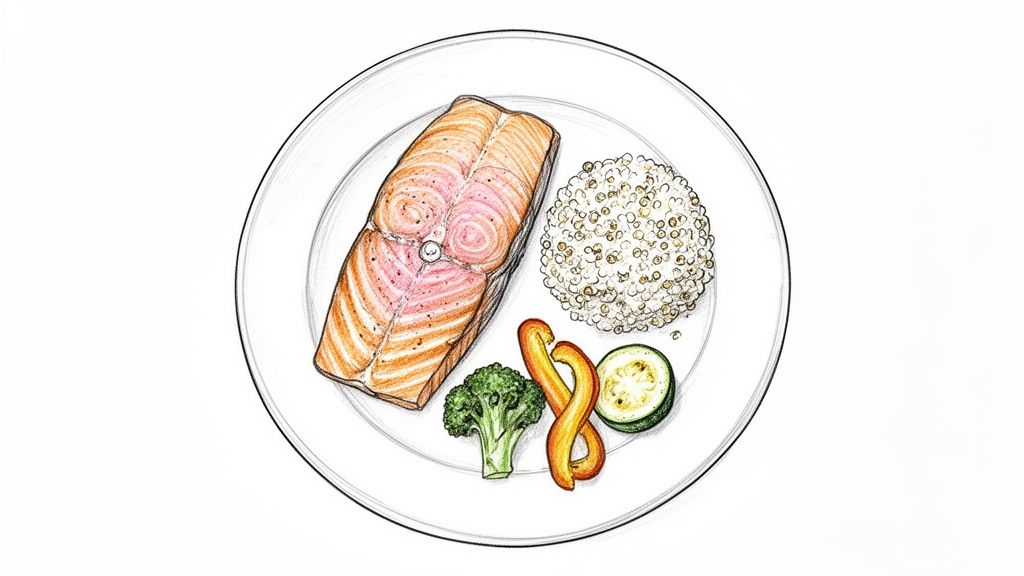
1. Grilled Salmon with Quinoa and Roasted Vegetables
Grilled salmon with quinoa and roasted vegetables is one of the most effective high-protein lunch or dinner options you can put together in under 30 minutes. A 5-ounce wild-caught salmon fillet delivers roughly 35–38g of protein — meeting the per-meal target — and clears the 3g leucine threshold at approximately 3.2g, with no supplements needed.
Omega-3s, Inflammation, and the Perimenopausal Advantage
Salmon's EPA and DHA content actively reduces systemic inflammation, which tends to rise during the hormonal shifts of perimenopause and can slow muscle recovery after training. Studies suggest 1.8–2.7g of combined EPA/DHA daily supports both muscle protein accretion and joint comfort — a 5-ounce salmon fillet provides roughly 1.5–2g, making it a meaningful contribution.
Quinoa adds a complete amino acid profile on top of the salmon's, plus roughly 8g of fiber per cup to support blood sugar stability and digestion. For perimenopausal women, stable blood sugar matters: erratic insulin response can amplify cortisol, which directly competes with muscle-building signals.
Expert Insight: Research published in Menopause journal found that omega-3 supplementation in perimenopausal women was associated with reduced hot flash frequency — a benefit that a regular salmon meal can contribute to, separate from any muscle-related effect.
How to Build Your Plate
- Protein: 5 oz wild-caught salmon fillet (35–38g protein, ~3.2g leucine)
- Carbohydrate: 1 cup cooked quinoa — a complete protein with fiber that slows glucose absorption
- Vegetables: Roast broccoli, bell peppers, and zucchini — broccoli provides vitamin K and calcium co-factors that support bone density
- Absorption boost: Squeeze fresh lemon juice over the plate; the vitamin C improves iron uptake from the quinoa, supporting energy and red blood cell production
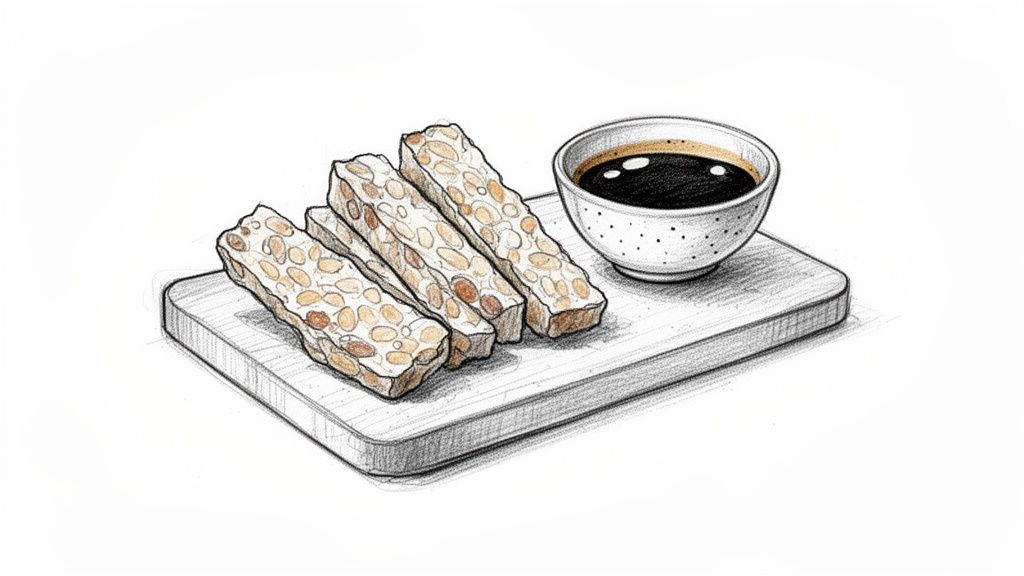
2. Lentil and Tempeh Stir-Fry with Brown Rice
This stir-fry is a strong plant-based option for muscle gain, combining lentils and fermented tempeh to cover all nine essential amino acids — something most single plant proteins cannot do alone.
Why the Lentil-Tempeh Combination Works for Plant-Based Eaters
Most plant proteins are low in leucine, which makes hitting 3g per meal take intentional pairing. Tempeh pulls more weight here than tofu or plain legumes — fermentation increases amino acid bioavailability, so more of what you eat actually reaches muscle tissue. Lentils add volume and methionine, which tempeh alone is light on. Together, they form a complete protein without requiring any animal products.
For women in perimenopause, tempeh carries an additional benefit: it contains isoflavones, plant compounds that partially mimic estrogen and have been associated with reduced vasomotor symptoms and modest support for bone density.
How to Build Your Bowl
- Protein base: 4 oz (115g) crumbled tempeh, sautéed until golden, plus 1 cup cooked lentils — roughly 30g protein combined
- Close the leucine gap: Add 2 tablespoons of nutritional yeast for an extra ~3g protein and a measurable leucine boost
- Top with pumpkin seeds: 1 oz adds 9g protein, bringing the meal closer to the 35–40g target
- Vegetables: Broccoli, bell pepper, spinach, ginger, and turmeric support recovery and reduce exercise-induced inflammation
- Serve over brown rice for complex carbohydrates and sustained energy around training
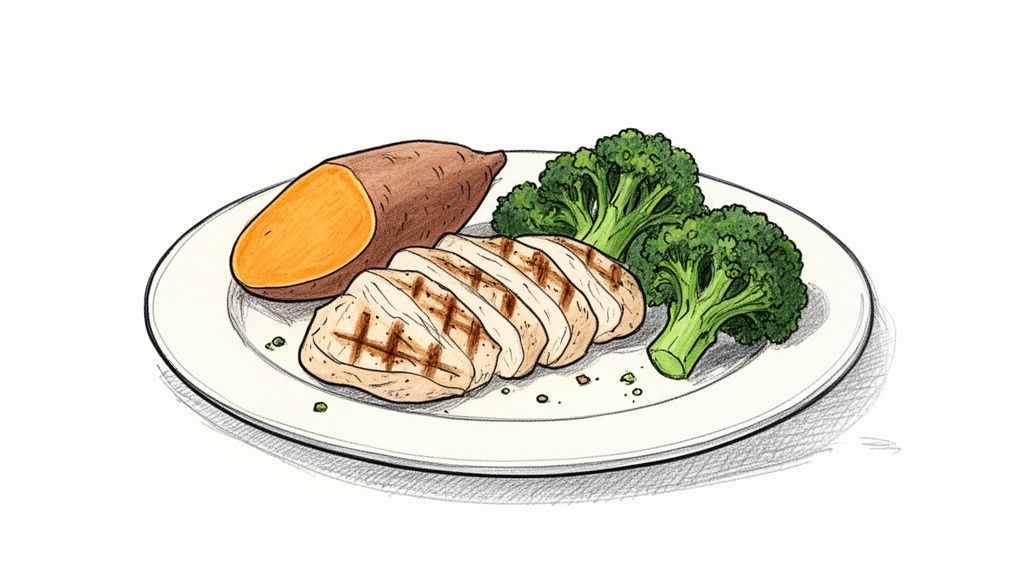
3. Chicken Breast with Sweet Potato and Broccoli
Chicken breast, sweet potato, and broccoli deliver a complete protein source, slow-digesting carbohydrates, and dense micronutrients in a single meal — practical and effective for supporting muscle repair after strength training.
A 4-ounce (113g) chicken breast provides roughly 30–35g of protein. Add a medium sweet potato and you're close to the 35–40g per-meal target — add a second small breast or a scoop of Greek yogurt on the side if you fall short. Chicken clears the 3g leucine threshold at approximately 3.3–3.6g per 4-ounce serving.
Broccoli earns its place here beyond fiber: it contains sulforaphane, a compound that supports estrogen detoxification through the liver — relevant during perimenopause when estrogen metabolism becomes less predictable. It also provides vitamin K and calcium co-factors that aid bone density.
Expert Insight: Research published in Menopause journal found that cruciferous vegetables consumed regularly were associated with more favorable estrogen metabolite ratios in perimenopausal women.
Building This Meal Efficiently
- Chicken: Pound to ¾-inch thickness, marinate 2–4 hours in lemon juice, olive oil, and herbs. Cook to 165°F internal temperature.
- Sweet potato: Roast one medium potato alongside the broccoli on a sheet pan to cut cleanup time.
- Broccoli: One cup roasted florets. Sheet-pan method takes about 20 minutes at 425°F.
- Batch prep: This meal keeps four days refrigerated. Preparing four servings at once covers most of a workweek. A rotisserie chicken is a legitimate shortcut — strip it, portion it, and you've done the hardest part.
4. Greek-Style Turkey Meatballs with Feta and Whole Grain Pasta
This Mediterranean dinner pulls together lean ground turkey, feta, and whole grain pasta into a meal that consistently delivers 38–42g of protein per serving, meeting the per-meal target. It's also a practical solution for diet fatigue: the same protein target, far less monotony.
Why the Mediterranean Pattern Works Here
Beyond protein, the overall eating pattern this meal belongs to is linked to measurable improvements in metabolic health markers — relevant for women navigating perimenopause, when insulin sensitivity and inflammation become more significant variables. Whole grain pasta contributes fiber that supports blood sugar stability, and the olive oil in marinara provides monounsaturated fats with documented anti-inflammatory effects.
Expert Insight: Feta, though lower in protein than other cheeses, contributes meaningful calcium — a co-factor that supports muscle contraction and is frequently under-consumed by women in perimenopause. It also adds sodium naturally, which aids fluid retention around training.
How to Build Your Plate
- Protein base: Use 93/7 lean ground turkey. Per pound, mix in one egg white for binding and finely minced mushrooms for moisture without added fat.
- Form and cook: Combine with crumbled feta, dried oregano, and garlic. Roll into ¾-inch meatballs and bake at 375°F for 12–15 minutes. No frying needed.
- Complete the plate: Serve 4–5 meatballs over one cup cooked whole grain pasta with a low-sugar marinara (under 5g sugar per serving). Wilt a large handful of spinach into the warm sauce for iron and additional micronutrients.
- Batch prep: Freeze uncooked meatballs on a flat sheet, then transfer to a freezer bag. On a busy evening, bake from frozen at 400°F for 18–20 minutes.
5. Beef and Vegetable Stir-Fry with Brown Rice
Lean beef stir-fry with brown rice pairs a complete amino acid profile with micronutrients that are frequently depleted in women over 40 — specifically heme iron, zinc, and B12.
Iron, Zinc, and Muscle Function: Why Lean Beef Earns the Spot
Heme iron from red meat absorbs at two to three times the rate of plant-based iron, making lean beef a practical solution for women whose energy and recovery suffer from low ferritin. Zinc, also concentrated in beef, supports testosterone production and immune function — both relevant as levels shift during perimenopause. A 4–5 oz portion of sirloin, flank, or round steak delivers roughly 35–38g of protein, meeting the per-meal target and clearing the 3g leucine threshold at approximately 3.2–3.5g.
Expert Insight: Pairing beef with broccoli and bell peppers does more than add color — vitamin C from those vegetables meaningfully increases non-heme iron absorption from any plant-based sides in the same meal, compounding the iron benefit beyond what the beef provides alone.
How to Build It
- Protein: Slice 4–5 oz of lean beef thinly against the grain. Marinate 15–30 minutes in tamari and fresh ginger to tenderize and add depth.
- Vegetables: Use broccoli, bell peppers, and carrots. Add firmer vegetables first so nothing overcooks.
- Carbohydrates: Serve with ½–1 cup of pre-cooked brown rice. Batch-cooking rice on the weekend makes weeknight assembly straightforward.
- Target: This bowl reliably hits 35–40g protein per serving, with zinc and B vitamins that support energy metabolism beyond muscle repair alone.
6. Tuna Niçoise Bowl with White Beans
The tuna Niçoise bowl is one of the strongest no-cook lunch options for hitting the 35–40g per-meal protein target. A 5-ounce can of water-packed albacore tuna delivers approximately 35g of protein and a leucine count of around 3.0g — right at the minimum threshold needed to trigger muscle protein synthesis. Combine that with half a cup of canned white beans (roughly 8g additional protein) and a whole boiled egg (6g), and you're at 40g+ with almost no active prep time.
For women navigating perimenopause, tuna and white beans address two common nutritional gaps simultaneously. Tuna provides heme-adjacent omega-3s (EPA and DHA) — not as concentrated as salmon but still meaningful at around 600–900mg per 5-ounce serving — which help manage the low-grade systemic inflammation that tends to rise as estrogen declines. White beans contribute non-heme iron, which, when paired with the lemon vinaigrette's vitamin C, absorbs at a significantly higher rate than unamended plant iron sources.
Expert Insight: Canned albacore tuna is one of the most cost-effective leucine-complete proteins available — it clears the 3g threshold in a single can with no cooking required. For women managing time constraints, rotating this meal into two to three lunches per week substantially reduces the planning load of hitting daily protein targets.
How to Build Your Bowl
- Protein base: 1 can (5 oz) water-packed albacore tuna, drained — ~35g protein, ~3.0g leucine
- Add white beans: ½ cup canned cannellini or great northern beans, rinsed — 8g additional protein, plus fiber and potassium
- Boiled egg: 1 large egg — 6g protein, 0.5g leucine, plus choline for brain and liver health
- Vegetables: Halved cherry tomatoes, sliced cucumber, kalamata olives, and blanched green beans (or frozen, thawed) for potassium, antioxidants, and volume
- Dressing: 1 tbsp extra-virgin olive oil + fresh lemon juice + Dijon mustard — monounsaturated fats support fat-soluble vitamin absorption; avoid bottled dressings with added sugar
- Leucine note: This bowl reaches 3.5–3.8g leucine combined — no supplementation or protein powder needed
7. Shrimp and Edamame Stir-Fry with Soba Noodles
Shrimp and edamame together produce one of the most complete amino acid profiles in a plant-forward dinner, combining an animal protein with a whole soy source to cover every essential amino acid — including a strong leucine contribution from both sides. A 5-ounce serving of cooked shrimp delivers approximately 25g of protein, and one cup of shelled edamame adds 17g more. Combined, this dinner hits 35–40g of total protein with roughly 3.2g of leucine — clearing the threshold without any protein powder or supplementation.
Edamame's soy origin matters here. Like tempeh and tofu, edamame contains isoflavones that partially bind to estrogen receptors. For perimenopausal women, this may contribute modest relief from vasomotor symptoms (hot flashes) and some support for bone mineral density — effects documented in multiple peer-reviewed reviews of dietary soy intake. Shrimp, meanwhile, is high in iodine and selenium, both of which support thyroid function — relevant because thyroid irregularities become more common in the perimenopausal window and can mimic or amplify hormonal symptoms.
Expert Insight: Shrimp is among the leanest complete protein sources available — roughly 1g of fat per ounce — which means this meal delivers the full protein and leucine target while leaving macronutrient room for the soba noodles and sauce without tipping into excess calories. For women managing body composition during perimenopause, that calorie efficiency matters.
How to Build Your Bowl
- Protein base: 5 oz raw shrimp (peeled and deveined), sautéed 2–3 minutes per side in sesame oil — ~25g protein once cooked
- Edamame: 1 cup shelled (thawed from frozen) — 17g protein, 2.0g leucine, plus isoflavones and folate
- Soba noodles: 2 oz dry (cooked per package) — buckwheat provides rutin, a flavonoid with anti-inflammatory properties; about 8g protein
- Sauce: Tamari, fresh ginger, garlic, and a splash of rice vinegar — keep sodium moderate; target under 600mg for the dish
- Vegetables: Snap peas, shredded purple cabbage, sliced scallions — color variety correlates with micronutrient diversity
- Total time: Under 20 minutes from frozen shrimp and pre-thawed edamame
8. Turkey and White Bean Soup
Turkey and white bean soup is the definitive batch-cook dinner for hitting daily protein targets across a full week without daily cooking. A single pot yields six to eight servings, each delivering roughly 38–42g of protein from the combination of ground turkey and white beans — both meeting the per-meal floor and clearing the 3g leucine threshold at approximately 3.1–3.4g per serving.
Ground turkey (93/7 lean) provides approximately 28g of protein per 4 oz — a higher protein-to-calorie ratio than most red meats. Cannellini or great northern white beans add 17g per cup and contribute resistant starch, which functions as a prebiotic to support gut microbiome diversity. This matters for perimenopausal women because emerging research suggests gut microbiome composition influences estrogen metabolism — a poorly balanced microbiome may reduce the proportion of estrogen that is properly recycled and excreted, compounding the hormonal shifts already underway.
The anti-inflammatory herb combination in this soup — rosemary, thyme, and bay leaf — contributes polyphenols that modestly suppress pro-inflammatory cytokines. For women in perimenopause, baseline inflammation tends to rise as estrogen's systemic anti-inflammatory effect diminishes; dietary polyphenols are one of the most accessible mitigation tools available.
Expert Insight: The combination of lean ground turkey and white beans in a broth-based soup is one of the most protein-dense low-calorie meals you can batch-cook. At roughly 380–420 calories per serving with 38–42g protein, it delivers an exceptional protein-to-calorie ratio — ideal for women working to build or preserve muscle while managing changes in body composition during perimenopause.
How to Build Your Batch
- Protein base: 1.5 lbs lean ground turkey (93/7) — brown in the pot first, breaking it up thoroughly
- White beans: 2 cans (15 oz each) cannellini or great northern beans, rinsed — adds ~34g protein total to the batch plus fiber
- Aromatics: 1 medium onion, 4 cloves garlic, 3 stalks celery, 2 carrots — sauté before adding turkey
- Broth: 6 cups low-sodium chicken or vegetable broth
- Herbs: 1 tsp dried rosemary, 1 tsp thyme, 2 bay leaves — add at the beginning and remove bay leaves before serving
- Greens: Stir in 3–4 cups of chopped kale or spinach in the final 5 minutes — adds folate, calcium, and iron
- Simmer time: 25–30 minutes total. Refrigerates for 5 days; freezes for 3 months in individual portions.
9. Baked Cod with Sweet Potato and Asparagus
Baked cod with sweet potato and asparagus is a mild, accessible dinner that many women who are newer to high-protein eating find easier to start with than salmon or beef. A 5-ounce cod fillet delivers approximately 30g of protein, which falls just below the per-meal target — the practical fix is a half-cup of cottage cheese on the side, which adds 14g and brings the total to 38–44g. Combined leucine from cod and cottage cheese reaches approximately 3.1–3.4g, clearing the threshold reliably.
Cod is lower in omega-3s than salmon, but it compensates with an exceptional phosphorus content — one 5-ounce fillet delivers roughly 60% of the daily value. Phosphorus works alongside calcium and vitamin D in bone mineral density maintenance, making it directly relevant for perimenopausal women experiencing accelerated bone turnover. Asparagus adds folate, vitamin K, and inulin (a prebiotic fiber), supporting both bone health and gut microbiome diversity. Sweet potato provides beta-carotene and potassium — the latter supporting muscle contraction and helping buffer the sodium that may be elevated in a high-protein diet.
Expert Insight: Cod is one of the most widely available, affordable white fish options, and its mild flavor makes it easier to eat consistently — which matters more than any single meal's nutritional perfection. For perimenopausal women building a sustainable protein routine, rotating mild options like cod alongside richer proteins like salmon prevents palate fatigue that derails long-term adherence.
How to Build Your Plate
- Protein base: 5 oz cod fillet, baked at 400°F for 12–15 minutes with olive oil, garlic, and lemon zest — ~30g protein, ~2.5g leucine
- Protein top-up: ½ cup 2% cottage cheese alongside — 14g protein, ~0.7g additional leucine; brings meal to 38–44g total
- Sweet potato: 1 medium roasted alongside the fish — beta-carotene and potassium; complex carbohydrates to support energy and muscle glycogen
- Asparagus: 6–8 spears roasted at 400°F for 10–12 minutes with olive oil — vitamin K for bone health, inulin for gut microbiome support
- Leucine note: The cod + cottage cheese combination clears 3g leucine without any supplementation — the cottage cheese's casein protein contributes significantly
- Sheet-pan tip: Cod and asparagus bake at the same temperature and time; the sweet potato goes in 20 minutes earlier. One pan, minimal cleanup.
10. Greek Chicken Bowl with Tzatziki and Quinoa
The Greek chicken bowl is a Mediterranean-pattern dinner that builds on different mechanics than the basic chicken breast and broccoli plate — here, bone-in chicken thighs are roasted rather than grilled, tzatziki made from strained Greek yogurt adds a secondary protein hit, and the overall flavor profile makes the meal sustainable as a weekly rotation rather than a clinical obligation.
Chicken thighs deliver slightly more fat than breast — about 8–10g per thigh — and that fat carries meaningful advantages. Dietary fat improves the absorption of fat-soluble vitamins (D, K, A, E) all of which are relevant for bone health and immune function during perimenopause. Two medium bone-in, skin-on thighs (approximately 4–5 oz meat after cooking) provide 30–34g of protein and around 3.0–3.2g of leucine. The tzatziki, made from ½ cup of plain Greek yogurt, adds another 10–12g of protein and pushes leucine to approximately 3.5–3.7g total — comfortably above the threshold.
The Mediterranean dietary pattern as a whole is supported by robust epidemiological data showing reduced cardiovascular risk, improved insulin sensitivity, and lower inflammatory markers — all of which become more clinically significant during the perimenopausal transition when estrogen's systemic protective effects diminish. This meal embodies that pattern: olive oil, legumes (via hummus on the side), whole grains, and lean protein in one bowl.
Expert Insight: Greek yogurt in tzatziki form is more palatable to many women who find plain yogurt difficult to eat consistently. Because the leucine and casein content of Greek yogurt is identical whether eaten plain or as tzatziki, this is an effective way to increase dairy protein intake without relying on willpower — the flavor does the work.
How to Build Your Bowl
- Protein base: 2 medium bone-in, skin-on chicken thighs — marinate in olive oil, lemon juice, garlic, oregano, and cumin for 2–4 hours; roast at 425°F for 35–40 minutes until skin is crispy and internal temp reaches 165°F. Remove skin before plating if reducing fat intake. ~30–34g protein, ~3.0–3.2g leucine
- Tzatziki: ½ cup plain full-fat Greek yogurt, grated cucumber (squeezed dry), minced garlic, fresh dill, lemon juice — 10–12g additional protein, ~0.6g leucine. Doubles as the sauce.
- Quinoa: 1 cup cooked — complete amino acid profile, 8g protein, 5g fiber; supports blood sugar stability around training
- Vegetables: Halved cherry tomatoes, sliced cucumber, red onion, and kalamata olives — traditional components; olives contribute monounsaturated fats
- Optional additions: A tablespoon of hummus on the side adds another 2–3g protein and contributes phytosterols with modest cholesterol-regulating effects
- Total leucine: ~3.5–3.7g combined — well above the 3g minimum for muscle protein synthesis activation
10 High-Protein Lunch and Dinner Ideas: Meal Comparison
Each meal below is evaluated on prep time, cost, protein yield, and leucine content. Per this protocol, women over 40 need roughly 1g of protein per pound of bodyweight daily, with at least 35–40g per meal. Meals that fall short of 35g are noted — adjust portions accordingly.
| Meal | Prep complexity | Cost | Protein & leucine | Best for | Notable advantages |
|---|---|---|---|---|---|
| Grilled Salmon with Quinoa and Roasted Vegetables | Moderate (25 min) | Higher (wild salmon) | 35–38g protein; leucine ~3.2g — meets threshold without modification | Dinner; recovery meals | Omega-3s reduce exercise-driven inflammation; complete amino acid profile from salmon + quinoa |
| Lentil and Tempeh Stir-Fry with Brown Rice | Moderate (20–30 min) | Budget-friendly | 30–32g plant protein; leucine 2.3–2.6g — add edamame or hemp seeds to close the gap | Plant-based meal prep | Fermented tempeh improves amino acid bioavailability; isoflavones support estrogen signaling in perimenopause |
| Chicken Breast with Sweet Potato and Broccoli | Moderate (10–30 min) | Affordable | 34–36g protein; leucine 3.3–3.6g | Strength-training dinners; batch cooking | Sulforaphane supports estrogen detoxification; easy to scale for weekly meal prep |
| Greek-Style Turkey Meatballs with Feta and Whole Grain Pasta | Moderate (30 min) | Moderate | 38–42g protein; leucine ~3.1–3.4g — meets threshold | Adherence-friendly dinners | Feta adds calcium and sodium; Mediterranean polyphenols from herbs and olive oil; freezer-friendly |
| Beef and Vegetable Stir-Fry with Brown Rice | Moderate (30 min) | Higher (lean beef) | 35–38g protein; leucine 3.2–3.5g — meets threshold | Women with iron or zinc needs; strength training | Heme iron absorbs 2–3x faster than plant iron; zinc supports testosterone and immune function |
| Tuna Niçoise Bowl with White Beans | Very low (5–10 min, no cooking) | Low | 40g+ protein (tuna + beans + egg); leucine ~3.5–3.8g combined — meets threshold | No-cook lunches; high-frequency rotation | Omega-3s from tuna; non-heme iron from beans amplified by lemon vinaigrette vitamin C |
| Shrimp and Edamame Stir-Fry with Soba Noodles | Low–moderate (20 min) | Moderate | 35–40g protein; leucine ~3.2g — meets threshold | Quick weeknight dinners; soy-inclusive eaters | Edamame isoflavones support estrogen signaling; shrimp iodine and selenium support thyroid health |
| Turkey and White Bean Soup | Low active (35 min total; batch yields 6–8 servings) | Budget-friendly | 38–42g protein; leucine 3.1–3.4g — meets threshold | Batch cooking; meal prep weeks | Resistant starch from white beans feeds gut microbiome; anti-inflammatory herbs reduce systemic inflammation |
| Baked Cod with Sweet Potato and Asparagus | Low–moderate (30 min, sheet pan) | Low–moderate | 38–44g protein (cod + cottage cheese); leucine ~3.1–3.4g — meets threshold | Accessible high-protein dinners; new-to-fish eaters | High phosphorus from cod supports bone mineral density; cottage cheese casein extends amino acid release |
| Greek Chicken Bowl with Tzatziki and Quinoa | Moderate (40 min including marinating) | Moderate | 40–46g protein (thighs + tzatziki + quinoa); leucine ~3.5–3.7g — well above threshold | Mediterranean-pattern adherence; flavor variety | Tzatziki doubles protein without perceived effort; roasted thigh fat improves fat-soluble vitamin absorption |
The five meals that reliably hit 35–40g without modification — salmon, turkey meatballs, beef stir-fry, tuna bowl, and Greek chicken bowl — are the strongest choices when a single sitting needs to move the needle. The remaining meals are solid nutritionally but require small portion adjustments or additions to meet the per-meal target.
Putting It All Together: Your Path to Strength and Vitality
Building muscle after 40 comes down to one consistent habit: hitting 35–40g of quality protein at each main meal, distributed across the day, at roughly 1g per pound of bodyweight daily. Plant-based eaters should add 15% to that target to account for lower protein digestibility.
The lunch and dinner ideas in this guide are templates, not rigid recipes. Each one is built to clear the 35–40g threshold and deliver at least 3g of leucine. Once you understand those two numbers, the specifics become flexible.
Key Takeaways for Lasting Strength
- Distribute, don't dump. Spreading protein across three to four meals produces better muscle-building results than front- or back-loading it.
- Leucine quality matters. Dairy, eggs, meat, and fish clear the leucine threshold reliably. Plant-based eaters should lean on tofu, tempeh, and lentil combinations and track amino acid profiles, not just total grams.
- Consistency beats perfection. One lower-protein meal changes nothing. A consistent pattern over weeks and months changes everything.
- Perimenopause context. Estrogen decline accelerates muscle loss and reduces anabolic sensitivity — which is exactly why the higher per-meal target exists. Meeting it regularly is one of the most direct levers available.
Your First Step: Make It Simple and Actionable
Choose one meal from this guide and build it into your week. Notice whether you feel more satiated and recover better from training. That feedback is more motivating than any abstract goal.
If you want to verify your amino acid intake beyond just protein grams, a protein tracker app that breaks down leucine and essential amino acids per meal is worth using for a few weeks to calibrate your eye.
Frequently Asked Questions
Do I really need 1g of protein per pound of bodyweight, or is the standard 0.8g/kg enough?
The standard 0.8g/kg recommendation was designed for sedentary adults to prevent deficiency, not to support muscle building in an active body navigating hormonal change. Estrogen decline creates anabolic resistance—your muscles become less responsive to protein, so you need more per sitting (35–40g) to stimulate the same muscle protein synthesis effect. Research from Dr. Stacy Sims and others supports ~1g per pound for women over 40 engaged in strength training; sedentary women may need slightly less, but anyone training should aim for this higher target.
Can I hit my daily protein target with fewer, larger meals instead of spreading it across three to four meals?
No—research shows that distributing protein across multiple meals produces better muscle-building results than consuming the same total amount in one or two large meals. Your muscles can only synthesize a certain amount of protein per sitting; excess intake beyond ~40g per meal doesn't add additional muscle-building stimulus and may be oxidized for energy instead. Spreading protein across the day keeps your muscles in a consistent state of protein synthesis, which compounds over weeks and months into measurable strength gains.
What if I'm plant-based and can't easily hit 35–40g of protein per meal without supplements?
Plant-based eaters should add roughly 15% to their daily protein target to account for lower amino acid digestibility—so a 140-pound woman would aim for ~160g daily instead of 140g. Focus on complementary proteins (lentils + tempeh, quinoa + beans, tofu + nutritional yeast) to ensure all nine essential amino acids are present, and use a nutrition tracker to verify leucine content reaches 3g per meal. A high-quality pea or hemp protein powder can bridge the gap when whole-food combinations fall short.
Are soy products like tofu and tempeh safe for women in perimenopause?
Yes—soy contains isoflavones, phytoestrogens that weakly bind to estrogen receptors and have been associated with reduced vasomotor symptoms (hot flashes) and modest bone density support in perimenopausal women. The evidence suggests soy is beneficial during this life stage, not harmful. If you have a personal or family history of hormone-sensitive cancers, consult your healthcare provider, but for most women, tofu and tempeh are excellent protein choices with specific perimenopause-relevant benefits.
How do I know if a meal I've created hits the 3g leucine threshold without a nutrition app?
Animal proteins (dairy, eggs, meat, fish) reliably contain 2.5–3.5g of leucine per 4-ounce serving and almost always clear the threshold. Plant proteins fall short—tofu, lentils, and tempeh alone typically contain 1.5–2.2g per serving, so combine them or add a leucine-rich food like nutritional yeast or hemp seeds. For the first few weeks, use a free nutrition tracker app to log your meals and see which combinations reliably hit 3g; this calibrates your eye so you can estimate confidently without tracking long-term.
This article is for education only and is not medical advice. Just Protein is not a medical provider — we summarize published research and cite our sources so you can verify them; decisions about your health, hormones, or mood belong with your doctor.
