TL;DR
- Aim for 30–40 grams of protein per meal (not daily total) to overcome anabolic resistance and trigger muscle protein synthesis in women over 40.
- Distribute protein evenly across three meals rather than front-loading or back-loading your intake—each meal is a separate muscle-building opportunity.
- Leucine-rich sources like salmon, eggs, and Greek yogurt are your best allies; they directly activate the amino acid signal your aging muscles need.
- Hitting your protein target at even one meal meaningfully impacts muscle preservation; start there and expand to other meals as the habit solidifies.
- Pair consistent per-meal protein intake with resistance training 2–3 times weekly for maximum effect on muscle mass, bone density, and metabolism.

For women over 40, targeting 30–40 grams of protein per meal is one of the most effective strategies for maintaining and building muscle. This isn't arbitrary — research shows that older adults require more protein per serving than younger people to trigger the same muscle-building response, a phenomenon known as anabolic resistance.
After 40, women lose roughly 3–8% of muscle mass per decade, a process called sarcopenia. That loss accelerates without adequate protein and resistance training. Eating enough protein at each meal — not just across the day — matters because muscles can only use so much at once. Spreading intake across three meals of 30–40 grams is more effective than eating 20 grams at breakfast and trying to compensate with 60 grams at dinner.
Practically, 30–40 grams looks like: 5 oz of grilled chicken breast (about 43g), 1.5 cups of Greek yogurt with a scoop of protein powder (about 35g), or a 6 oz salmon fillet (about 34g). These are realistic targets, not extreme ones.
This guide breaks down why the 30–40 gram per meal target works, how to hit it consistently, and which protein sources deliver the best results at this stage.
Your Simple Answer on Protein Per Meal After 40
Research consistently points to one clear target: 30–40 grams of high-quality protein per meal to maximize muscle protein synthesis at this age.
The per-meal distribution matters as much as your daily total. Each protein-rich meal triggers muscle protein synthesis—the process that repairs and builds muscle tissue. Drop below the threshold in a given meal, and that trigger doesn't fire effectively.
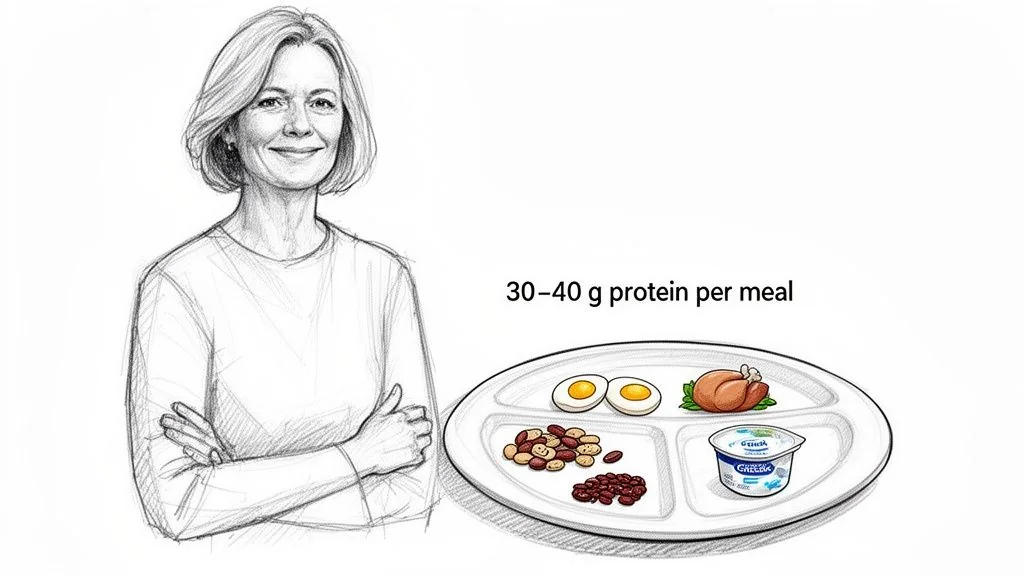
After 40, your muscles become less sensitive to protein—a process called anabolic resistance. This means you need a stronger per-meal dose than a 25-year-old to stimulate the same muscle-building response. That's the physiological case for the higher end of the range.
Quick Guide to Your Per-Meal Protein Targets
| Meal | Target Range | Why It Matters |
|---|---|---|
| Breakfast | 30–40g | Initiates muscle repair early; stabilizes blood sugar to reduce afternoon cravings |
| Lunch | 30–40g | Sustains muscle maintenance signaling; prevents midday energy drops |
| Dinner | 30–40g | Fuels overnight muscle repair and recovery |
| Post-Workout | 25–30g | Delivers amino acids during the post-exercise recovery window |
Hitting these targets consistently helps you maintain lean muscle mass, support bone density, and stay satiated between meals—three priorities that become increasingly important during perimenopause and beyond. You can explore the science behind protein distribution in this Danone Research overview.
Why Consistent Protein Intake Matters More After 40
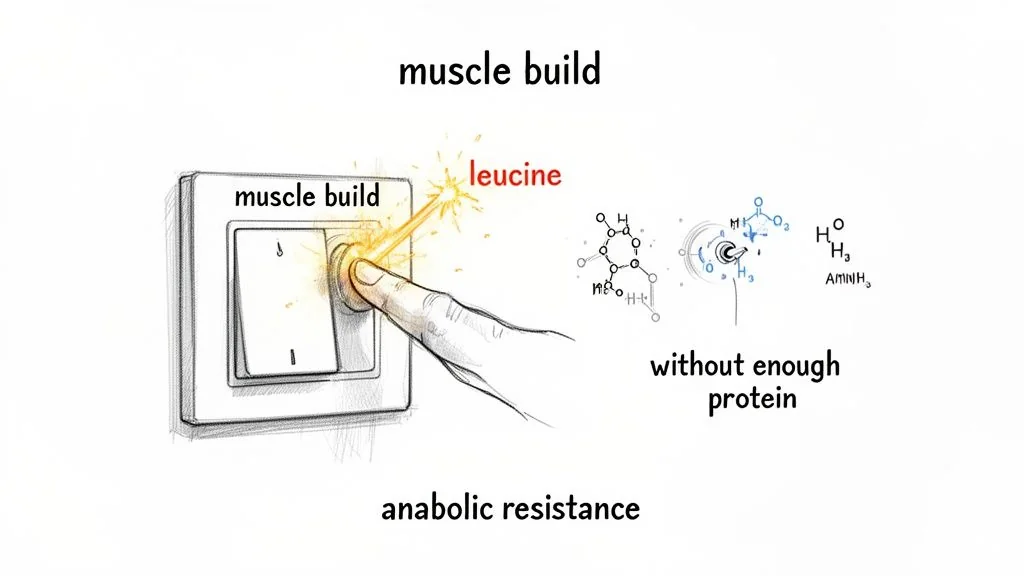
After 40, your muscles become less responsive to protein—a phenomenon researchers call anabolic resistance. Declining estrogen during perimenopause and menopause is a primary driver. The result: your body now needs a stronger protein signal to trigger the same muscle repair and growth response it once achieved easily.
That signal comes from leucine, an amino acid that activates muscle protein synthesis. To clear the higher activation threshold caused by anabolic resistance, most women over 40 need 30–40 grams of quality protein per meal—not 15–20 grams, which was often sufficient before.
Why Timing Across Meals Matters
Eating most of your protein at dinner—a common pattern—is far less effective than spreading intake evenly. Research consistently shows that muscle protein synthesis has a ceiling per meal: consuming 70 grams of protein at once doesn't double the benefit of 35 grams. Excess amino acids are oxidized, not stored.
More critically, skipping adequate protein at breakfast and lunch leaves your muscles in a catabolic state for hours. During those gaps, your body may break down existing muscle tissue to source the amino acids it needs.
Distributing 30–40 grams across three meals gives you three distinct windows to activate muscle protein synthesis daily. This approach also stabilizes blood sugar more effectively than uneven intake, reducing energy crashes and hunger between meals—both common concerns while navigating hormonal changes in midlife.
Consistent protein per meal isn't about eating more overall. It's about timing and distribution that works with your biology, not against it.
Calculating Your Personal Protein Target Per Meal
There are two practical ways to set your per-meal protein target. Use whichever fits how you think about food.
Method 1: The 30–40 Gram Guideline
Aim for 30 to 40 grams of protein at each main meal. This range consistently clears the threshold needed to trigger muscle protein synthesis at this age, where anabolic resistance means lower doses simply don't move the needle.
Method 2: Body Weight Calculation
For a more personalized target, use 0.3 to 0.4 grams of protein per kilogram of body weight, per meal — a distribution shown to maximize the muscle-building response (source).
Step 1: Divide your weight in pounds by 2.2 to get kilograms. Step 2: Multiply by 0.3 (lower end) and 0.4 (upper end).
Real examples: - 140 lb (64 kg): 19–26 g per meal - 165 lb (75 kg): 23–30 g per meal - 180 lb (82 kg): 25–33 g per meal
Notice that these ranges sit at or near the 30–40 gram guideline. For most women, targeting the higher end is the smarter move given age-related anabolic resistance.
Don't stress about hitting exact numbers every meal. Consistent effort across the week matters far more than perfection on any single day.
If you'd rather skip the math, our protein intake calculator generates your personalized target in seconds.
What 30 Grams of Protein Actually Looks Like On Your Plate
Knowing your target is one thing. Knowing what it looks like on a plate is what actually changes your habits. Once you build a mental library of high-protein meals, you stop second-guessing and start eating with intention.
From Numbers to Nourishment
Here are real meals that hit the 30–40g mark without complicated prep:
- Breakfast (35g): Three scrambled eggs with ¼ cup shredded cheese, plus a cup of plain Greek yogurt with hemp seeds on the side.
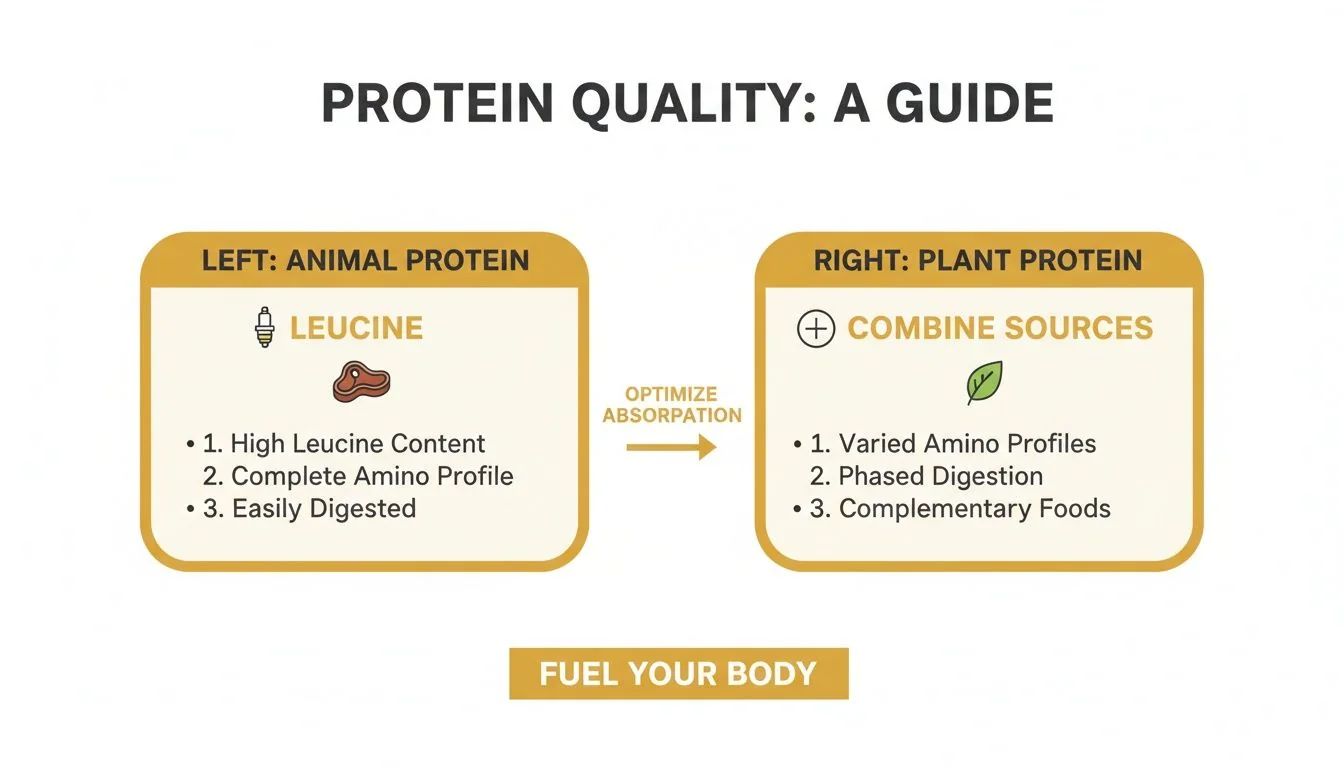
- Lunch (40g): Salad topped with 5oz grilled salmon, ½ cup chickpeas, and pumpkin seeds. Salmon is one of the richest dietary sources of leucine—the amino acid that directly triggers muscle protein synthesis.
- Dinner (38g): 4oz baked chicken breast, 1 cup cooked quinoa, and a side of broccoli. Quinoa adds a complete plant protein to supplement the chicken.
Plant-Powered Plates
Plant-based eaters can hit the same targets by combining complementary protein sources:
- Vegetarian (36g): 1 cup cottage cheese + ½ cup black beans + a handful of almonds.
- Vegan (35g): 1.5 cups cooked lentils in soup with a slice of whole-wheat bread. Lentils deliver roughly 18g of protein per cup and are among the highest-leucine plant foods available.
Sample 30–40g Protein Meals For Any Diet
| Meal | Omnivore | Vegetarian | Vegan |
|---|---|---|---|
| Breakfast | 3 eggs + cheese + Greek yogurt (~35g) | 1.5 cups cottage cheese + almonds (~36g) | 8oz tofu scramble + soy sausage (~38g) |
| Lunch | 5oz grilled chicken salad (~40g) | 1 cup chickpeas + 4oz feta Greek salad (~30g) | Lentil soup + whole wheat bread (~35g) |
| Dinner | 5oz baked salmon + quinoa (~40g) | 2 black bean burgers + cheese (~32g) | Burrito bowl with beans, rice + 4oz tempeh (~40g) |
Simple Protein Boosts For Any Meal
Small swaps add up fast:
- Add edamame: ½ cup shelled = 11g protein added to any salad or stir-fry.
- Swap sour cream for Greek yogurt: Same texture, 15–20g more protein per cup.
- Sprinkle hemp or pumpkin seeds: 2 tablespoons = 6–8g added to oatmeal or smoothies.
- Use legume-based pasta: One serving of lentil or chickpea pasta delivers 20g+ protein before the sauce.
An app like Just Protein lets you scan a meal photo to see its protein content instantly—useful when you're estimating rather than measuring.
Your Action Plan for Building Strength Today
Putting this into practice doesn't require a complete overhaul. Start with one change at a time.
Small Steps, Big Impact
- Start with one meal: At your very next meal, aim for 30 grams of protein. That single target is enough to trigger muscle protein synthesis meaningfully.
- Prioritize leucine-rich sources: Choose foods high in leucine—the amino acid that directly activates muscle building. Salmon (4 oz = ~25g protein), eggs (3 large = ~18g), or Greek yogurt (1 cup = ~17–20g) are practical starting points.
- Build meal by meal: Once hitting 30g at one meal feels routine, apply the same target to a second. Consistency across weeks matters far more than perfection on any single day.
Let Technology Help You
Estimating protein content by memory is unreliable. A photo-based tracking app like Just Protein lets you snap your plate and get an instant protein breakdown—no manual logging or calorie obsession required. This turns your knowledge about protein per meal for women over 40 into a daily habit without adding mental overhead.
Pair this nutritional approach with resistance training two to three times per week and you have the two most evidence-backed levers for preserving muscle mass, supporting bone density, and maintaining metabolic function through perimenopause and beyond.
Common Questions About Per-Meal Protein
Do My Snacks Also Need to Hit 30 Grams?
No. The 30–40 gram target applies to main meals because that's the threshold shown to maximally stimulate muscle protein synthesis. Snacks serve a different purpose: managing hunger and contributing to your daily total. Aim for 10–15 grams at snacks—Greek yogurt, cottage cheese, or a hard-boiled egg all work well.
Will Eating This Much Protein Make Me Bulky?
No. Building significant muscle mass requires years of heavy progressive resistance training combined with a sustained calorie surplus. At this stage, adequate protein does the opposite of bulking—it helps preserve the lean muscle you're naturally losing to age-related muscle decline (sarcopenia begins in your 30s), supports bone density, and keeps your metabolism functioning efficiently.
Is This Amount of Protein Safe to Eat Every Day?
For most healthy women, yes. Research consistently shows higher protein intakes—up to 1.6–2.2 grams per kilogram of body weight daily—are safe and beneficial for muscle, bone, and metabolic health. The one exception: women with diagnosed kidney disease should consult their doctor before significantly increasing protein intake, as impaired kidneys process protein differently. If you have no kidney issues, this level of intake is both safe and well worth prioritizing.
Ready to stop guessing and start seeing your protein intake clearly? The Just Protein app helps you track your meals with a simple photo, making it effortless to see if you're hitting your muscle-building targets. Join the waitlist today and take the first step toward a stronger you.
Frequently Asked Questions
What if I can't hit 30 grams at every meal—will partial progress still help?
Absolutely. Each meal you hit 30+ grams is a distinct window of muscle protein synthesis activation. If you only manage it at two meals instead of three, you're still getting two powerful signals daily rather than none. Progress compounds over weeks and months—consistency matters far more than perfection on any single day.
Can I eat all my protein at one big meal and still preserve muscle?
No. Muscle protein synthesis has a ceiling per meal; your body can only use so much protein at once, and excess is oxidized rather than stored. More critically, skipping protein at breakfast and lunch leaves your muscles in a catabolic state for hours, potentially breaking down existing tissue. Three distributed meals activates muscle-building three times daily.
Do I need to track protein obsessively, or is estimation enough?
Estimation improves with practice, but a photo-based app removes guesswork and takes seconds. Since hitting your target consistently is the real goal, using a tool like Just Protein removes the mental friction that often derails good intentions. Many people find that two weeks of tracking teaches them the visual portion sizes they need.
How does protein intake connect to other changes happening in my body after 40?
Declining estrogen during perimenopause accelerates both muscle loss (sarcopenia) and anabolic resistance—making adequate protein per meal even more critical. Consistent protein intake also stabilizes blood sugar more effectively than uneven eating, which becomes increasingly important as hormonal shifts make energy crashes more pronounced during this life stage.