Last reviewed July 2026.
TL;DR
- Women lose 3–8% of muscle mass per decade after 30, accelerating during menopause due to declining estrogen and progesterone.
- Aim for 1.6–2.2g of protein per kilogram of body weight daily, distributed as 30–40g per meal to overcome anabolic resistance.
- Leucine (a key amino acid) requires ~3g per meal to trigger muscle protein synthesis; animal proteins reach this threshold more efficiently than plant sources.
- Resistance training 2–3 times weekly is essential—protein provides raw materials, but strength work sends the signal to build muscle.
- Hormone therapy alone won't prevent muscle loss; consistent protein intake and resistance training remain the most effective strategies regardless of HRT use.
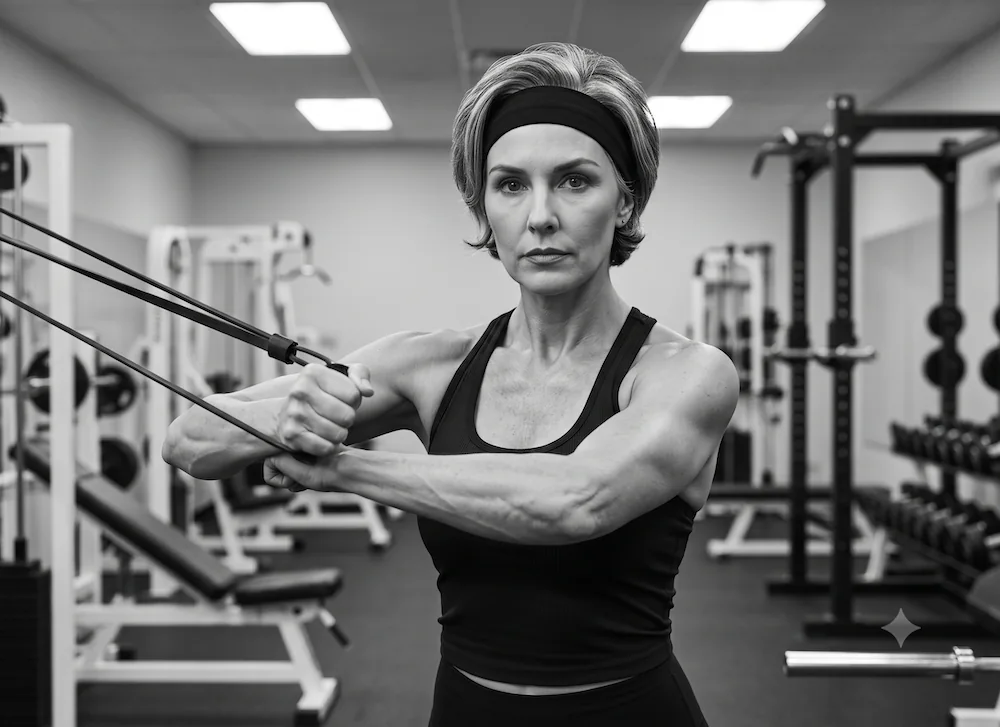
If keeping muscle on your frame feels harder after 40, you're not imagining it. Menopause-related changes in estrogen and progesterone directly affect muscle protein synthesis — the process your body uses to build and repair muscle tissue. Research shows women can lose 3–8% of muscle mass per decade after 30, and that rate accelerates during the menopausal transition.
Estrogen plays a bigger role in muscle maintenance than most women realize. It supports satellite cells — the repair cells that rebuild muscle after exercise — and helps regulate inflammation that breaks muscle down. As estrogen declines, your recovery slows, your strength can drop, and fat tends to accumulate in place of muscle, particularly around the abdomen.
The practical result: the training and nutrition habits that worked in your 30s may no longer be enough. You likely need more dietary protein (research points to 1.6–2.2g per kilogram of body weight daily), more deliberate resistance training, and closer attention to recovery.
Understanding why menopause muscle loss happens in women over 40 is the first step toward reversing it. The strategies that work aren't complicated, but they are specific — and that specificity matters.
The Simple Science: Why Menopause Can Accelerate Muscle Loss
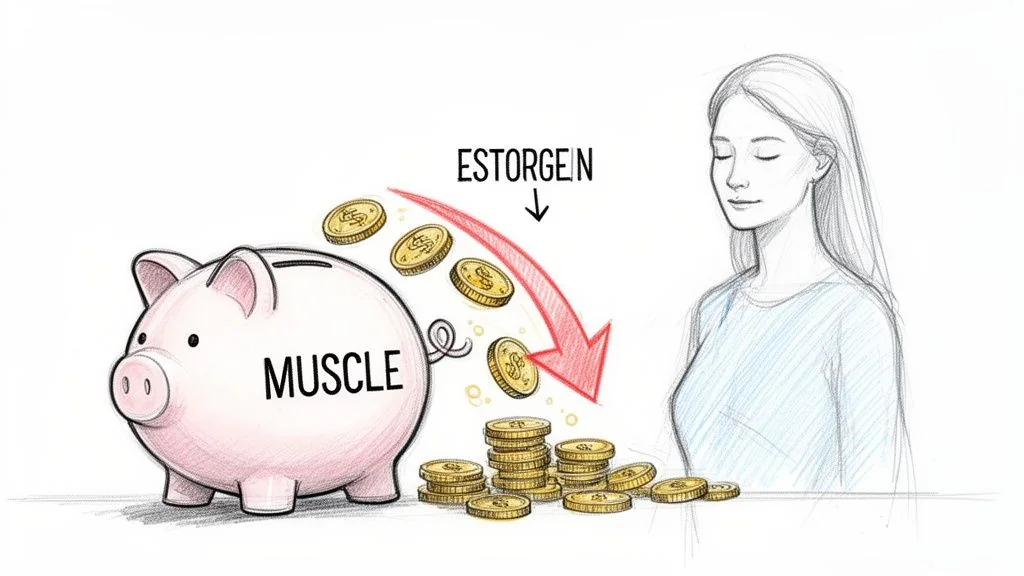
Menopause triggers more than hot flashes. One of its quieter effects is accelerated muscle loss—driven not just by age, but by a specific hormonal shift.
Estrogen plays a direct role in muscle protein synthesis: it helps your body convert dietary protein into new muscle tissue. As estrogen declines during perimenopause and menopause, that process becomes less efficient. Research suggests women can lose 3–8% of muscle mass per decade after 30, with that rate increasing significantly during the menopausal transition. This is clinically called sarcopenia.
Several interconnected changes drive this process:
| Physiological Change | Impact on Muscle Health | Practical Response |
|---|---|---|
| Estrogen Decline | Reduced muscle protein synthesis—less of the protein you eat is used to build muscle. | Increase daily protein intake (aim for 1.6–2.2g per kg of body weight) and prioritize resistance training. |
| Increased Inflammation | Low-grade chronic inflammation accelerates muscle breakdown. | Prioritize anti-inflammatory foods (fatty fish, leafy greens, berries), quality sleep, and consistent movement. |
| Insulin Resistance | Muscles become less responsive to insulin, reducing glucose uptake and energy availability. | Distribute protein across all meals and use strength training to improve insulin sensitivity. |
| Anabolic Resistance | Muscles need a stronger stimulus—more protein and heavier loads—to trigger the same growth response as in your 30s. | Use progressive overload in your training and ensure each meal includes a complete protein source. |
These factors compound each other, but they are addressable. The strategy that worked at 35 needs updating—not abandoning.
Why This Matters for Women Over 40
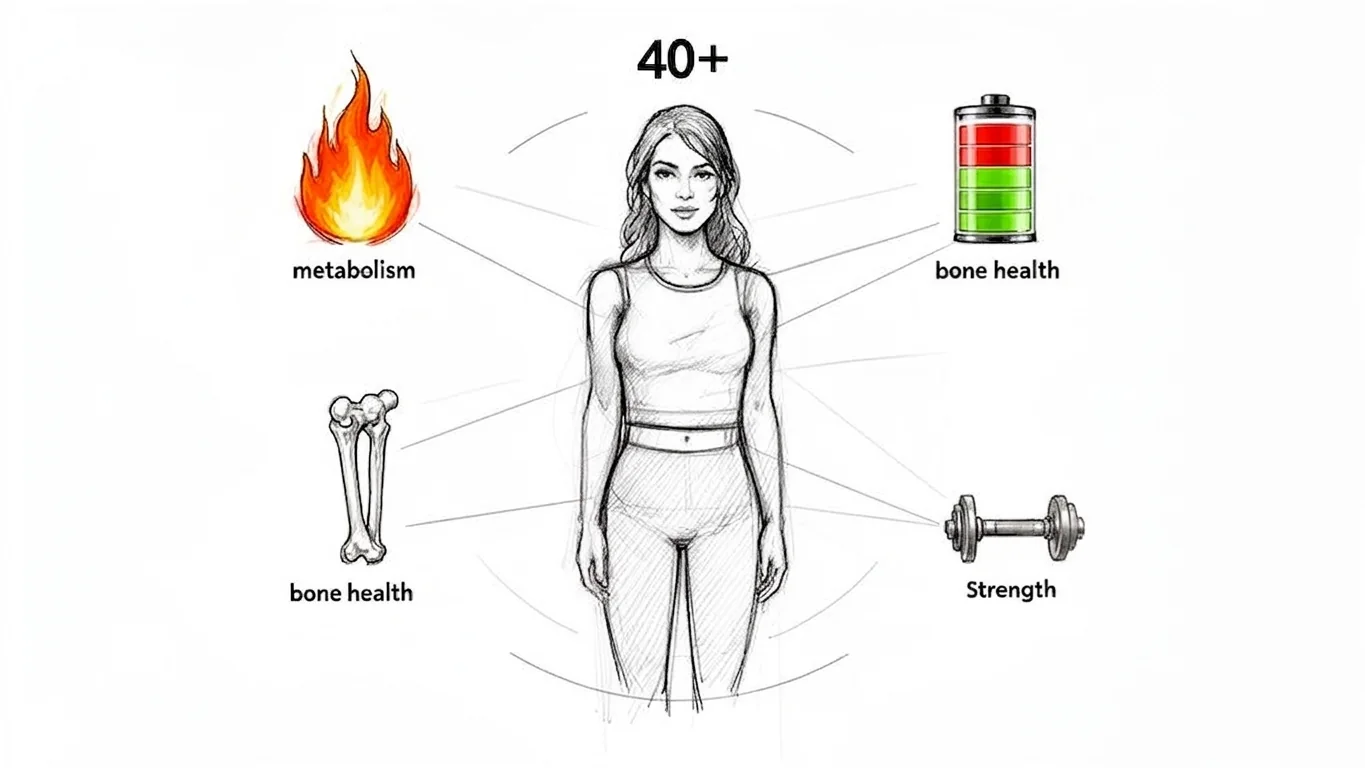
Menopause muscle loss in women over 40 isn't just about strength—it directly affects metabolism, bone density, blood sugar regulation, and your ability to stay independent as you age.
The hormonal drop in estrogen during perimenopause accelerates muscle loss significantly. Women can lose up to 3–8% of muscle mass per decade after 30, and that rate increases after menopause. The International Menopause Society notes this process continues even with hormone therapy.
Muscle Drives Your Metabolism
Muscle tissue burns roughly 6 calories per pound at rest, compared to 2 calories per pound of fat. Less muscle means a slower resting metabolic rate—which is why weight management becomes harder during this transition even without any change in diet or activity.
Strength for Daily Function
Muscle loss shows up practically: difficulty getting off the floor, carrying luggage, or recovering from a stumble. These aren't small inconveniences—they're early signs of declining functional independence.
Bones and Blood Sugar
Muscle contractions place mechanical stress on bone, signaling it to maintain density —critical when estrogen loss is already accelerating bone breakdown. Muscle also acts as the body's primary glucose storage site; greater muscle mass improves insulin sensitivity and reduces the risk of type 2 diabetes.
Explore more strategies in our articles for women over 40.
Common Myths About Menopause and Muscle Loss
Several misconceptions make it harder for women to take effective action. Here's what the evidence actually shows.
-
Myth 1: "It's just age — nothing you can do." Age plays a role, but the accelerated muscle loss around menopause is driven by declining estrogen, not time alone. Consistent strength training and adequate protein intake can meaningfully slow that loss and support muscle rebuilding at any age.
-
Myth 2: "Hormone therapy will handle it." HRT can ease many menopausal symptoms and may help slow shifts in body composition, but research does not support it as a standalone solution for muscle loss. Protein intake and resistance training remain essential regardless of whether you use HRT.
-
Myth 3: "Any protein source works." Protein quality matters significantly after 40. Muscle protein synthesis requires leucine — a specific amino acid found in whey, eggs, meat, and soy. Collagen protein, despite its popularity, is low in leucine and is not an effective trigger for muscle building.
-
Myth 4: "Cardio is enough for staying lean." Cardio supports cardiovascular health but does little to preserve muscle mass. Resistance training is the most effective tool for maintaining your metabolic rate and muscle tissue during and after menopause. Combining both is ideal, but strength work should be the priority.
Anabolic Resistance: The New Rulebook for Your Muscles
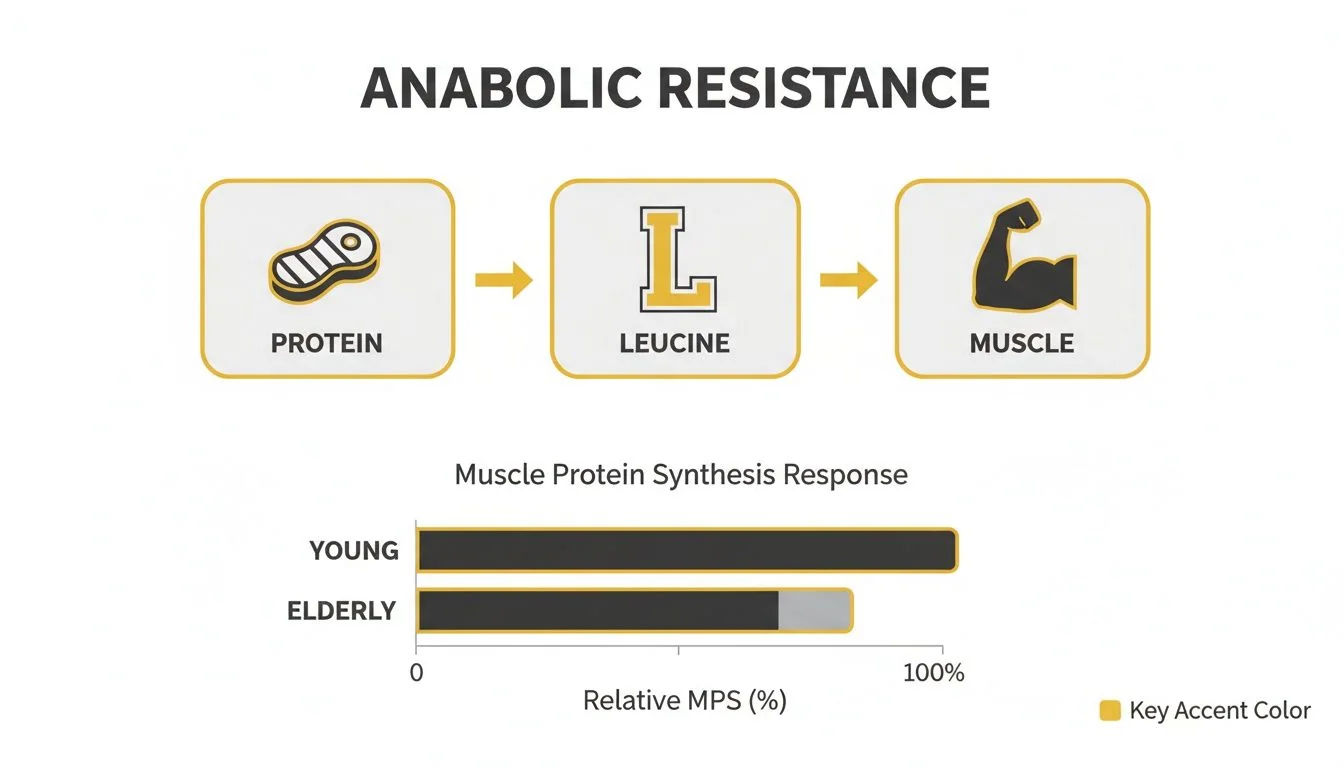
Anabolic resistance is one of the most important concepts for understanding menopause muscle loss in women over 40. It means your muscles become less sensitive to the protein you eat — requiring a stronger stimulus to trigger the same repair and growth response you once got with less.
This is why standard protein recommendations often fall short after menopause. The amount that worked at 30 no longer moves the needle.
How to Send a Stronger Signal
Research points to two specific tactics:
-
Higher protein per meal: Total daily intake matters, but distribution matters more. Aim for 30–40 grams of high-quality protein per meal. A 15-gram serving won't trigger a meaningful muscle-building response in women over 40.
-
The leucine threshold: Leucine is the amino acid that activates muscle protein synthesis. You need at least 2.5–3 grams of leucine per meal to flip that switch. When you consistently hit 30–40 grams from quality sources — eggs, Greek yogurt, meat, fish, or whey — you typically clear this threshold automatically.
These two targets work together. Meeting them turns a vague goal of "eating more protein" into a precise, physiology-backed strategy for combating menopause muscle loss. For a deeper dive, learn more about anabolic resistance in our article.
Actionable Steps You Can Take Today
Start by raising your daily protein target. General guidelines are set too low for women over 40 fighting muscle loss. Research supports a target of 1.6 to 2.2 grams of protein per kilogram of your ideal body weight—not your current weight.
Your Per-Meal Protein Targets
Distributing that protein evenly across meals matters as much as the total. Due to anabolic resistance, aim for 30 to 40 grams of high-quality protein per main meal. Anything below this threshold may not be enough to trigger muscle protein synthesis effectively.
Muscle mass declines 3–8% per decade from age 30, accelerating after 60. Menopause speeds this up further. Hitting a consistent 30–40g per-meal protein target is one of the most evidence-backed strategies to counter it. See this study on sarcopenia for the underlying data.
Real-World Examples: Meeting Your Leucine Threshold
Protein quality determines how much your muscles can actually use. The key driver is leucine—you need roughly 3 grams per meal to activate muscle repair. Animal proteins reach this threshold more efficiently than plant proteins, as shown below.
| Food Source | Serving to Reach ~3g Leucine | Protein in That Serving |
|---|---|---|
| Whey Protein Isolate | ~28g (1 scoop) | 25g |
| Chicken Breast | ~140g (5 oz) | 44g |
| Salmon | ~155g (5.5 oz) | 34g |
| Greek Yogurt (0%) | ~270g (1.2 cups) | 28g |
| Eggs (Large) | ~5 large eggs | 30g |
| Extra Firm Tofu | ~365g (13 oz) | 36g |
| Lentils (Cooked) | ~2.3 cups | ~40g |
Plant-based eaters can still hit these targets—it requires larger portions or combining sources. Learn more about what is protein quality to make smarter choices.
Your Muscle-Supportive Meal and Exercise Plan
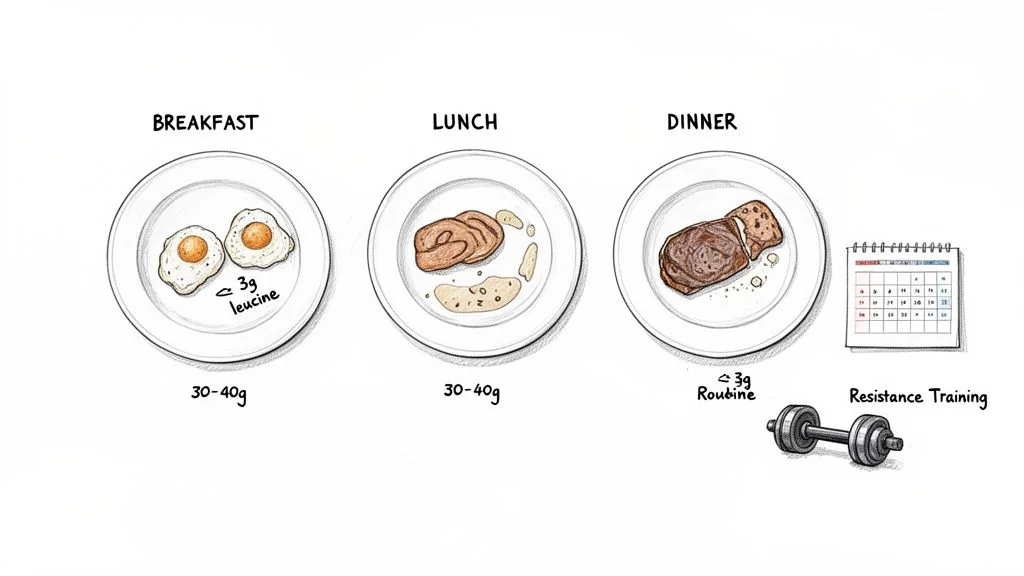
Designing Your Meals
Aim for 30–40 grams of protein per main meal, with each serving delivering at least 3 grams of leucine—the amino acid that directly triggers muscle protein synthesis. Here's what that looks like in practice:
| Meal | Omnivore | Vegetarian | Vegan |
|---|---|---|---|
| Breakfast | 3-egg omelet with cheese + Greek yogurt | Greek yogurt with nuts + whey protein scoop | Tofu scramble with nutritional yeast + soy milk |
| Lunch | 5 oz grilled chicken breast salad | Quinoa bowl with 1 cup chickpeas + feta | 2-cup lentil soup with whole-grain bread |
| Dinner | 5.5 oz baked salmon with vegetables and wild rice | 1.5 cups cottage cheese with sliced tomatoes | 13 oz extra-firm tofu stir-fry with broccoli |
Build every meal around the protein source first, then add vegetables and complex carbs around it.
The Critical Role of Resistance Training
Protein supplies the raw materials, but resistance training is the signal that tells your body to actually use them. Without that stimulus, extra protein has nowhere to go.
Aim for two to three sessions per week, prioritizing compound movements—squats, deadlifts, rows, and presses—that recruit your largest muscle groups simultaneously. Consistency over the weeks and months matters far more than any single perfect workout. See our guide on strength training for perimenopause for session ideas.
Gentle Reassurance: A Skimmable Summary
Menopause-related muscle loss is real, but it's largely preventable with two consistent habits: eating enough protein and giving your muscles a reason to grow.
Your strategy, simplified:
- Hit your daily protein target: Aim for 1.6–2.2 g per kilogram of body weight, spread across meals rather than loaded into one sitting.
- Optimize each meal: Target 30–40 grams of high-quality protein per meal to hit roughly 3 grams of leucine—the amino acid threshold that triggers muscle protein synthesis.
- Train with resistance: Lift weights or do bodyweight training 2–3 times per week. The workout creates the demand; protein provides the raw materials.
Common questions:
- Do I need high protein on rest days? Yes. Muscle repair peaks 24–48 hours post-training, so consistent daily intake matters more than timing around workouts.
- Can a plant-based diet work? Yes, but it requires larger portions and strategic food combinations to reliably hit leucine thresholds. Soy, lentils, and hemp seeds are among the strongest plant-based sources.
- Will this make me look bulky? No. After 40, declining estrogen and testosterone make significant muscle bulk extremely difficult for women. These targets are calibrated to preserve lean mass, not maximize it.
Navigating menopause and muscle loss requires a smarter approach to protein—one that focuses on quality and timing. Just Protein is designed to make this simple. Our app helps you track the protein quality of your meals, ensuring you hit the thresholds needed to support your strength and long-term health.
Sign up for the waitlist today to get early access. Learn more and join at https://justprotein.app.
Frequently Asked Questions
How much protein do I actually need if I'm over 40 and experiencing menopause?
Research supports 1.6–2.2 grams of protein per kilogram of your ideal body weight daily. More importantly, distribute this across meals aiming for 30–40 grams per main meal to overcome anabolic resistance—the reduced muscle sensitivity to protein that develops after 40. A single 15-gram serving won't trigger meaningful muscle-building response.
Can I prevent menopause muscle loss with diet alone, or do I need to exercise?
Both are essential and inseparable. Protein provides the building blocks, but resistance training creates the stimulus that tells your muscles to actually use that protein. Without strength training, extra protein has nowhere to go. Aim for 2–3 resistance sessions weekly combined with adequate protein intake for best results.
Is whey protein better than plant-based protein for combating menopause muscle loss?
Whey and other animal proteins contain higher concentrations of leucine—the amino acid that directly activates muscle protein synthesis—making them more efficient at hitting the 3g leucine threshold per meal. Plant-based sources like soy, lentils, and hemp can work, but require larger portions or strategic combinations to reach the same threshold.
If I start eating more protein and lifting weights, will I get bulky?
No. After 40, declining estrogen and testosterone make significant muscle bulk extremely difficult for women. These protein and training targets are calibrated to preserve lean mass and combat age-related muscle loss, not maximize muscle size. Most women will notice improved strength and a leaner appearance as muscle replaces fat.
Does hormone replacement therapy (HRT) eliminate the need for strength training and high protein?
No. Research from the International Menopause Society shows that HRT does not prevent age-related muscle loss on its own. Whether you use HRT or not, consistent resistance training and adequate protein intake remain the most effective and essential strategies for combating menopause muscle loss.
This article is for education only and is not medical advice. Just Protein is not a medical provider — we summarize published research and cite our sources so you can verify them; decisions about menopause, hormone therapy (HRT), or your muscle and bone health belong with your doctor.