
The 10 Best Complete Protein Foods for Women Over 40

TL;DR
- Complete proteins contain all nine essential amino acids; animal sources qualify automatically, while plant foods require strategic pairing to cover all amino acids.
- Women over 40 need 35–40g of protein per meal with at least 3g of leucine per serving to trigger muscle protein synthesis due to anabolic resistance.
- Eggs, salmon, chicken breast, and Greek yogurt are the fastest routes to hitting per-meal targets; cottage cheese and whey isolate are efficient, slow-digesting options.
- Plant-based eaters should add 15% to their daily protein target (2.2g/kg baseline) and pair complementary foods like lentils + quinoa or beans + whole grains.
- Start with a single-day protein audit to identify which meal falls short, then make one targeted swap before overhauling your entire approach.
After 40, your body becomes less efficient at converting dietary protein into muscle — a phenomenon called anabolic resistance. Estrogen decline during perimenopause makes muscles less responsive to the protein you eat, so the threshold to stimulate muscle protein synthesis rises. A landmark study by Churchward-Venne et al. (2016, The Journal of Physiology) confirmed that older muscle requires both a higher total protein dose and adequate leucine — at least 3g per meal — to trigger the same rebuilding response younger muscle gets from less.
The standard RDA of 0.8g of protein per kilogram of body weight was designed to prevent deficiency, not to support an active woman navigating hormonal shifts and muscle loss. Dr. Stacy Sims, exercise physiologist and researcher in female-specific nutrition, recommends roughly 2.2g/kg — simplified as about 1g per pound of body weight — with a minimum of 35–40g of protein per meal to clear the threshold needed for meaningful muscle protein synthesis. Sims's recommendations are reinforced by findings from Dr. Stuart Phillips (McMaster University), whose work consistently shows that older adults require significantly more dietary protein than younger populations to achieve the same anabolic response (Phillips & Chevalier, 2017, Applied Physiology, Nutrition, and Metabolism).
This guide gives you a practical complete protein foods list built around those targets — covering animal sources, plant-based options, and how to combine plant proteins effectively. You will find gram counts, meal examples, and a straightforward framework to match your approach to your diet. No extreme overhauls required.
What Are Complete Proteins and Why Do They Matter After 40?
A complete protein contains all nine essential amino acids — the ones your body cannot make on its own — in proportions sufficient to support muscle repair and growth.
Most animal foods (meat, fish, eggs, dairy) qualify. Most single plant foods do not, though that gap is closeable through smart pairing, covered below.
Building meals around complete protein sources is the most straightforward way to hit the 2.2g/kg daily target while also meeting the 3g leucine minimum per meal.
1. Eggs
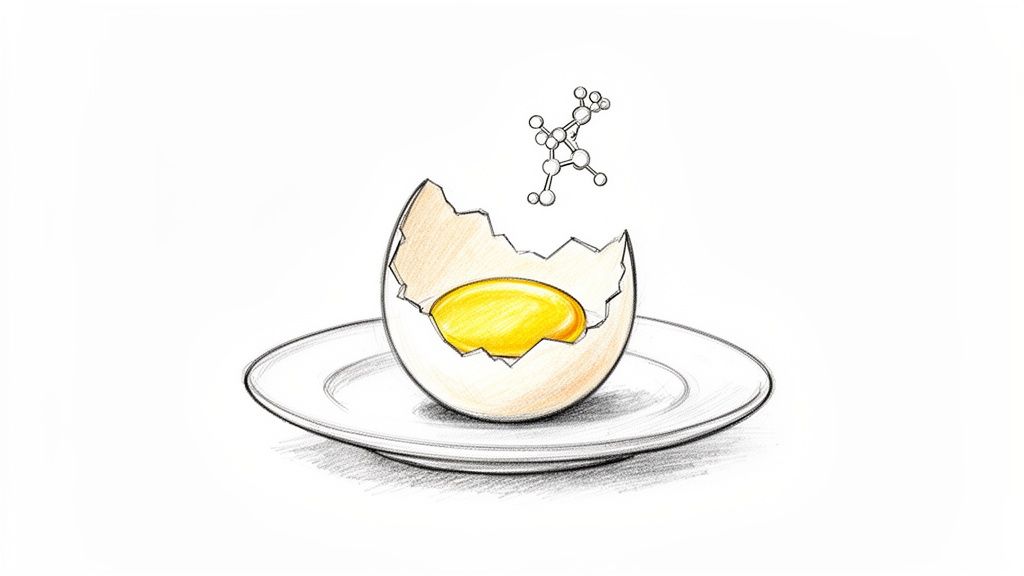
Eggs are one of the most bioavailable sources of complete protein available — they contain all nine essential amino acids in ratios closely matched to what the body can actually use.
One large egg delivers about 6 grams of protein, split between the yolk and white. To hit the 35–40g per-meal target, plan for three eggs as a base and build from there — add cottage cheese, smoked salmon, or a side of Greek yogurt to close the gap.
Why Eggs Work Well for Women Over 40
The yolk earns its place here specifically. It provides choline — critical for liver function and cognitive health — along with lutein for eye health and fat-soluble vitamins A, D, and K2. Discarding it cuts your nutrient return significantly.
On cholesterol: Harvard's long-running Nurses' Health Study found no meaningful association between whole egg consumption and cardiovascular risk in healthy adults. Eat the whole egg.
Common Myth: "I should stick to egg whites to protect my heart." The evidence does not support this for most healthy women. The yolk contains roughly half the protein and nearly all the micronutrients.
Practical Tips
- Build toward 35–40g: Three eggs (18g) plus one cup of cottage cheese (25g) reaches the target in one meal.
- Prep in advance: Hard-boiled eggs keep refrigerated for up to a week — a reliable, portable protein source with no prep at mealtime.
- Pair strategically: Add complex carbohydrates like roasted sweet potato or whole-grain toast to slow digestion and sustain energy without diluting the protein quality.
2. Greek Yogurt
A 6-ounce (170g) serving of plain Greek yogurt delivers 17–20g of complete protein, with roughly 1.5–2g of leucine — a useful building block toward the 35–40g per-meal target, though a single serving falls well short on its own. Treat it as a base, not a complete meal.
Beyond protein, Greek yogurt earns attention for two other reasons. First, it provides roughly 200mg of calcium per serving, directly supporting bone density at a stage of life when losses accelerate. Second, the live active cultures in most plain varieties support gut microbiome diversity, which research associates with better metabolic and hormonal outcomes (Sonnenburg & Bäckhed, Nature, 2016).
Making Greek Yogurt Work Harder
- Pair it strategically: Add a quarter-cup of hemp seeds (10g protein) and two tablespoons of almond butter (7g protein) to push a single bowl past 35g.
- Skip flavored varieties: Fruit-flavored Greek yogurts often carry 15–20g of added sugar, which offsets the metabolic benefit of the protein.
- Use it as a cooking swap: Replace sour cream in sauces or dips with plain Greek yogurt to add protein without changing texture meaningfully.
- Check the label: Look for varieties with at least 15g of protein per 150–170g serving and live active cultures listed in the ingredients.
3. Salmon
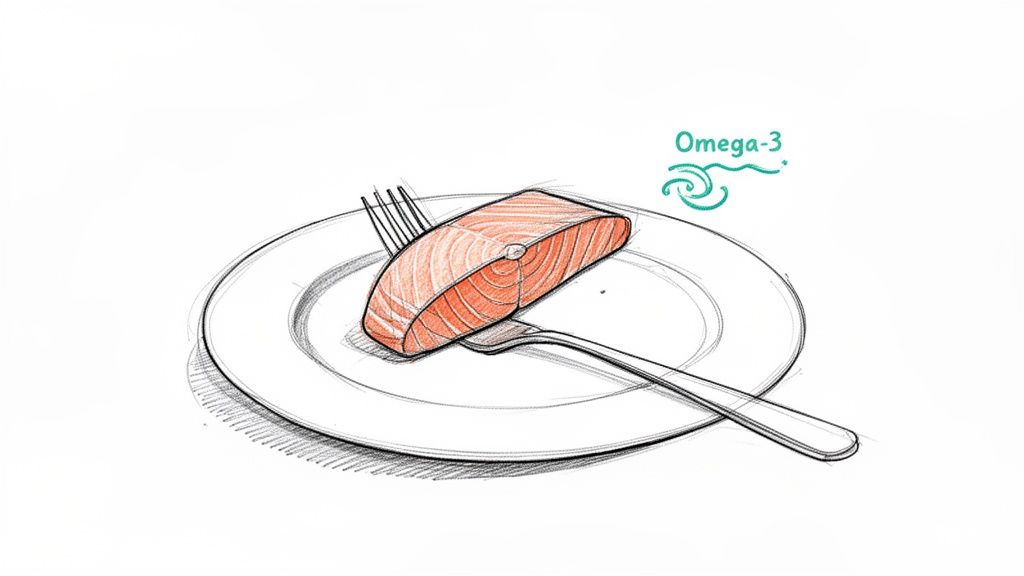
A 3.5-ounce serving of salmon delivers 25 grams of complete protein along with a nutrient combination that few other foods can match: omega-3 fatty acids and vitamin D in meaningful doses. It is also one of the highest per-gram leucine density whole foods available, clearing the 3g leucine threshold in a 6 oz serving.
A 4-ounce fillet (roughly palm-sized) gets you to about 28 grams of protein. To reach the 35–40g per-meal target, pair it with a side that adds 10–12g: two eggs scrambled into the same pan, a cup of edamame, or a scoop of Greek yogurt-based sauce.
Why Salmon Is a Smart Choice for Women Over 40
Salmon's omega-3s (EPA and DHA) directly address two concerns that increase after 40: systemic inflammation and cognitive decline. A 2020 review by Calder et al. in Nutrients found that regular EPA and DHA intake meaningfully reduces inflammatory markers — the same markers that, when elevated, accelerate muscle breakdown. Salmon is also one of the few dietary sources of vitamin D, which supports bone density and immune function alongside its protein content.
Actionable Tips for Incorporating Salmon
- Reach 35–40g at this meal: Add two eggs or half a cup of cottage cheese on the side to close the gap between a standard fillet and your per-meal target.
- Cook gently: Baking, poaching, or grilling preserves the omega-3 content better than high-heat frying.
- Use canned salmon: It delivers the same complete protein and omega-3s as fresh — useful for quick salads or salmon patties when time is short.
- Track your weekly dose: Aim for two to three servings per week to maintain consistent omega-3 levels rather than relying on one large portion.
4. Chicken Breast
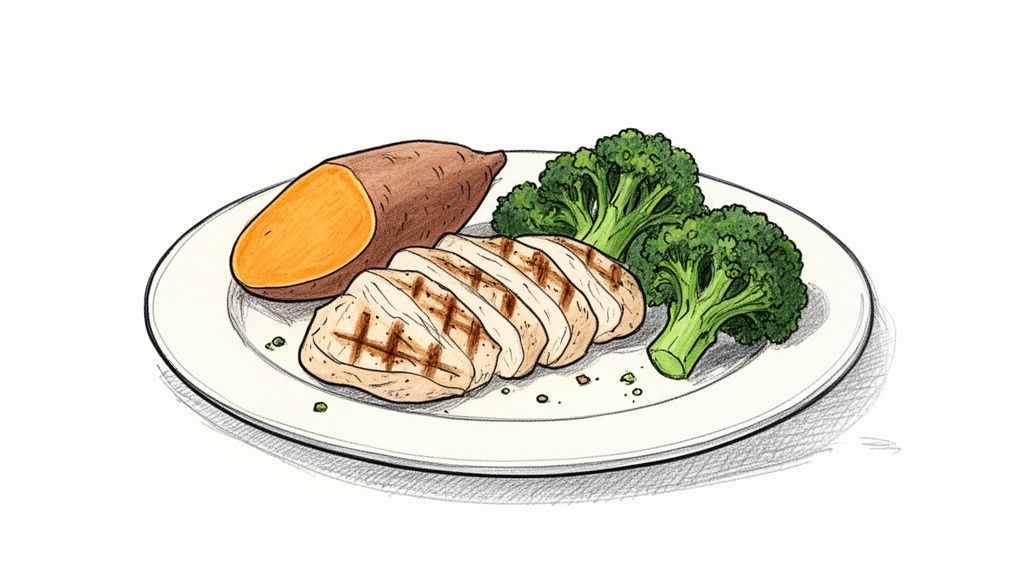
Cooked chicken breast delivers roughly 31g of protein per 100g — one of the highest protein-to-calorie ratios of any whole food. A 5-ounce (140g) portion lands at approximately 43g of complete protein, clearing the 35–40g per-meal target in a single serving and comfortably exceeding the 3g leucine threshold.
Why It Works for Women Over 40
Beyond the protein numbers, chicken breast is low in saturated fat and calories, so it leaves room on the plate for carbohydrates and healthy fats without pushing total intake into surplus. That balance matters during perimenopause, when body composition shifts can make excess caloric intake harder to offset.
Practical Tips
- Hit your target in one serving: A 5oz portion (~140g) gives you 43g of protein. Add roasted vegetables and a half-cup of cooked quinoa for a complete meal.
- Batch cook once, eat all week: Roast or poach four to six breasts on Sunday. Shred and refrigerate. Use throughout the week in grain bowls, salads, and wraps without recooking.
- Keep it from drying out: Pull it from heat at an internal temperature of 160°F (71°C) and rest it for five minutes — carryover cooking finishes the job. A meat thermometer removes the guesswork entirely.
For tracking whether your meals are consistently reaching the 35–40g target, a protein tracker app can help identify gaps before they become a pattern.
5. Cottage Cheese
A half-cup (113g) serving of cottage cheese delivers roughly 14 grams of complete protein. Two servings stacked into a meal gets you close to the 35–40g per-meal target, making it a practical building block rather than a token add-on.
The dominant protein here is casein, which digests slowly and releases amino acids over several hours. That sustained release is why cottage cheese works particularly well as an evening option: a serving an hour before bed keeps muscles supplied with amino acids overnight when repair activity is highest. Research by Res et al. (2012, Medicine & Science in Sports & Exercise) found that 40g of casein consumed before sleep significantly increased overnight muscle protein synthesis in adults.
Why Cottage Cheese Is a Smart Choice for Women Over 40
Beyond muscle repair, slow-digesting casein blunts appetite longer than faster proteins, which matters when you're spacing meals to hit higher per-meal targets without overeating overall.
Actionable Tips for Incorporating Cottage Cheese
- Stack servings to hit 35g+: Combine one cup (28g protein) with two eggs or a small scoop of hemp seeds to clear the per-meal target.
- Blend it into sauces or oatmeal: A half-cup blended into oatmeal or a pasta sauce adds 14g of protein without changing the texture noticeably.
- Use it as a pre-sleep protein source: One cup before bed provides roughly 28g of casein — add a tablespoon of nut butter to bring leucine and calories up without disrupting sleep.
6. Beef (Lean Cuts)
A 3.5-ounce serving of lean sirloin or 93% lean ground beef delivers roughly 26 grams of complete protein. That falls short of 35–40g on its own, but beef pairs easily with eggs, cottage cheese, or a side of Greek yogurt to close the gap.
Beyond protein, lean beef offers two nutrients that matter specifically to women over 40: heme iron, which the body absorbs at two to three times the rate of plant-based iron, and vitamin B12, which supports nerve function and energy metabolism. Zinc — critical for immune function and hormone production — is also concentrated in beef in a highly bioavailable form.
Research by Paddon-Jones and Rasmussen (2009, Current Opinion in Clinical Nutrition and Metabolic Care) confirmed that animal-source proteins, including beef, produce a meaningfully greater muscle protein synthesis response than plant proteins gram-for-gram, partly due to their complete amino acid profile and digestibility.
Common myth: Lean red meat and processed meat are the same risk category. They are not. The health concerns linked to red meat in population studies are largely driven by processed varieties. Lean, unprocessed cuts are a different food.
Practical tips
- Choose lean cuts: Sirloin, eye of round, and 93% lean ground beef keep saturated fat low without sacrificing protein density.
- Pair with vitamin C: Bell peppers, broccoli, or tomatoes eaten at the same meal increase heme iron absorption further.
- Build to your target: Combine a 3.5-ounce portion with one or two high-protein sides to reach 35–40g per meal.
7. Quinoa
Pronounced "keen-wah," quinoa is one of the few plant foods that qualifies as a complete protein — it contains all nine essential amino acids. One cup of cooked quinoa delivers around 8 grams of protein, which means it works best as a supporting player in a meal rather than the primary protein source, since hitting 35–40g will require pairing it with eggs, legumes, Greek yogurt, or another dense protein. At 8g per cup, it does not clear the 3g leucine threshold on its own — pair accordingly.
Quinoa's low glycemic index and high fiber content support stable blood sugar without the spike-and-crash pattern that can disrupt energy and appetite regulation — relevant because estrogen fluctuations already make blood sugar control less predictable. It also contributes meaningful amounts of magnesium and iron, two minerals commonly undereaten in midlife and tied to muscle function and energy metabolism.
Practical Ways to Use Quinoa
- As a meal base: Build a protein bowl starting with one cup of cooked quinoa (8g protein), then add grilled salmon or ground turkey to bring the meal into the 35–40g range.
- Batch cook once a week: Cooked quinoa keeps in the refrigerator for up to five days and takes minutes to fold into salads, soups, or stir-fries.
- Morning protein boost: Stir a half-cup of cooked quinoa into Greek yogurt with berries — a simple way to add texture and an extra 4 grams of protein to breakfast.
8. Tofu (Firm & Extra-Firm)
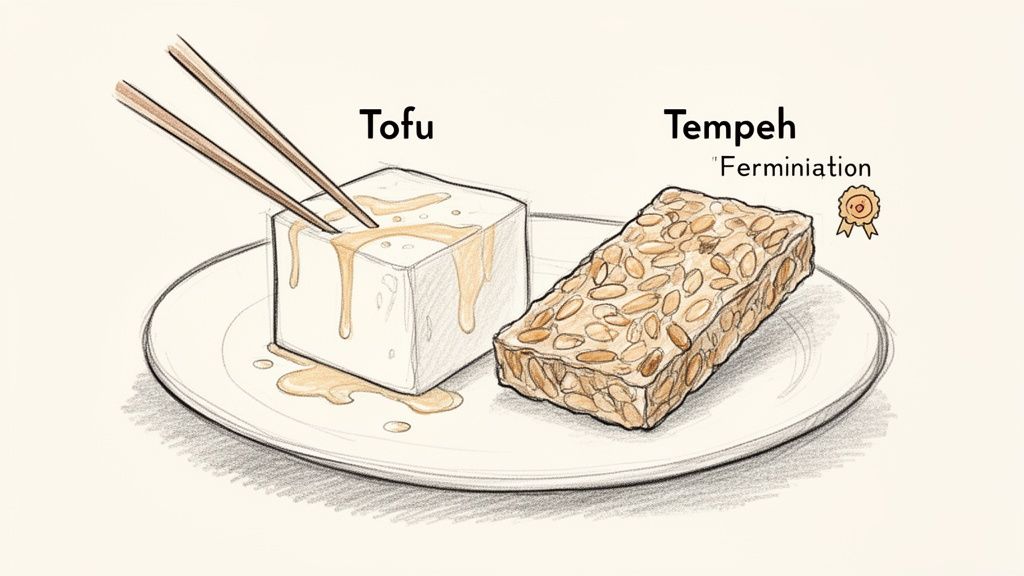
Firm tofu is one of the few plant foods that qualifies as a complete protein, supplying all nine essential amino acids from soy. A 3.5-ounce (100g) serving provides roughly 8g of protein, so reaching 35–40g per meal requires 14–17 ounces — plan accordingly when building plant-based plates.
Because soy contains isoflavones, tofu also offers a secondary benefit for women navigating the menopausal transition. A 2019 review by Messina et al. in Nutrients found that moderate soy food consumption does not disrupt hormonal function and may modestly reduce vasomotor symptoms. The longstanding concern that soy harms women's hormones applies to isolated soy isoflavone supplements at high doses — not to whole foods like tofu.
Common Myth: "Soy disrupts estrogen." Whole soy foods like tofu and tempeh are safe for most women and are not associated with negative hormonal effects, per the NIH's Office of Dietary Supplements and the Messina et al. review above.
Getting More From Tofu
- Press it properly. Press firm or extra-firm tofu for at least 30 minutes before cooking. Removing moisture produces a firmer texture that holds up to roasting, grilling, or pan-searing.
- Pair it strategically. Combine 6 oz of tofu (~14g protein) with a cup of edamame (~17g) and half a cup of cooked quinoa (~4g) to land near 35g in a single bowl.
- Choose firm or extra-firm. Silken tofu contains significantly less protein per serving and breaks down under heat — reserve it for smoothies or sauces.
- Go organic when you can. Non-GMO, organic tofu is widely available and avoids potential pesticide residues, though conventional tofu is nutritionally comparable.
9. Tempeh
Tempeh is a fermented soybean cake originating from Indonesia, and one of the few plant foods that delivers a complete amino acid profile without any combining required. A 100g (3.5oz) serving provides 19g of protein — to hit 35–40g per meal, plan on roughly 200g or pair it with a complementary protein source.
The fermentation process does two things regular tofu cannot: it breaks down anti-nutrients like phytic acid, improving mineral absorption (iron, calcium, zinc), and it increases digestibility so more of that 19g actually reaches your muscles. Research by van Nieuwenhoven et al. (2010, British Journal of Nutrition) found that fermented soy products show meaningfully higher protein digestibility scores than unfermented equivalents. For women eating primarily plant-based, also apply the +15% adjustment to your daily 2.2g/kg target to account for lower plant protein bioavailability.
Practical ways to use it
- Steam before cooking: 10–15 minutes of steaming removes bitterness and opens the texture so marinades absorb deeply.
- Marinate at least 30 minutes: Soy sauce, rice vinegar, garlic, and smoked paprika work well.
- Crumble as a ground meat substitute: Sauté with taco or chili spices — 200g crumbled tempeh over a grain bowl adds ~38g protein before any toppings.
10. Whey Protein Isolate Powder
Whey protein isolate is one of the most protein-dense options on any complete protein foods list — over 90% protein by weight, with most of the lactose, fat, and carbohydrates removed during processing. A single scoop typically delivers 25–30 grams of complete protein, including roughly 3g of leucine, which clears the per-meal leucine threshold.
Its fast absorption rate makes it particularly useful in the post-workout window, when muscle tissue is primed to use amino acids quickly — a practical way to close the gap on high-demand training days without adding significant meal prep.
Why It Works for Women Over 40
Whey isolate is calorie-efficient. You get 25–30g of protein for around 110–130 calories, which matters when you need to hit 35–40g per meal without excess calories crowding out nutrients from whole foods.
How to Use It
- Post-workout: One scoop blended with water or unsweetened milk within 30–60 minutes of strength training.
- Breakfast boost: Stir an unflavored scoop into oatmeal or pancake batter to bring the meal to 35–40g.
- Midday smoothie: Combine with Greek yogurt and frozen fruit to hit both protein and micronutrient goals in one meal.
- Quality check: Choose a third-party tested isolate with minimal additives — certifications like NSF Certified for Sport or Informed Sport are reliable indicators of purity.
How to Combine Foods for Complete Protein
Plant proteins are rarely complete on their own, but pairing them strategically fills the gaps — and you don't need to eat the pairings in the same meal. Your body pools amino acids over the course of the day, so spreading complementary foods across breakfast, lunch, and dinner works just as well.
This approach is called protein complementation. Here are five reliable pairings with approximate combined protein yields:
- Rice + beans (1 cup each): ~15g — grains are low in lysine; legumes supply it
- Whole-wheat pita + hummus (1 large pita + ½ cup hummus): ~14g — the grain-legume combination covers all nine essential amino acids
- Peanut butter + whole-wheat toast (2 tbsp + 2 slices): ~12g — another grain-legume pair with broad amino acid coverage
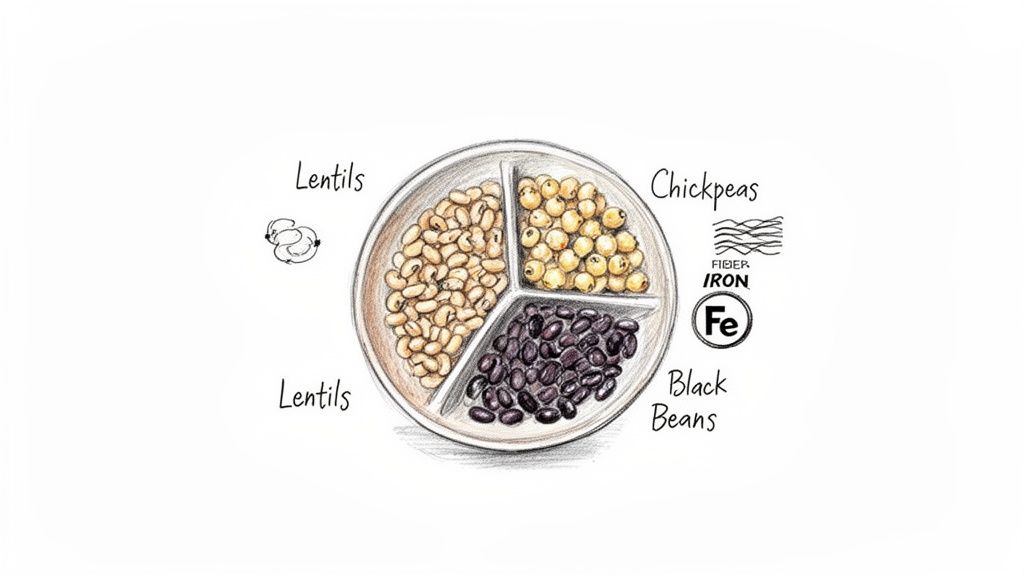
- Lentils + quinoa (½ cup each, cooked): ~17g — quinoa is one of the few grains with a near-complete profile, making this pairing especially dense
- Corn tortilla + black beans (2 tortillas + ½ cup beans): ~13g
Because plant proteins are less bioavailable than animal sources, researchers including Messina & Lynch (2022, Nutrients) recommend plant-based eaters add roughly 15% to their daily target — so adjust your 2.2g/kg baseline upward accordingly.
Hitting 35–40g per plant-based meal takes intentional stacking. A sample meal that gets there: 1 cup cooked lentils (~18g) + 1 cup cooked quinoa (~8g) + 2 tbsp hemp seeds (~6g) + ½ cup edamame (~8g) = ~40g.
If you're building a complete protein foods list for plant-based eating, prioritize pairings that include at least one legume — they reliably supply the lysine that most grains and vegetables lack.
Your Next Step: Building a Resilient, Protein-Smart Plate
You have two practical paths forward, depending on how you eat.
If you eat animal protein: Hitting 35–40g per meal is straightforward. A 5–6 oz chicken breast, two eggs plus a scoop of cottage cheese, or a large tin of salmon each clear the threshold on their own. Your focus should be on consistency across all three meals, not just one high-protein anchor.
If you eat primarily plant-based: Add roughly 15% to your daily target to account for lower amino acid bioavailability, then build meals around complementary pairings that together hit 35–40g. Lentils (18g per cup) with quinoa (8g per cup) and hemp seeds (10g per 3 tbsp) gets you there. Edamame (17g per cup) with tempeh (19g per 3.5 oz) is another reliable combination. A sample day might look like: tofu scramble with nutritional yeast at breakfast (~37g), a lentil-quinoa bowl with pumpkin seeds at lunch (~38g), and a tempeh stir-fry over edamame at dinner (~40g).
Your first action this week: Run a single-day protein audit — note the grams per meal without changing anything. Most women find one meal consistently low, usually breakfast or lunch. That is your starting point.
Before you build your plate, check the protein requirements for women over 40.
Want the whole list in one place? Grab the free printable high-protein foods cheat sheet — stick it on your fridge.
Frequently Asked Questions
Can I hit my protein target with plant-based foods alone?
Yes, but it requires intentional pairing and a 15% upward adjustment to your daily total because plant proteins are less bioavailable than animal sources. A meal combining one cup of cooked lentils (18g), one cup of quinoa (8g), two tablespoons of hemp seeds (6g), and half a cup of edamame (8g) delivers approximately 40g of complete protein. The key is building meals around complementary pairs—grains with legumes, for example—rather than relying on single plant foods.
Do I need to eat complete proteins at every meal?
Your body pools amino acids throughout the day, so you don't need every single meal to be complete—but consistency across all three main meals matters far more than having one high-protein meal and two low ones. If breakfast is only 20g and lunch is 18g, even a 50g dinner won't optimize muscle protein synthesis because you missed the threshold at two earlier opportunities. Aim for 35–40g at each main meal.
Is whole egg or egg white protein better?
Whole eggs are superior. While the white contains roughly half the protein, the yolk supplies choline for liver and brain health, lutein for eye health, and fat-soluble vitamins A, D, and K2 that the white lacks entirely. The Harvard Nurses' Health Study found no meaningful association between whole egg consumption and cardiovascular risk in healthy adults, so discarding the yolk sacrifices nutrient density without any real benefit.
How does protein bioavailability affect my actual muscle gains?
Bioavailability determines how much of the protein you eat your muscles can actually use. Animal proteins like whey, salmon, and chicken are digested and absorbed more completely than plant proteins, so you need fewer grams to achieve the same muscle protein synthesis response. This is why plant-based eaters are advised to add 15% to their daily 2.2g/kg baseline—it accounts for the amino acids lost during digestion and absorption.
Can I use protein powder as my primary protein source?
Whey isolate powder is useful for closing gaps on busy days or post-workout, but whole foods should remain your foundation because they provide micronutrients (iron, B12, omega-3s, calcium) that powder cannot replicate. Think of powder as a tool for consistency—it removes barriers to hitting your target on days when meal prep isn't possible—not as a replacement for foods like eggs, salmon, and Greek yogurt.
This article is for education only and is not medical advice. Just Protein is not a medical provider — we summarize published research and cite our sources so you can verify them; decisions about your health, hormones, or mood belong with your doctor.
