TL;DR
- Bone loss speeds up after 40 as estrogen falls — women can lose up to ~10% of bone density in the first five years after menopause, and some lose 10–20%.
- Bone isn't just calcium. Nearly a third of it is a living protein scaffold (collagen). Too little protein means a weaker frame for minerals to attach to.
- The old worry that "protein leaches calcium from your bones" is outdated. When you get enough calcium, higher protein actually helps bone.
- Aim for roughly 1g of protein per pound of body weight, spread across meals, from bone-friendly foods — canned fish with bones (sardines/salmon), calcium-set tofu, dairy, leafy greens, eggs.
- The real danger is a fall-related fracture later in life — and protein + strength training now is your best insurance. Ask your doctor about a baseline bone scan.
Here's the unsettling thing about bone: you can't feel it getting weaker. There's no ache, no warning — as orthopedic surgeon Dr. Vonda Wright puts it, "bones are silent until they break." That's exactly why bone health is so easy to put off in your 40s, when everything still feels fine.
But this decade is the moment that matters most. The good news: bone is living tissue that responds to what you do — and two of the biggest levers, protein and strength, are squarely in your hands. This guide is grounded in published research and cited throughout, so you can focus on what you can actually control — starting with protein for bone health and the everyday foods that make it work.
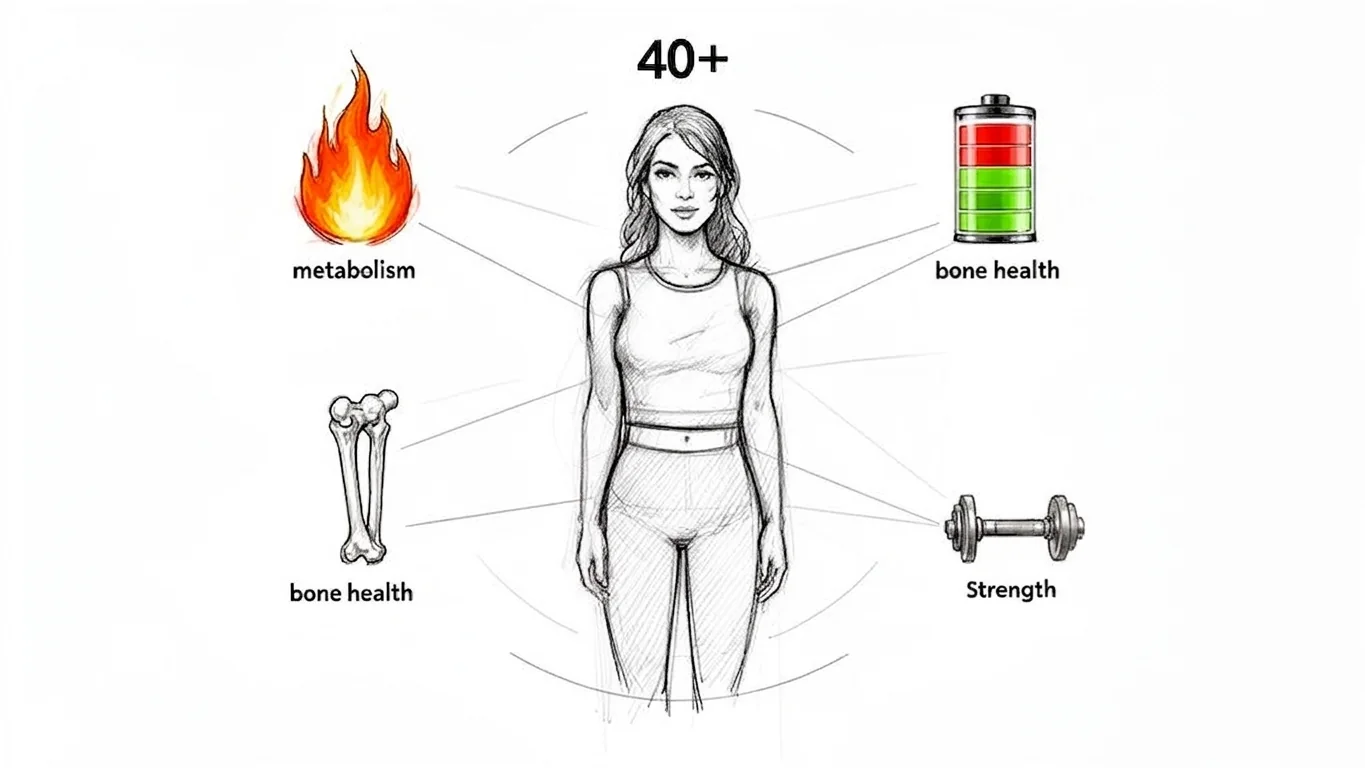
Why bone loss speeds up after 40
Estrogen is one of your skeleton's best protectors. It keeps a natural brake on the cells that break bone down (called osteoclasts). As estrogen declines through perimenopause and menopause, that brake comes off and bone breakdown accelerates.
The numbers are real: women lose bone fastest in the years right around menopause — roughly 1–2% a year, and up to about 10% in the first five years after their last period, with some women losing 10–20% (Cleveland Clinic). That's why your 40s — before and during that transition — are the window where prevention pays off most.
Bone isn't just calcium — it's built on protein
Most of us picture bone as a solid block of calcium. It's actually more like reinforced concrete: a flexible protein scaffold — mostly a protein called collagen — with minerals (calcium and phosphate) packed onto it for hardness. The protein framework gives bone its ability to bend a little without snapping; the minerals give it compressive strength.
That scaffold is a big part of the structure — the protein matrix makes up roughly a third of bone by weight, and collagen alone accounts for about 90% of bone's protein. So if you're short on protein, you're short on the very material your body uses to build and repair the frame that holds calcium in place. Protein isn't a side note in bone health — it's a building block.
"Doesn't protein leach calcium from bones?" — the myth, cleared up
You may have heard that a high-protein diet makes your body pull calcium out of your bones. This came from an old idea called the "acid-ash hypothesis." It sounds logical, but when researchers actually measured it, it didn't hold up.
A meta-analysis (2009) found no evidence that a higher dietary "acid load" causes a net loss of calcium from the body or promotes bone loss. In fact, reviews of the human research show the opposite: protein works with calcium to improve calcium absorption and support bone — and higher protein intake is generally linked to better bone density , not worse (review of protein & skeletal health). The one caveat: this holds when your calcium intake is adequate. So the goal isn't protein or calcium — it's both.
How Much Protein for Bone Health?
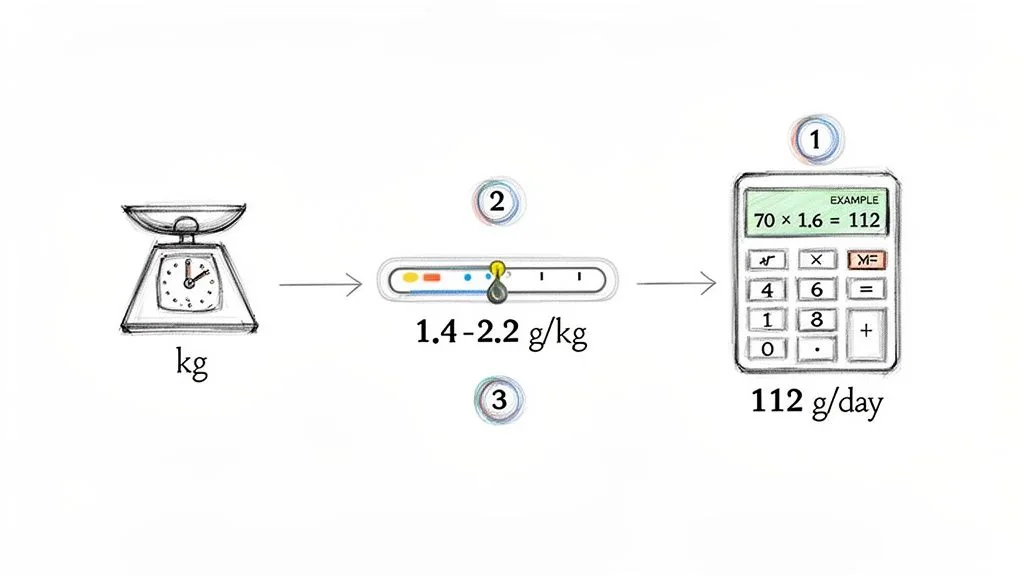
The same target that supports muscle after 40 supports bone: aim for roughly 1 gram of protein per pound of body weight per day (about 2.2g per kilogram), spread across your meals. This is well above the old baseline "RDA" (the government's minimum-to-prevent-deficiency figure of 0.8g/kg) — and an international expert panel concluded that older adults genuinely need more than that minimum to protect muscle and bone (PROT-AGE position paper, 2013). A more recent systematic review of older adults backs this up: protein intakes above the RDA were linked to better bone density, with no harm to bone (systematic review & meta-analysis, 2019).
Not sure what your number is? Start here:
The best foods for bone health
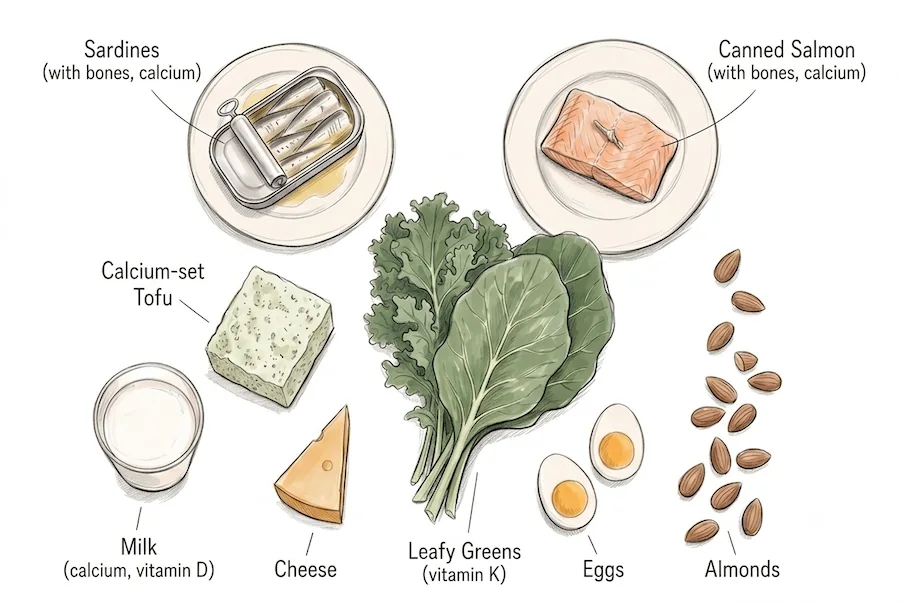
The most bone-protective foods do double duty: they deliver protein and the minerals bone needs (especially calcium and vitamin D). A few standouts, strongest first:
- Canned fish with edible bones (sardines, canned salmon) — arguably the single most complete bone food: protein, plus real absorbable calcium from the soft bones, vitamin D, and omega-3. One can of sardines has roughly 350mg of calcium.
- Calcium-set tofu — tofu made with calcium sulfate is a plant-based two-for-one (check the label for "calcium sulfate"); a serving can rival dairy for calcium.
- Dairy — milk, cheese & yogurt. Classic calcium-plus-protein. One honest note: Greek yogurt is strained, which boosts its protein but lowers its calcium versus regular yogurt or milk — so enjoy it for the protein, and lean on milk, regular yogurt, or the foods above for calcium.
- Leafy greens — collard greens, kale, and bok choy offer well-absorbed plant calcium (collards especially, with little of the oxalate that blocks absorption in spinach).
- Eggs — quality protein, plus a little vitamin D and vitamin K in the yolk.
- Edamame & almonds — protein with a calcium boost to round things out.
Here's how the top bone-friendly foods stack up on the two nutrients bone needs most — protein and calcium:
| Food | Serving | Protein | Calcium |
|---|---|---|---|
| Canned sardines (with bones) | 1 can (3.75 oz) | ~23 g | ~350 mg |
| Canned salmon (with bones) | 3 oz | ~17 g | ~230 mg |
| Calcium-set tofu* | ½ cup | ~11 g | ~250–430 mg |
| Plain yogurt (regular / low-fat) | 1 cup | ~11 g | ~450 mg |
| Milk | 1 cup | ~8 g | ~300 mg |
| Collard greens (cooked) | 1 cup | ~4 g | ~270 mg |
| Edamame (cooked) | 1 cup | ~18 g | ~100 mg |
| Almonds | 1 oz | ~6 g | ~75 mg |
| Eggs | 2 large | ~12 g | ~55 mg |
*Calcium-set tofu varies by brand — check the label for "calcium sulfate." Values approximate, from USDA FoodData Central.
Eating plant-based? You can absolutely build bone-friendly meals — see our guide to high-protein vegan meals for women over 40 for how to hit your protein target without animal products.
Protein's supporting cast: calcium, vitamin D & K
Protein builds the frame, but bone needs a few teammates:
- Calcium — the main mineral. Most guidance for women over 40 lands around 1,000–1,200mg a day; food-first is ideal.
- Vitamin D — helps you actually absorb the calcium you eat. Many women run low, especially in winter — worth asking your doctor to check.
- Vitamin K — found in leafy greens; helps direct calcium into bone.
A quick, honest note: Just Protein is a food-and-nutrition brand, not a supplement seller. Food is the best place to start, and whether you need any supplement — including vitamin D — is a conversation for you and your doctor, ideally guided by a simple blood test.
The overlooked half of bone health: don't fall
Here's what makes weak bones actually dangerous: a fall. And the stakes climb with age. Among older adults, a broken hip carries a one-year mortality of roughly 20–30%, and fewer than half of survivors regain their previous independence (Health in Aging). This isn't meant to scare you — it's meant to reframe the goal: protecting bone is really about protecting your independence for decades to come.
The powerful part: the same habits that build bone also prevent falls. Protein feeds muscle; muscle gives you the strength and balance to catch yourself. That's why bone health and holding onto muscle after 40 are really one project — and why strength training belongs alongside your protein plan.
How to Increase Bone Density After 40 (What You Can Control)
Wondering how to increase bone density after 40? Here's the honest answer: once you're past your 20s it's mostly about slowing the loss — but the right habits can still build a little, and every one of them is in your control. None are dramatic; done consistently, they're how you protect your future self:
- Hit your protein target, spread across meals — front-load breakfast, and lean on the bone-friendly foods above.
- Pair protein with calcium and vitamin D — food-first; check your D level with your doctor.
- Lift heavy-ish and add impact. Bone responds to being loaded. Resistance training plus a little impact (jumping, hopping, brisk stair-climbing) signals bone to stay strong. Even short, regular sessions count.
- Protect your balance — simple daily practice (like standing on one leg while brushing your teeth) is free fall insurance.
- Ask about a baseline bone scan. A DEXA scan is a quick, low-radiation X-ray that measures bone density. Routine screening often starts at 65, but some experts — like Dr. Vonda Wright — suggest a baseline around 40 so you can track changes early. Ask your doctor whether it's right for you.
Frequently Asked Questions
Does eating a lot of protein weaken your bones?
No — that's an outdated belief. The old "acid-ash" idea suggested protein pulls calcium from bone, but when researchers measured it, higher protein did not cause net calcium loss. Reviews actually show protein works with calcium to support bone density. The key is getting enough calcium alongside your protein.
How much protein do I need for bone health?
Roughly 1 gram per pound of body weight per day (about 2.2g/kg), spread across meals — the same target that supports muscle after 40, and well above the old bare-minimum RDA. Pair it with adequate calcium (around 1,000–1,200mg/day) and vitamin D.
What foods are best for bone health?
Foods that deliver both protein and calcium: canned sardines or salmon with the soft bones (a calcium standout, plus vitamin D and omega-3), calcium-set tofu, dairy like milk and yogurt, and low-oxalate leafy greens such as collards, kale, and bok choy — with eggs and edamame to round things out. Note that Greek yogurt, being strained, is higher in protein but lower in calcium than regular yogurt or milk.
Can I still build or protect bone in my 40s and 50s?
Yes. You reach peak bone mass in your 20s, so after that it's mostly about slowing loss and staying strong — and diet plus resistance and impact training genuinely help. Starting in your 40s, before the fastest menopausal bone loss, is the highest-leverage time to act.
How can I increase bone density after 40?
After your 20s you mostly slow bone loss rather than dramatically increase density — but the right habits still make a real difference. The biggest levers: eat enough protein (roughly 1g per pound of body weight) alongside adequate calcium (about 1,000–1,200mg a day) and vitamin D; do regular resistance training plus a little impact (bone strengthens when it's loaded); and protect your balance to avoid falls. Consistency beats intensity.
Do I need calcium or vitamin D supplements?
Not necessarily — food-first is best, and many women meet calcium needs through diet. Vitamin D is the one many people run low on, especially in winter. Whether to supplement is a decision for you and your doctor, ideally based on a blood test rather than guesswork.
This article is for education only and is not medical advice. Just Protein is not a medical provider — we summarize published research and cite our sources so you can verify them; decisions about bone density, osteoporosis, screening, supplements, or medication belong with your doctor.