
High protein vegan meals for women over 40: science-backed strategies and meal blueprints
TL;DR
- Women over 40 need approximately 1g of protein per pound of body weight daily, plus a 15% buffer for plant-based sources — because your body absorbs and uses plant protein a little less efficiently than animal protein (what scientists call lower "bioavailability").
- Distribute protein evenly across three meals (35–40g each) rather than loading it into dinner—this triggers consistent muscle protein synthesis (your body's muscle-building process) throughout the day.
- Build every meal around a protein anchor (tofu, tempeh, lentils, edamame) combined with a fiber-rich carb and healthy fat to hit both total protein and the critical 3g leucine threshold (leucine is a protein building block that acts as the main "on switch" for building muscle).
- Firm tofu meets the 3g leucine target in a solid serving, and tempeh comes close; legume-based meals need pairing with seeds or nuts (like pumpkin seeds) to get there.
- Start with breakfast as your protein-first meal—hitting 35–40g at breakfast stabilizes blood sugar, suppresses hunger, and maximizes your muscles' early-window repair response.
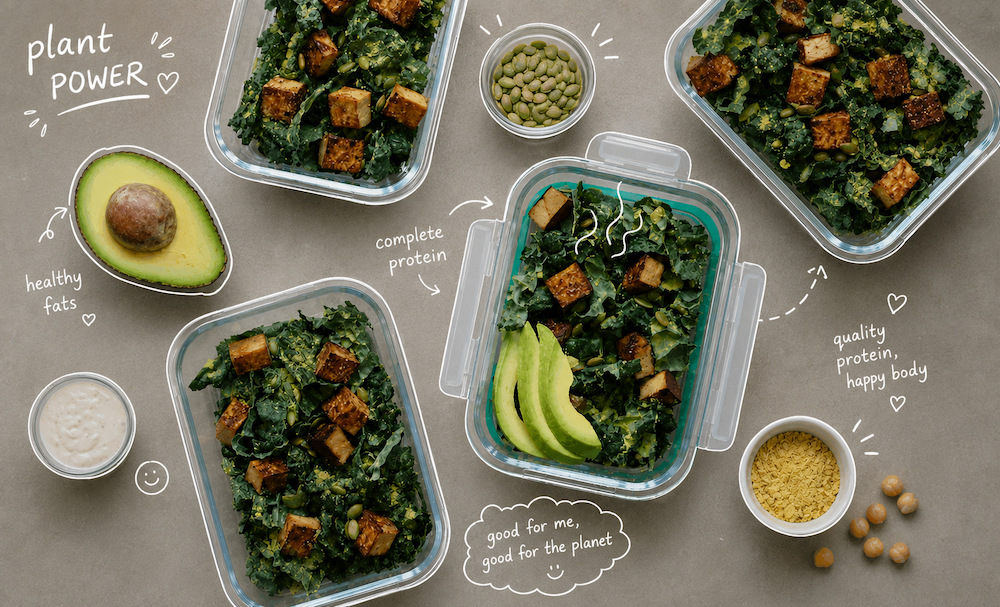
High protein vegan meals are entirely achievable — but they require more intention than simply eating more plants. For women over 40, the protein target shifts significantly. Dr. Stacy Sims recommends approximately 2.2g per kilogram of body weight per day — often simplified as roughly 1g per pound — with an additional 15% added for those eating plant-based, since plant proteins are digested less efficiently than animal sources. That works out to a minimum of 35–40g of protein per meal.
For context, the standard RDA (Recommended Dietary Allowance — the government's baseline) sits at just 0.8g/kg — a threshold designed to prevent deficiency, not support an active body that is working to maintain muscle, bone density, and energy through hormonal changes. An international panel of experts (the PROT-AGE group) concluded that older adults actually need well above the RDA — at least 1.0–1.2g/kg per day, and more if they're active — to hold onto muscle (PROT-AGE position paper, 2013).
The foods that make this possible — tofu, lentils, edamame, tempeh, seeds, and legumes — are all genuinely high in protein. The key is knowing how to combine them so that each meal hits the threshold that actually triggers muscle protein synthesis. That is what this guide covers.
Why Protein Becomes So Important for Women After 40
After 40, your body becomes less efficient at converting the protein you eat into muscle tissue — a process called anabolic resistance. Declining estrogen turns down a key muscle-growth signal inside your cells (scientists call it mTOR), which makes muscle-building harder. The practical result: you need more protein — and more leucine — per meal than you did in your 30s to get the same muscle-building response (systematic review on the leucine "trigger" in older adults, 2021).
This matters across several areas of health:
- Muscle mass: Lean muscle is metabolically active tissue. Losing it gradually — which happens when protein intake is too low — affects body composition, strength, and how efficiently your body uses energy.
- Bone density: Protein forms the structural matrix of bone. As estrogen declines during perimenopause and menopause, adequate protein intake becomes one of the most practical nutritional levers for maintaining bone strength.
- Blood sugar and fullness: Protein-rich plant meals help stabilize blood sugar between meals, which reduces energy dips and hunger — both of which tend to become more pronounced in this life stage.
The shift here is not extreme. It means being intentional about hitting 35–40g of protein per meal rather than treating protein as an afterthought. That threshold is where muscle protein synthesis in women over 40 tends to become meaningfully activated.
Figuring Out Your Daily Plant Protein Goal
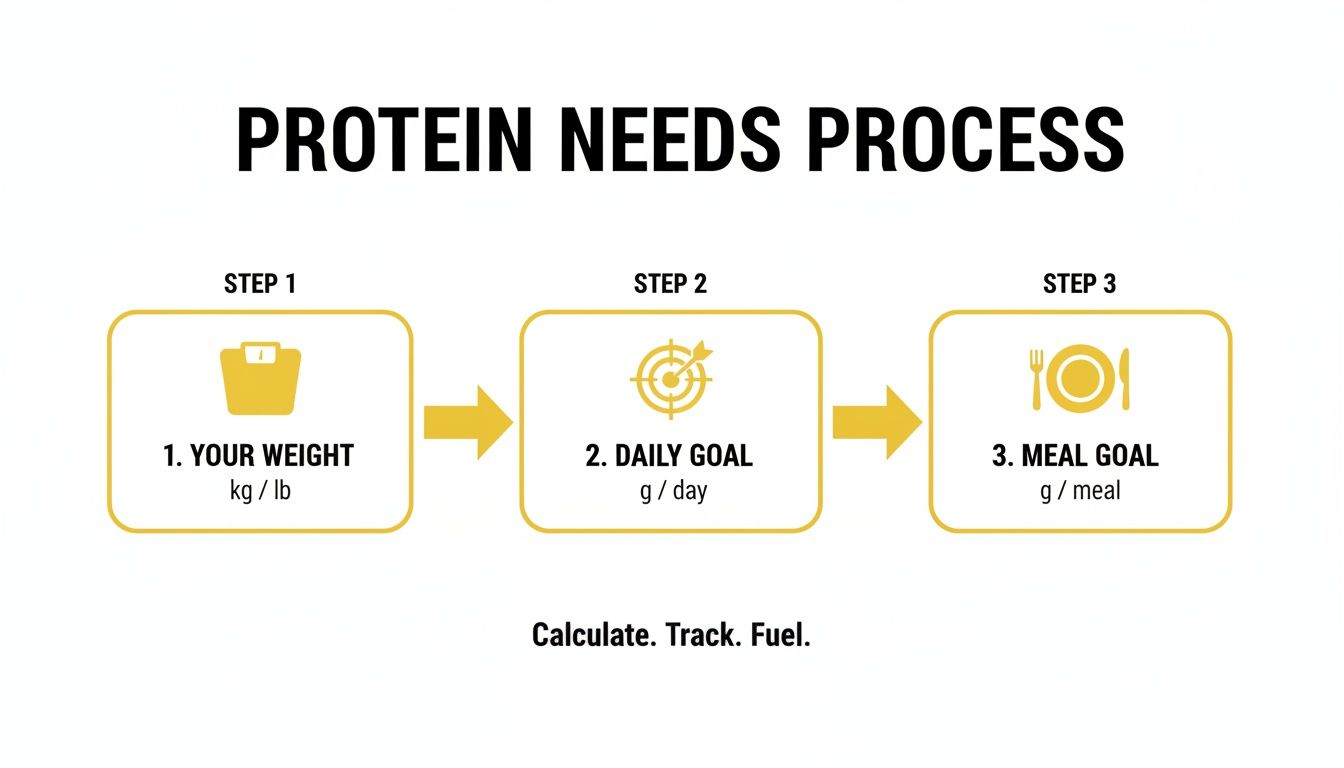
Start with a clear daily target: ~2.2g of protein per kilogram of body weight, or roughly 1g per pound. Because your body absorbs plant protein a little less efficiently (that lower "bioavailability" again), add a 15% buffer to that daily total. So if you weigh 140 pounds, you're aiming for around 140g of protein per day from food, then bump that to roughly 160g to account for the plant-based adjustment.
From a Daily Total to a Per-Meal Goal
Hitting your daily number matters less than how you distribute it. Because your muscle-building process needs a strong enough leucine signal at each meal — at least 3g of leucine, the protein building block that flips on that muscle-growth switch — spreading protein evenly across three meals is far more effective than loading most of it into dinner.
The practical target: 35–40g of protein per main meal. Here's what that looks like on a plate:
- Lentil soup + quinoa + hemp seeds: ~18g + 8g + 10g = 36g
- Tofu scramble + nutritional yeast + black beans: ~20g + 8g + 7g = 35g
- Chickpea salad sandwich + edamame: ~18g + 8g + 9g = 35g
These aren't large meals — they're strategic ones. Building high protein vegan meals around this per-meal framework is more practical than tracking every gram throughout the day.
Some days you'll hit the target easily. Other days you won't. Consistency over weeks matters more than perfection on any single day. A free protein tracker app can help you find a personalized starting range if you want more precision.
Not sure of your number? The free vegan protein calculator gives you a personalized daily target in seconds.
How to Build a High Protein Plant Based Plate
Assembling a strong plant-based plate doesn't require rigid rules — it requires a repeatable structure. Start with a strong protein anchor, add a fiber-rich carbohydrate, and include a healthy fat. That's the whole formula.
The three components of a functional plate:
- Protein anchor: Tofu, tempeh, lentils, edamame, or pea protein. This is what you build the meal around, not after.
- Fiber-rich carbohydrate: Quinoa, brown rice, or sweet potatoes for sustained energy and gut health.
- Healthy fat: Avocado, seeds, or nuts — these support hormone function and help absorb fat-soluble vitamins.
Pairing Proteins for a Complete Amino Acid Profile
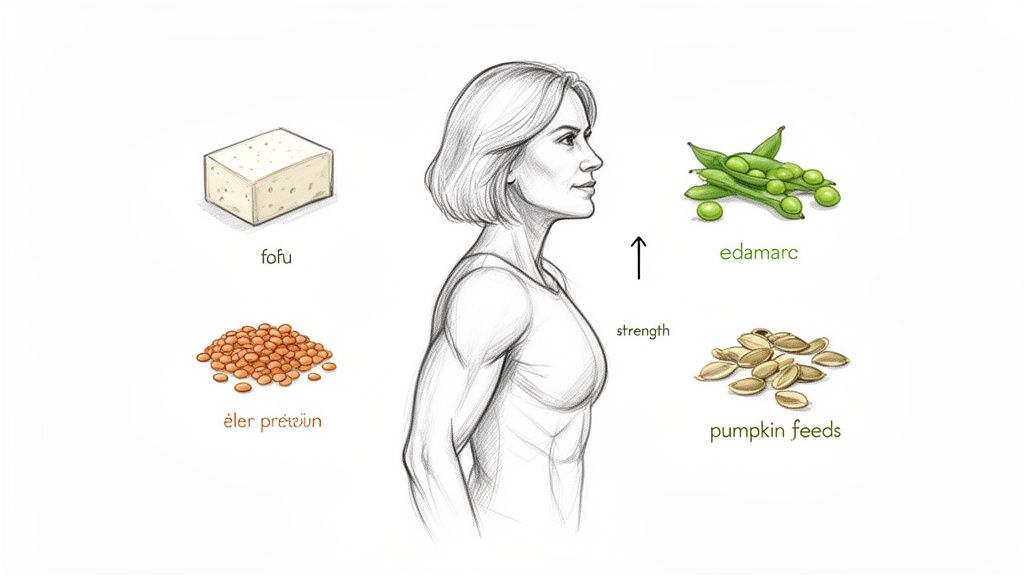
Your body needs nine "essential" amino acids — protein building blocks it can't make on its own, so they have to come from food. Animal proteins usually contain all nine in good amounts (that's what "complete protein" means), while most plant proteins run low in one or two. The fix is straightforward: combine legumes with grains (beans and rice is the classic example), or legumes with nuts and seeds (lentils with pumpkin seeds, or hummus made with chickpeas and tahini). You don't need to pair them in the same meal — variety across the day is enough. This "complementary proteins" idea is well supported in the research comparing plant and animal protein for muscle (critical review, 2019).
Hitting Your Leucine Target
Use this table to plan accordingly:
| Plant Protein Source | Serving Size | Protein (g) | Estimated Leucine (g) |
|---|---|---|---|
| Firm tofu | 1 cup (250g) | ~40g | ~3.2g |
| Tempeh | 1 cup (166g) | ~34g | ~2.4g |
| Edamame (shelled) | 1.5 cups (230g) | ~27g | ~1.9g |
| Lentils (cooked) | 1.5 cups (300g) | ~27g | ~2.2g |
| Pumpkin Seeds | 1/2 cup (64g) | ~19g | ~1.5g |
| Pea Protein Isolate | 1 scoop (30g) | ~24g | ~1.9g |
Tofu's protein varies a lot by type and brand — from ~8g per 100g (soft) up to ~17g (firm/extra-firm, calcium-set) — so check your label. The figures here assume firm tofu.
Firm tofu clears the 3g leucine threshold in a solid serving, and tempeh comes close (~2.4g) — a small pairing like edamame or a spoon of seeds gets it there. Lentil-based meals fall shorter, so add a half cup of pumpkin seeds to help close the gap while boosting total protein toward the per-meal target.
Plant-Based Meal Blueprints to Hit Your Protein Goals
These templates are built around the 35–40g per-meal target, with each meal hitting or approaching the 3g leucine threshold. Treat them as flexible frameworks — swap vegetables, grains, and spices based on what you have. The protein sources stay consistent; everything else is negotiable.
Breakfast Blueprints
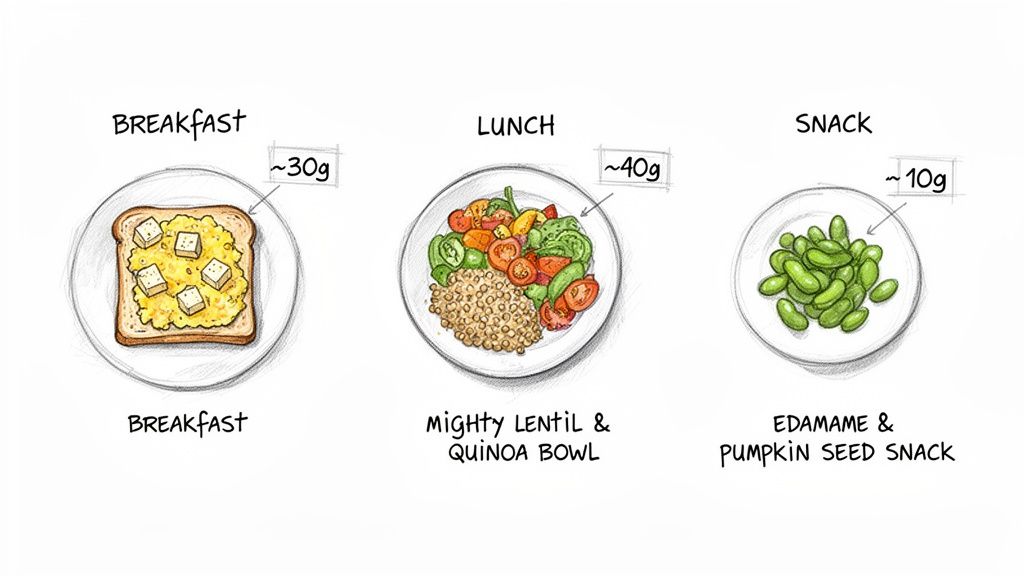
1. The Power Tofu Scramble
- The Blueprint: Crumble extra-firm tofu into a hot pan and sauté with turmeric, a pinch of black salt (also called kala namak — it gives an eggy flavor), and vegetables like bell peppers and spinach.
- Why It Works: Extra-firm tofu is one of the densest leucine sources in plant-based eating. Add nutritional yeast for extra protein and a cheesy flavor, then serve alongside black beans or high-protein whole-grain toast to close the leucine gap.
- Estimated Protein: ~38g
- Estimated Leucine: ~3.1g
2. The Lentil Protein Smoothie
- The Blueprint: Blend unsweetened plant milk, a full scoop of pea protein isolate, frozen berries, spinach, and a half-cup of pre-cooked red lentils.
- Why It Works: Pea protein isolate contributes a concentrated leucine dose; red lentils add fiber and protein without altering taste or texture. Add a tablespoon of hemp seeds to push protein and healthy fats higher.
- Estimated Protein: ~40g
- Estimated Leucine: ~3.2g
Lunch and Dinner Blueprints
These are designed for batch cooking. Building your main meals around these protein-rich foundations means you hit your targets consistently, not just on good days.
3. The Lentil & Quinoa Bowl
- The Blueprint: Combine cooked green or brown lentils with quinoa, roasted broccoli and sweet potato, and a tahini-lemon dressing.
- Why It Works: Lentils and quinoa together cover the full essential amino acid spectrum. Add ¼ cup pumpkin seeds as a topping — they add crunch and push leucine meaningfully closer to threshold.
- Estimated Protein: ~35g
- Estimated Leucine: ~2.8g
4. The Tempeh & Edamame Stir-Fry
- The Blueprint: Pan-fry cubed tempeh until golden. Stir-fry with edamame, bok choy, and carrots in a soy-ginger sauce. Serve over brown rice.
- Why It Works: Tempeh and edamame are both complete proteins that clear the 3g leucine threshold combined. Cook the tempeh and rice ahead — stir-frying the vegetables fresh takes under ten minutes.
- Estimated Protein: ~42g
- Estimated Leucine: ~3.4g
5. The Three-Bean Chili
- The Blueprint: Simmer black beans, kidney beans, and pinto beans in a spiced tomato base with onion and bell pepper.
- Why It Works: Different beans provide overlapping amino acid profiles, building a solid protein base. Top with unsweetened soy yogurt and hemp seeds to push the total higher.
- Estimated Protein: ~33g
- Estimated Leucine: ~2.6g
Note on the chili: At ~2.6g leucine, this meal sits just below the 3g threshold. Pair it with an edamame side or a hemp seed topping to close that gap.
High-Protein Snack
The Soy Yogurt Bowl
Plain, unsweetened soy yogurt tends to be significantly higher in protein than other plant-based yogurt options — check the label and aim for at least 10g per cup.
- The Blueprint: Top one cup of high-protein soy yogurt with walnuts and fresh berries. Stir in a tablespoon of chia or hemp seeds before adding toppings.
- Estimated Protein: ~18–22g
Building these meals into your weekly rotation makes hitting your daily protein target far more manageable. For a downloadable meal planning guide, search for a reputable plant-based nutrition resource or registered dietitian who works with active women.
Smart Strategies for Protein Timing and Spacing
How much protein you eat matters, but when you eat it matters almost as much. Most women load the majority of their protein into dinner — a pattern that works against muscle maintenance, especially after 40. Spreading protein evenly across three meals gives your muscles a consistent signal to repair and stay strong, which is far more effective than one large dose at the end of the day.
Start Strong at Breakfast
The most impactful shift you can make is treating breakfast as a protein-first meal. Hitting 35–40g at breakfast delivers real benefits:
- Appetite control: High-protein breakfasts suppress hunger hormones more effectively than carb-heavy ones, reducing the urge to snack before lunch.
- Stable blood sugar: Protein slows glucose absorption, helping you avoid the mid-morning energy dip that follows toast or cereal.
- Early muscle signal: After an overnight fast, your muscles are ready to respond — a strong protein dose first thing takes advantage of that window.
Space It Across Three Meals
Think of your daily protein goal as three separate targets of 35–40g, not one number to accumulate by bedtime. This creates a steady supply of amino acids for muscle repair, hormone production, and energy regulation throughout the day. You don't need to eat on a rigid schedule — just anchor protein to each main meal.
Post-Workout Timing
The strict 30-minute post-workout window is outdated. Your muscles remain primed for repair for up to two hours after exercise. Your next well-planned meal will do the job — no protein shake required the moment you finish training.
Got Questions About Plant-Based Protein After 40? Let's Talk.
Here are the questions I hear most often from women making this shift — answered directly.
Can I Really Get Enough Leucine on a Plant-Based Diet?
Yes, but it requires building meals around the right sources. Tofu, tempeh, edamame, lentils, pumpkin seeds, and pea protein powder are your best options. The target is 3g of leucine per meal — so make one of these the foundation of every plate, not a side note.
Will Eating This Much Protein Make Me Bulky?
No. Women over 40 lack the hormonal environment to build significant bulk. The 35–40g per-meal target is calibrated to preserve and build lean muscle — the tissue that supports strength and metabolic health — not mass. Resistance training at this protein intake makes you harder, not bigger.
I Feel Bloated When I Eat a Lot of Beans and Lentils
This is a fiber adaptation issue, not a reason to avoid legumes. Fix it by increasing portions gradually over two to three weeks. Soak dried beans overnight and rinse canned beans thoroughly — this removes much of what causes gas. Stay well-hydrated. If your gut is still adjusting, lean on tofu, tempeh, and quinoa in the meantime; they tend to digest more easily.
Do I Need a Protein Supplement?
Not necessarily, but a quality pea protein powder is a practical tool for busy mornings or days when whole-food sources fall short. If you use one, check that it delivers at least 3g of leucine per serving. A protein tracker app can help you see where you're hitting the mark and where you're coming up short.
Frequently Asked Questions
How do I know if my plant-based meal is hitting the leucine threshold?
Use the leucine table provided in the article to identify your protein source's leucine content. Firm tofu can reach ~3g in a solid serving and tempeh comes close; lentil-based meals typically fall short and need a seed topping like pumpkin seeds (½ cup adds ~1.5g leucine). Track for a few days using a free protein app to see where your meals stand—you'll quickly recognize which combinations work.
Is it okay to skip breakfast protein if I eat more at lunch and dinner?
Not ideal. A strong breakfast protein dose activates muscle repair after an overnight fast and stabilizes blood sugar for hours. Skipping it and loading protein into dinner alone leaves your muscles without signals to repair during the day and often leads to mid-morning energy crashes. Distributing protein across three meals is far more effective for women over 40, even if total daily intake stays the same.
Can I combine incomplete plant proteins throughout the day instead of in one meal?
Yes—you don't need complete amino acid profiles at every single meal. Combining lentils with rice at lunch and nuts with seeds at dinner across the day works fine. However, hitting the 3g leucine threshold per meal is what triggers muscle protein synthesis, so focus on ensuring each main meal has that signal rather than spreading complementary proteins across the day.
What if I'm sensitive to legumes—can I still hit my protein target?
Absolutely. Tofu, tempeh, quinoa, pea protein powder, nuts, seeds, and soy products are all gentler on digestion while still hitting high protein and leucine targets. If you're avoiding legumes entirely, stack your meals around tofu, tempeh, and pea protein isolate with strategic seed additions. You may need slightly larger portions since these sources vary in density, but it's entirely doable.
Do I need to track protein obsessively every single day?
No. Use a tracker for 3–5 days to identify which meals naturally hit 35–40g and which fall short, then build a personal rotation of go-to meals. After that, consistency over weeks matters more than daily perfection. Most women find that once they have five to seven reliable meal templates, hitting their target becomes automatic without ongoing tracking.
This article is for education only and is not medical advice. Just Protein is not a medical provider — we summarize published research and cite our sources so you can verify them; decisions about your diet, protein needs, supplements, or any medical condition belong with your doctor or a registered dietitian.
