
Foods for Insulin Resistance: A Guide for Women Over 40
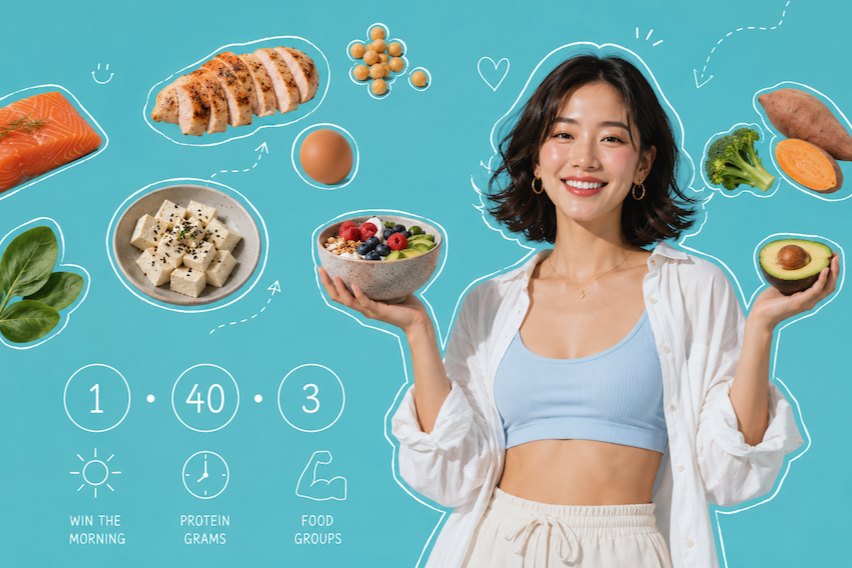
TL;DR
- After 40, declining estrogen makes your cells more insulin-resistant — even if nothing about your eating has changed. It's physiological, not a willpower problem.
- The one principle behind every food below: steady your blood sugar. Build meals from fiber + protein + healthy fat, and go easier on refined carbs and sugar.
- Highest-impact foods: legumes, whole grains (oats/barley/quinoa), non-starchy vegetables, quality protein, fatty fish, nuts/seeds, and berries.
- Protein at every meal — especially breakfast — is the simplest lever to blunt the glucose swings that drive cravings and belly fat.
- Food is powerful but supportive: if you've been told you have insulin resistance, PCOS, or prediabetes, partner with your doctor — this doesn't replace medical care.
If your body feels like it changed the rules after 40 — more belly fat, stronger cravings, energy that dips and spikes — insulin resistance is often part of the story. The reassuring part: what you put on your plate is one of the most direct levers you have. Everything below is grounded in published research and cited, so you can act on what's in your hands.
Why insulin resistance rises after 40
First, in plain terms: insulin is the hormone that moves sugar out of your blood and into your cells for energy. With insulin resistance, your cells stop responding to it well — so sugar lingers in your blood, your body pumps out even more insulin to cope, and over time that fuels cravings, belly fat, and rising blood sugar.
As estrogen declines through perimenopause and menopause, your cells become less sensitive to insulin, and your body starts storing more fat around the middle — which itself worsens insulin resistance. This shift can raise blood-sugar and type-2-diabetes risk even if your diet hasn't changed (Harvard Health). In other words: it's not that you suddenly lost discipline — the hormonal backdrop changed.
That's also why food has real leverage here: the way you build meals directly influences the blood-sugar swings your body is now less equipped to handle.
The one principle: steady your blood sugar
Every "insulin resistance food" below works through the same mechanism — slowing how fast glucose hits your bloodstream so you avoid the spike-and-crash cycle that fuels cravings, energy dips, and fat storage. The formula for any meal:
- Fiber (vegetables, legumes, whole grains) — slows glucose absorption
- Protein (at every meal, especially breakfast) — blunts the post-meal spike
- Healthy fat (olive oil, nuts, avocado) — further steadies the rise
Prioritizing protein at every meal — starting with breakfast — is repeatedly cited as the first step for blood-sugar balance in this life stage. (If you're not sure you're getting enough, see how much protein women over 40 need.)
The best foods for insulin resistance
1. Legumes (beans, lentils, chickpeas)
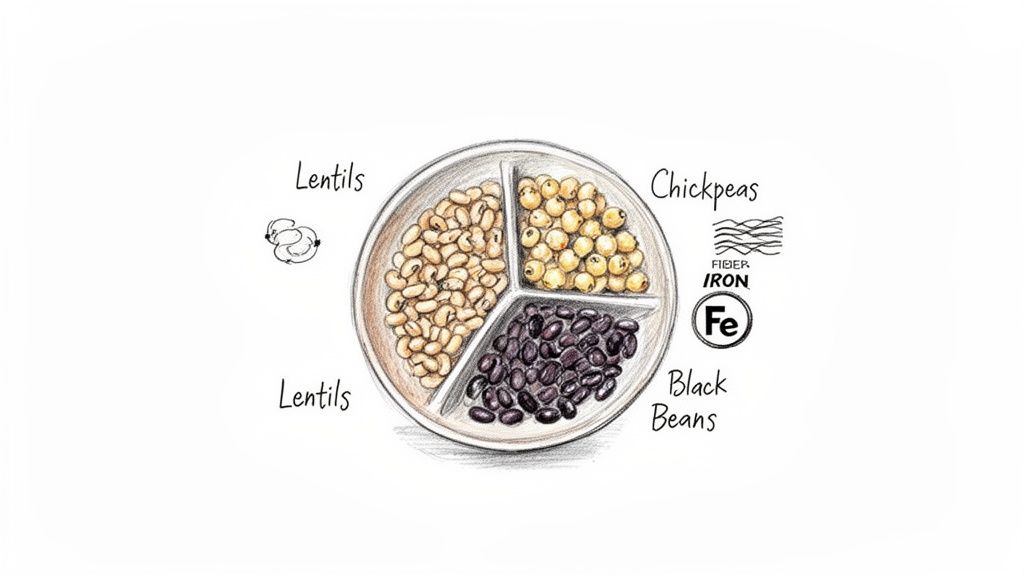
Legumes are arguably the single best food group here — they combine soluble fiber, resistant starch (a fiber-like starch your body doesn't fully digest), and plant protein — and are consistently linked to better insulin sensitivity and blood-sugar control (Cleveland Clinic). There's even a "second-meal effect": your gut bacteria turn that resistant starch into helpful compounds that keep blood sugar steadier — not just at that meal, but hours later at your next one (whole grains & legumes review).
2. Whole grains — oats, barley, quinoa
Whole (not refined) grains keep their fiber, and the beta-glucan in oats and barley — a soluble fiber that turns gel-like in your gut — slows carbohydrate absorption for steadier glucose. Higher fiber intake is associated with reduced insulin resistance in a systematic review, and whole-food fiber appears more useful than isolated supplements (CDC). Swap white bread/rice for oats, barley, quinoa, or whole grains. (Yes — oats are a whole grain, and great in their whole form. The catch is eating them plain and carb-only, or as instant/sweetened oatmeal and oat milk, where they behave more like fast carbs — see the breakfast section below.)
3. Non-starchy vegetables & leafy greens
"Non-starchy" simply means low in starch (carbs) — leafy greens, broccoli, cauliflower, peppers, zucchini, cucumber, tomatoes, green beans, asparagus, mushrooms. They're high in fiber and water with very little glucose impact, so filling half your plate with them is the easiest way to lower a meal's blood-sugar load. (The starchy vegetables — potatoes, sweet potatoes, corn, peas, winter squash — raise blood sugar more, so treat those as your carb portion, not a free-for-all.)
4. Quality protein — fish, eggs, poultry, tofu, Greek yogurt
Protein is the steadying anchor of every meal: it slows digestion and blunts the glucose rise, while protecting the muscle that keeps your metabolism (and insulin sensitivity) higher. This is the Just Protein throughline — an adequate, evenly-spread protein intake matters more than any single "superfood."
5. Fatty fish (salmon, sardines) & omega-3s
Omega-3 fats (the healthy fats concentrated in fatty fish) are anti-inflammatory and show promise for insulin sensitivity — a meta-analysis found benefit particularly in people already showing metabolic issues (the effect was neutral in healthy people). Aim for fatty fish a couple of times a week.
6. Nuts, seeds & healthy fats
Almonds, walnuts, chia, flax, olive oil, and avocado add fiber and fat that slow glucose absorption — a small handful of nuts or a scoop of seeds turns a carb-heavy snack into a steadier one.
7. Berries (lower-sugar fruit)
If you want something sweet, berries are the smart pick — lower in sugar, high in fiber and polyphenols (protective plant antioxidants), and gentler on blood sugar than tropical or dried fruit.
| Food group | Why it helps | Easy picks |
|---|---|---|
| Legumes | Fiber + resistant starch + protein; second-meal effect | Lentils, chickpeas, black beans |
| Whole grains | Beta-glucan slows glucose | Oats, barley, quinoa |
| Non-starchy veg | Fiber, minimal glucose load | Greens, broccoli, peppers |
| Protein | Blunts the post-meal spike | Fish, eggs, tofu, Greek yogurt |
| Fatty fish / omega-3 | Anti-inflammatory; supports sensitivity | Salmon, sardines |
| Nuts & seeds | Fat + fiber slow absorption | Almonds, chia, flax |
| Berries | Lower-sugar, high-fiber fruit | Blueberries, raspberries |
What to go easy on
- Refined carbs — white bread, pastries, white rice (spike glucose fast)
- Sugary drinks — soda, juice, sweetened coffees (the biggest, quickest spike)
- Ultra-processed snacks — low fiber, easy to overeat
You don't have to be perfect — the goal is most meals built around fiber, protein, and fat, not zero carbs.
How to build an insulin-friendly plate
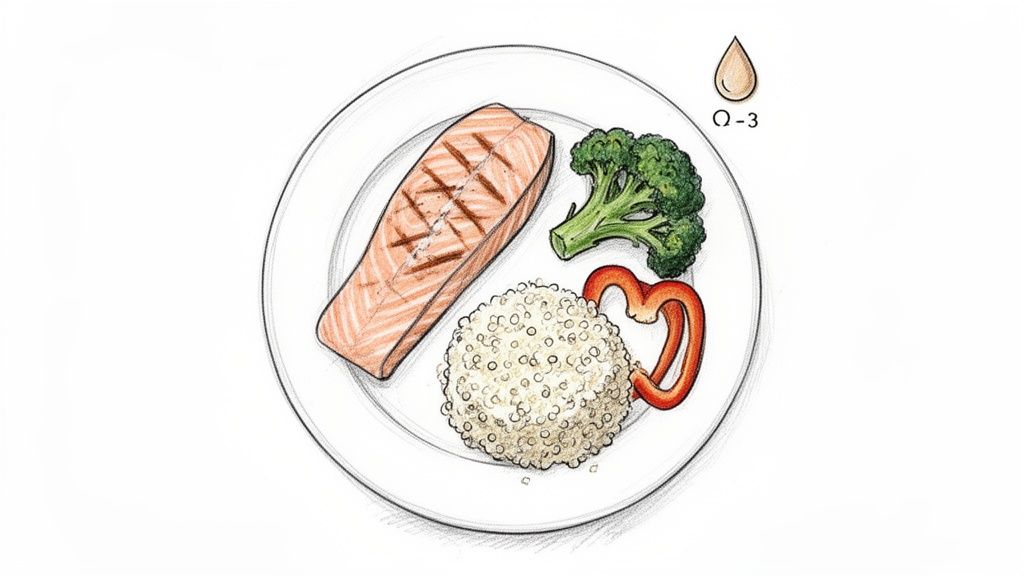
A simple, repeatable template:
- ½ plate non-starchy vegetables
- ¼ plate protein (fish, eggs, tofu, poultry, Greek yogurt)
- ¼ plate smart carbs (legumes or whole grains)
- A thumb of healthy fat (olive oil, avocado, nuts)
And the highest-leverage habit: make breakfast protein-forward (30–40g) instead of carb-heavy — it sets your blood sugar up for the whole day.
The breakfast trap — even a "healthy" one
Here's the most common mistake: a big bowl of oatmeal (or toast, cereal, or a fruit smoothie bowl) feels virtuous — but on its own it's mostly carbohydrate and light on protein, which means a fast morning glucose spike followed by the mid-morning crash and cravings. It's not that oats are "bad" (they're a whole grain, and their fiber genuinely helps) — it's that oats alone aren't a protein-first breakfast.
Watch your drinks, too: oat milk — especially sweetened or "barista" versions — is a sneaky one. Unlike whole oats, most of the fiber is gone, so it acts more like fast sugar, and a big oat-milk latte can spike your morning glucose all on its own. If you drink it, choose an unsweetened version — and make sure the rest of your breakfast brings the protein.
The easy fix: lead with protein. The simplest swap is Greek yogurt — a cup packs ~20g of protein — with berries and a spoonful of seeds or nuts. And if you love your oats, don't ditch them: anchor them by stirring in Greek yogurt or a scoop of protein and topping with nuts or seeds, so the bowl isn't carb-only.
Doable on a busy morning (all protein-first, barely any effort):
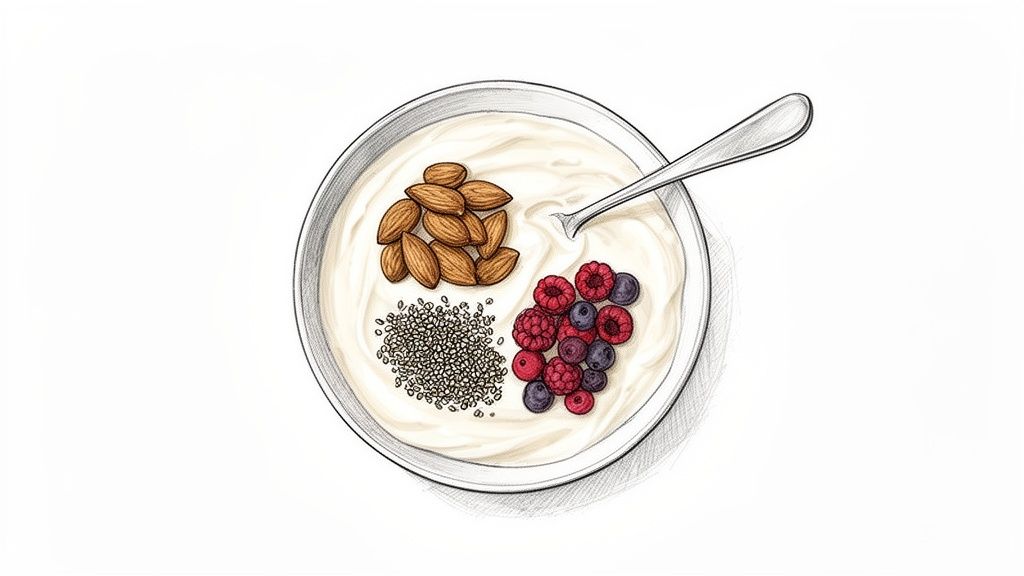
- Greek yogurt or skyr (a thick, high-protein Icelandic yogurt) + berries + seeds — 30 seconds
- Cottage cheese + fruit + a handful of walnuts
- Overnight oats, done right: the night before, stir rolled oats into Greek yogurt (plus chia and berries) in a jar and refrigerate — no cooking, grab it cold in the morning. The Greek yogurt is what makes it protein-first instead of just carbs.
- 2 boiled eggs (batch a few ahead) + a piece of fruit
- A protein smoothie: protein powder + Greek yogurt + a handful of spinach + berries
Honest limits
- Food is a powerful lever, but it works alongside — not instead of — medical care. Insulin resistance, PCOS (polycystic ovary syndrome), and prediabetes are diagnoses your doctor manages.
- Much of the human diet evidence is observational (it shows links, not definitive proof); these foods are low-risk and well-supported, but "improve insulin sensitivity" isn't a guaranteed outcome for everyone.
- If you've been told your blood sugar is high, or you're on medication, talk to your doctor before big dietary changes.
Frequently Asked Questions
What foods are best for insulin resistance?
Foods that slow glucose entry into the blood: legumes (beans, lentils, chickpeas), whole grains like oats and barley, non-starchy vegetables, quality protein, fatty fish, nuts and seeds, and berries. The common thread is fiber + protein + healthy fat, which blunt the blood-sugar spikes that drive insulin resistance.
Why does insulin resistance get worse after 40?
Declining estrogen in perimenopause and menopause makes cells less sensitive to insulin and shifts fat storage toward the belly, which further worsens it — often even without any change in diet. That's why the same eating habits can suddenly show up as cravings, belly fat, and energy swings.
Does protein help with insulin resistance?
Yes, indirectly and reliably: protein slows digestion and blunts the post-meal glucose spike, and it protects the muscle that keeps your metabolism and insulin sensitivity higher. Prioritizing protein at every meal — especially breakfast — is one of the simplest, highest-impact steps.
What should I eat for breakfast if I have insulin resistance?
Make it protein-forward and low in refined carbs. A common mistake is a big bowl of oatmeal, cereal, or toast alone — it feels healthy but it's mostly carbs, so it spikes your blood sugar. Lead with protein instead: Greek yogurt (~20g) with berries and seeds, eggs with vegetables, or a tofu scramble. (Love oats? Anchor them with Greek yogurt or a scoop of protein rather than eating them plain.) A protein-rich breakfast blunts the morning glucose spike and reduces cravings and energy crashes later in the day.
Can the right foods reverse insulin resistance?
Diet can meaningfully improve insulin sensitivity for many women, especially combined with movement, sleep, and stress management — but results vary, and it's not guaranteed or a substitute for medical care. If you have diagnosed insulin resistance, PCOS, or prediabetes, work with your doctor on a plan.
This article is for education only and is not medical advice. Just Protein is not a medical provider — we summarize published research and cite our sources so you can verify them; decisions about insulin resistance, PCOS, prediabetes, or medication belong with your doctor.
