

TL;DR
After 40, a shift called "Anabolic Resistance" means your muscles become less sensitive to protein signals.
Leucine is the key amino acid that triggers muscle repair. You need 2.5g–3g of Leucine per meal to "flip the switch."
The Daily Goal: Aim for 30–40g of high-quality protein at each meal to hit that threshold and protect your metabolism.
If you’ve noticed that your usual healthy habits aren’t yielding the same results they once did, you aren’t imagining it. For many women over 40, maintaining strength, energy, and body composition can suddenly feel like an uphill battle. This isn't a lack of willpower; it’s a normal biological shift—especially as we navigate perimenopause and menopause.
To stay vibrant, your body now requires a "clearer signal" from your food. That signal comes from Essential Amino Acids (EAAs)—nine non-negotiable ingredients that are the fundamental building blocks of your health. Your body cannot produce these on its own; it is counting on you to provide a steady supply through your diet.
The Science Behind the Shift: Anabolic Resistance
One of the key changes happening is a phenomenon called anabolic resistance. It sounds technical, but the concept is quite simple.
Think of your muscles as having "docking stations" for the amino acids from your food. In your younger years, these stations were highly sensitive. A serving of protein would arrive, dock easily, and send a strong signal to your muscles to repair and rebuild.
As estrogen levels fluctuate and decline with age, these docking stations can become less receptive. It’s as if they’ve turned down the volume on the signal from your food.
“ This means the same amount of protein from a meal might not trigger the same muscle-repair response it once did. Your body isn't broken; it just needs a clearer, stronger signal to get the message.”
This natural shift is why simply eating "enough" protein might not be sufficient anymore. The quality and timing of that protein become much more important now to overcome this resistance and continue supporting your muscle health, metabolism, and bone density.
Why It Takes More to Maintain Muscle
Because of anabolic resistance, your muscles now require a higher dose of essential amino acids—especially one called leucine—to initiate the muscle-building process effectively. Research shows that as we age, our muscles can start to ignore the standard protein signals they used to respond to so well.
This highlights a critical point: it's not just about the total grams of protein you eat in a day. It’s about getting a potent enough dose of high-quality protein at each meal to cross a higher activation threshold.
Here are some common signs that anabolic resistance might be affecting you:
A Subtle Loss of Strength: Perhaps finding it a bit harder to open a tight jar or lift a heavy bag of groceries.
Slower Recovery: Feeling sore for a day or two longer after activities that didn't used to be a big deal.
Changes in Body Shape: You might notice a shift toward less muscle tone, even if the number on the scale hasn’t changed much.
Seeing these signs isn't a cause for alarm. Think of it as your body giving you new information. This doesn’t mean you need extremes; it simply means you can learn to work with your body by making small, strategic tweaks to your meals.
For a deeper dive into the numbers, you can learn more about specific protein requirements for women over 40 in our detailed guide. Making these adjustments can make a significant difference in feeling strong and vital.
The Power of Leucine for Muscle and Metabolism
While all nine essential amino acids work as a team, one stands out as particularly important for women over 40: leucine.
Think of it as the ignition key for muscle protein synthesis. It’s the specific amino acid that signals your body to repair and build muscle—a process that’s absolutely critical for maintaining strength and supporting a healthy metabolism.
For years, the conversation around protein focused on the total grams per day. But a more effective strategy for midlife is to focus on the amount of leucine in each meal. It’s this amino acid that helps us work with the changes of anabolic resistance.
The Leucine Threshold: A Gentle Shift in Focus
Imagine you need to push a heavy door open. A light touch won't do it. You need to apply a certain amount of force before it begins to move.
Leucine works in a similar way for your muscles. You need to consume enough in one sitting to cross a specific "threshold" that sends a clear message: "It's time to rebuild!"
This is known as the leucine threshold. For many women over 40, research suggests that 2.5 to 3 grams of leucine per meal is an effective target. Hitting this amount sends a signal strong enough to overcome the muted response from anabolic resistance, ensuring the protein you eat gets put to good use.
“This simple shift—from just thinking about daily protein totals to focusing on per-meal leucine—can be a game-changer. It’s not about eating massive quantities of food; it's about making your meals work smarter for you.”
When you understand this, you can build meals that actively protect your muscle mass. This, in turn, helps keep your metabolism active and supports your bone density. You can dive deeper into this topic by exploring our resources on anabolic resistance.
How to Optimize Your Meals for Muscle Health
So, what does hitting that leucine target look like in real life?
To effectively stimulate muscle protein synthesis, research indicates that a meal containing around 30-40 grams of high-quality protein is beneficial. A portion this size typically provides the crucial 2.5-3 grams of leucine. While that might sound like a lot, it’s achievable with a bit of planning.
This isn’t about perfection. It’s about being intentional. It’s interesting—while over 99% of Americans get the bare minimum of essential amino acids, "minimum" may not be what's "optimal" for thriving in this life stage. You can discover more insights into how amino acid intake affects health outcomes in this recent research.
This approach offers powerful benefits that go beyond muscle:
Metabolic Support: Lean muscle is your body's metabolic engine, burning calories even at rest. Preserving it is key to a healthy metabolism.
Feeling Fuller, Longer: Meals rich in leucine-rich protein are very satisfying, which helps stabilize energy and reduce cravings.
Stronger Bones: Your muscles and bones are interconnected. Using your muscles sends signals to your bones to stay dense and resilient.
Focusing on leucine doesn’t require a complete diet overhaul. It simply means being more strategic with your food choices, turning each meal into an opportunity to fuel your strength.
Getting Your Essential Amino Acids From Food
The science is helpful, but what truly matters is what you put on your plate. The good news is you don't need complicated formulas or a restrictive diet to give your body what it needs. Hitting your EAA targets is completely doable with everyday foods.
This is a practical guide to building meals that support your muscle health, whether you eat animal products, follow a plant-based diet, or enjoy a mix of both.
Complete Animal-Based Protein Sources
Foods that contain all nine essential amino acids in effective amounts are called complete proteins. Animal-based foods are naturally complete, making them a straightforward way to meet your protein and leucine goals.
Remember our aim? We're looking for about 30 grams of protein and at least 2.5 grams of leucine per meal to give our muscles that strong rebuilding signal.
Here’s what that looks like in practical terms:
Chicken or Turkey Breast: A 4-ounce serving (about the size of your palm) provides roughly 35 grams of protein and nearly 3 grams of leucine.
Salmon or Tuna: A 4-5 ounce fillet delivers around 30-35 grams of protein and is rich in leucine, plus beneficial omega-3s.
Greek Yogurt (Plain): One cup can offer up to 25 grams of high-quality protein. Add a handful of nuts or seeds to easily reach the 30-gram mark.
Eggs: Four large eggs provide about 24 grams of protein. Pair them with a side of cottage cheese or whole-grain toast with nut butter to meet your goal.
This visual helps illustrate why these per-meal targets are so important for working with the anabolic resistance we may face after 40.
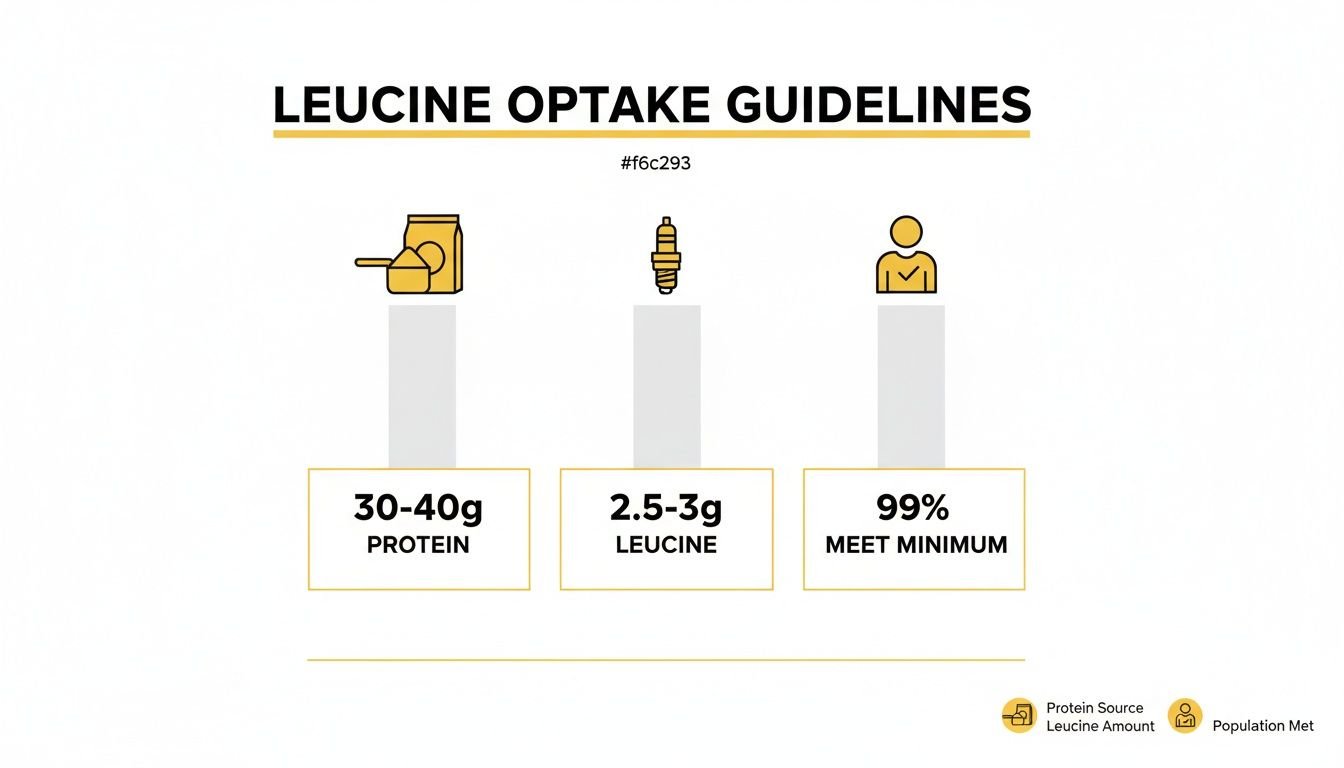
Infographic for women over 40 showing 30g protein and 2.5g leucine targets per meal.
Here's the key takeaway: most people get enough protein to avoid deficiency, but for many women over 40, aiming for these optimal per-meal amounts can be the secret to maintaining muscle and metabolic health.
Plant-Based Strategies for Complete Protein
You can absolutely get all your essential amino acids from plants with some thoughtful planning. While many plant foods are lower in one or more EAAs, you can easily work around this by choosing complete plant proteins or combining different foods.
Complete Plant Proteins
A few plant-based powerhouses contain all nine essential amino acids, making them excellent choices.
Tofu and Tempeh: These soy-based foods are protein champions. A 6-ounce serving of firm tofu packs around 20 grams of complete protein.
Edamame: Just one cup of these green soybeans provides about 18 grams of complete protein.
Quinoa: This versatile grain offers about 8 grams of complete protein per cooked cup, making it a great base for any meal.
The Power of Protein Pairing
A well-known strategy for plant-based eating is protein complementarity. This simply means pairing foods that fill in each other's amino acid gaps.
You don't even have to eat them in the exact same meal. Your body maintains a pool of amino acids, so as long as you eat a variety of sources throughout the day, you'll be well-supported.
Here are some classic combinations:
Beans and Rice: A classic for a reason. Beans are lower in methionine, while rice is lower in lysine. Together, they form a complete protein.
Lentil Soup with Whole-Grain Bread: This combination delivers a complete amino acid profile in a comforting meal.
Hummus and Pita: Chickpeas combined with a grain-based bread create a complete protein source, perfect for a snack or light meal.
For anyone looking for convenient and effective ways to boost their plant-based intake, exploring different vegan protein sources can be very helpful.
To make things even easier, here’s a quick-reference table to help you build your next meal with high-quality, leucine-rich protein in mind.
Leucine Powerhouses: A Quick Guide to Top Food Sources
| Food Source | Serving Size | Total Protein | Leucine Content |
|---|---|---|---|
| Chicken Breast | 4 oz | 35 g | 2.9 g |
| Salmon | 4 oz | 30 g | 2.5 g |
| Greek Yogurt (Plain) | 1 cup | 25 g | 2.5 g |
| Tofu (Firm) | 6 oz | 20 g | 1.5 g |
| Lentils (Cooked) | 1 cup | 18 g | 1.4 g |
| Quinoa (Cooked) | 1 cup | 8 g | 0.5 g |
Use this guide to mix and match. Notice how combining something like tofu with quinoa and some seeds gets you much closer to that 2.5 gram leucine sweet spot. It's all about making smart, simple choices, one meal at a time.
Benefits Beyond Muscle for Women Over 40
When we think about protein, our minds usually jump straight to muscle. But for women over 40, optimizing your intake of essential amino acids delivers benefits that reach far beyond the gym.
These protein building blocks have a profound impact on your overall well-being. Think of them less as "muscle food" and more as key regulators for your entire body, influencing everything from your mood to your metabolism, especially during the hormonal shifts of midlife.
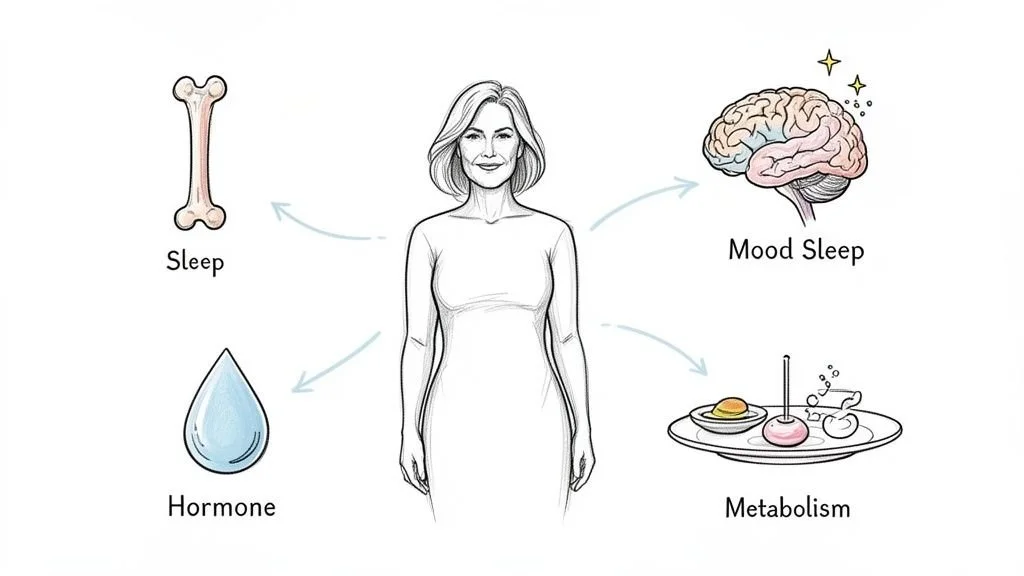
Hormone Production and Balance
Many of your body’s most important hormones are made from amino acids. For women navigating this life stage, supporting hormonal harmony is a top priority, and high-quality protein is a key part of that equation.
Your thyroid hormones, which govern your metabolism, and your stress-response hormones all require a steady supply of amino acids to be produced and regulated effectively. Ensuring you have these raw materials is a powerful way to support your body’s natural rhythms.
Mood, Sleep, and Brain Health
You've probably heard of tryptophan, the amino acid famously found in turkey. Its role is far more important than making you feel sleepy after a big meal.
Tryptophan is a precursor to serotonin—a key neurotransmitter that helps regulate your mood, anxiety, and sleep cycles. Similarly, the amino acid phenylalanine is a building block for dopamine, which is tied to focus and motivation.
“By providing your body with a complete set of essential amino acids, you’re giving your brain the exact tools it needs to produce the chemicals that help you feel calm, centered, and well-rested.”
Bone Health and Resilience
We often connect bone health only with calcium, but that’s just half the story. Your bones are a living protein matrix that is then hardened by minerals like calcium.
Without a strong protein foundation, bones can become more brittle over time. Research shows that adequate protein intake is directly linked to maintaining bone density, a critical health consideration for women after perimenopause. It's one more reason why understanding what are essential amino acids is so important for long-term health.
Metabolic Function and Satiety
A protein-rich meal is a powerful tool for metabolic wellness. Here’s how it works:
Improved Satiety: High-quality protein is the most filling macronutrient. It helps you feel fuller for longer, which can naturally quiet cravings and help maintain stable energy.
Blood Sugar Stability: Because protein digests slowly, it helps blunt the blood sugar spikes that can come from carb-heavy meals, leading to more even energy and less of that afternoon slump.
Prioritizing protein isn't about dieting or restriction. It’s a foundational strategy for feeling vibrant and resilient.
Common Questions We Hear
Navigating nutrition information can sometimes feel overwhelming, especially when your body's needs are changing. It’s completely normal to have questions. Here are clear, science-backed answers to some common concerns.
Our goal is to offer gentle reassurance. This is a journey of learning what works for your body, right now.
Do I need more protein even if I'm not a serious athlete?
Yes, absolutely. While strength training is wonderful for health, your body requires a steady supply of essential amino acids for countless daily functions that have nothing to do with the gym. This includes tissue repair, hormone production, and maintaining a strong immune system.
For many women after 40, we begin to naturally lose muscle mass over time in a process called sarcopenia. Getting enough high-quality protein is one of the most effective nutritional strategies to slow this process. This isn't just about muscle; it's about protecting your metabolism and maintaining the functional strength for everyday life.
Is it possible to eat too much protein?
This is a common myth that causes unnecessary worry. For most healthy women, modern research shows that a higher protein intake—somewhere in the range of 1.2 to 1.6 grams per kilogram of body weight—is not only safe but highly beneficial for muscle health and body composition.
The old concern about high protein intake harming healthy kidneys has been largely debunked by newer, more robust studies. As with any dietary approach, focusing on high-quality whole foods and staying hydrated is key. Of course, if you have a pre-existing kidney condition, it is always best to speak with your doctor.
“A Gentle Reminder: The goal isn't perfection. It's about finding a sustainable, healthy protein intake that helps you feel strong and energized. This doesn’t mean you need extremes.”
What if I feel too full to eat 30 grams of protein at breakfast?
This is a very common experience. Protein is incredibly satiating, so hitting a higher target first thing in the morning can feel challenging. The key is to remember that progress is more important than perfection.
You don't have to get there overnight. Start small and find what works for you.
A high-protein smoothie with Greek yogurt or a quality protein powder can be easier to consume.
Try two eggs with a side of cottage cheese.
A simple bowl of Greek yogurt topped with a handful of nuts and seeds can get you close.
You can also spread it out. Having yogurt first and then an egg an hour later can feel more manageable. For more answers, you can always check out our detailed FAQ page.
Can I get all my essential amino acids on a vegan diet?
Yes, you absolutely can. With thoughtful planning, it's entirely possible to meet your protein needs on a plant-based diet. While it's true that many plant foods are lower in one or two EAAs, you can get everything your body needs by eating a wide variety of sources.
The goal is to mix and match legumes, grains, nuts, and seeds throughout your day. It also helps to prioritize complete plant proteins like tofu, tempeh, quinoa, and edamame. A high-quality plant-based protein powder can also be a convenient tool to ensure you’re consistently hitting your targets.
Ready to take the guesswork out of your protein intake? The Just Protein app helps you track protein quality, not just quantity, using a simple photo of your meal. It’s designed to help you meet your unique needs for strength, energy, and long-term health. Join the waitlist and get early access today.
Ready to take the guesswork out of your protein intake? The Just Protein app helps you track protein quality, not just quantity, using a simple photo of your meal. It’s designed to help you meet your unique needs for strength, energy, and long-term health. Join the waitlist today.
Your Body’s Foundational Building Blocks
If you imagine a protein as a long, intricate chain, amino acids are the individual links. Your body uses 20 different amino acids to build everything from muscle tissue to hormones, but nine of them are unique.
These are the essential amino acids, and they’re called “essential” because your body is counting on you to provide a steady supply through your diet.
Without them, many of your body's most vital functions can be compromised. For many women after 40, understanding this is key to maintaining muscle health, supporting a healthy metabolism, and feeling vibrant.
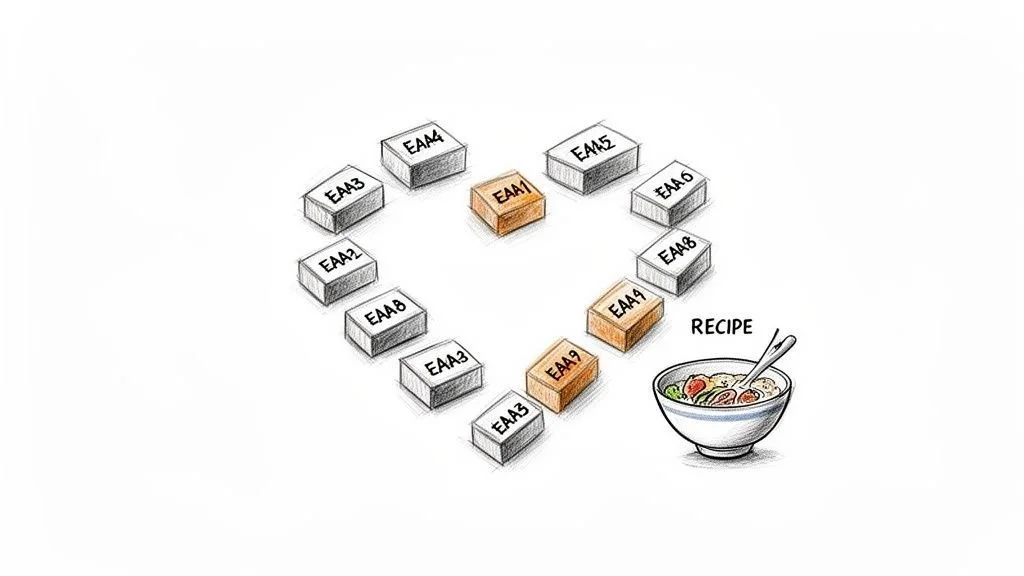
The Nine Essentials and Their Roles
These nine powerhouses are involved in nearly every biological process, from repairing muscle to making the brain chemicals that regulate your mood. For women over 40, they are absolutely crucial for maintaining strength, metabolic health, and that feeling of vitality.
Let's look at who these key players are and what they do in simple terms.
The Nine Essential Amino Acids and Their Core Functions
| Essential Amino Acid | What It Does For You |
|---|---|
| Leucine | The key player that signals your muscles to repair and grow. |
| Isoleucine & Valine | Leucine’s teammates, helping with muscle health and energy levels. |
| Lysine | Helps build collagen (for healthy skin and bones) and absorb calcium. |
| Methionine | A key player in your body’s natural detoxification and metabolic processes. |
| Phenylalanine | A precursor to brain chemicals like dopamine that affect mood and focus. |
| Threonine | Crucial for creating collagen and elastin, helping keep skin firm. |
| Tryptophan | Famous for its role in producing serotonin, which regulates sleep and mood. |
| Histidine | Involved in immune response and protecting nerve cells. |
The key takeaway isn't to memorize this list. It's to appreciate that the quality of your protein matters deeply, because it's all about getting this complete team on board to support your health.
If you want to explore this a bit more, we have a growing Protein Science library to help you understand protein, muscle health, and aging—clearly and responsibly.
https://www.justprotein.app/science
This article is for education only and is not medical advice. Just Protein is not a medical provider — we summarize published research and cite our sources so you can verify them; decisions about your health, hormones, or mood belong with your doctor.
