TL;DR
- A high-protein, high-fiber breakfast combines a protein food such as yogurt, eggs or tofu with fiber-rich berries, oats, beans or seeds.
- In the portions below, the five breakfasts provide about 24–34 g protein and 8–17 g fiber. Those are estimates, not targets you have to hit.
- Short on time? Make the yogurt bowl in about five minutes. Overnight oats need a night in the fridge; the savory meals are quickest when rice or beans are already cooked.
- Use the comparison table below to choose the breakfast that fits your time and appetite.
Pick by the kind of morning you're having
| Breakfast | Protein | Fiber | Time |
|---|---|---|---|
| Yogurt, raspberries, chia | ~24 g | ~12 g | ~5 min |
| Yogurt overnight oats | ~27 g | ~12 g | ~5 min active + overnight |
| Bean and egg tortilla | ~27 g | ~17 g | ~10–15 min; cooked beans ready |
| Tofu, bean, spinach scramble | ~34 g | ~11 g | ~10–15 min; beans/spinach ready |
| Korean-style edamame rice bowl | ~29 g | ~8 g | ~10–15 min; rice/edamame ready |
Numbers are approximate for the full portions listed above. Cooking rice, beans, edamame or spinach in advance takes additional time.
By the time the morning gets busy, breakfast has to be easy enough to actually make. A bowl of yogurt is quick; leftover rice and an egg are comforting. Add berries, oats, beans or seeds, and either can bring fiber to the table alongside protein.
So what sounds good tomorrow: something cool and creamy, a jar that's ready when you wake up, or a warm savory bowl? These five breakfasts give you a place to start, with the portions and nutrition estimates right beside the food.
A simple breakfast trick: add a partner
If breakfast is already yogurt, pair it with berries and chia. If it's eggs, add beans or edamame. If it's oats, stir in yogurt. You don't need to start over with a new breakfast routine; give a food you already like a protein or fiber partner.
Choose the idea that fits your morning. The estimates belong to the full portions written below, so you can make them as shown or use them as a starting point.
Five high-protein, high-fiber breakfast ideas
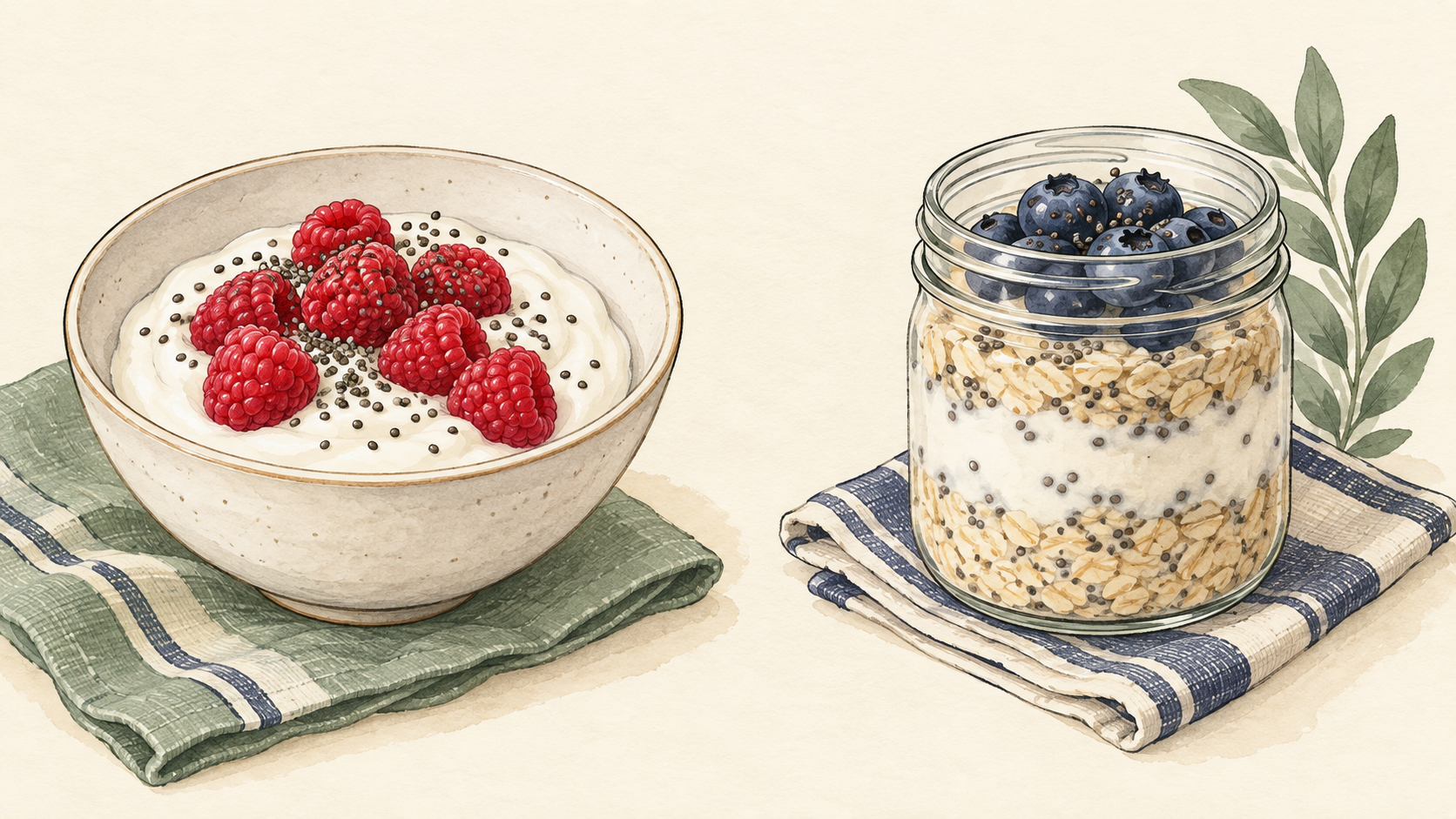
1. The five-minute raspberry yogurt bowl
About 24 g protein · 12 g fiber · 5 minutes, no cooking
Make it with: 200 g plain nonfat Greek yogurt, 100 g raspberries and 15 g chia seeds.
This is the one to make when you have five minutes and don't want to turn on the stove. Spoon the yogurt into a bowl, scatter on the raspberries, and finish with chia. You get cool, creamy yogurt, tart berries and a little crunch. The yogurt brings most of the protein; the berries and chia bring most of the fiber. Use your own yogurt's label if its protein count differs.
Curious about protein sources? Our protein quality guide explains the terminology.
2. Blueberry overnight oats for a busy morning
About 27 g protein · 12 g fiber · 5 minutes hands-on, plus overnight chilling
Make it with: 50 g dry oats, 170 g plain nonfat Greek yogurt, 15 g chia and 75 g blueberries.
Make this before bed and breakfast is waiting in the fridge. Stir the oats, yogurt and chia together in a jar with enough water or milk to loosen the mixture. Refrigerate overnight, then add blueberries in the morning. Milk changes the nutrition total, so it isn't counted here. If you like softer oats, let the jar sit longer or add a splash more liquid.
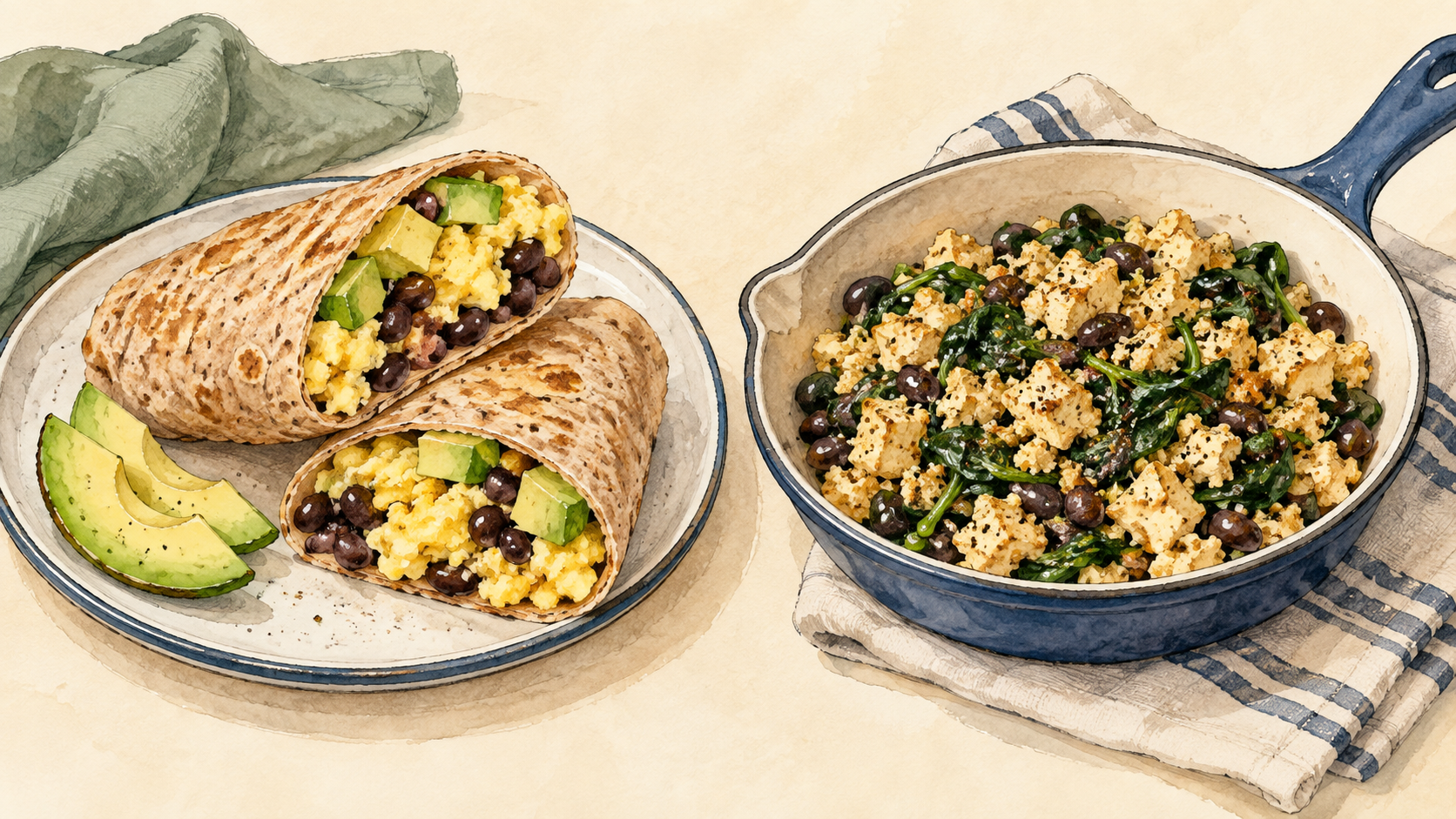
3. Egg, black bean and avocado breakfast wrap
About 27 g protein · 17 g fiber · 10–15 minutes with cooked beans ready
Make it with: 100 g edible egg (roughly 2 large eggs), 100 g cooked, drained black beans, a 50 g whole-wheat tortilla and 50 g avocado.
When you want a breakfast you can hold in one hand, warm the beans, cook the eggs and tuck both into the tortilla with avocado. The beans add fiber as well as protein, and the avocado makes the filling creamy. Using canned beans? Drain and rinse them. Check the can's label if you need a precise count, since the estimate here uses unsalted cooked beans.
4. A savory tofu and black bean skillet
About 34 g protein · 11 g fiber · 10–15 minutes with beans and spinach ready
Make it with: 150 g firm tofu prepared with calcium sulfate, 75 g cooked, drained black beans and 50 g cooked, drained spinach.
For a warm breakfast without eggs, crumble the tofu into a skillet and heat it with the beans and spinach. Add pepper, turmeric or whatever savory seasoning you usually reach for. Cooked beans and spinach from the fridge make this a much quicker morning meal. This estimate uses the USDA firm tofu entry with about 17 g protein per 100 g. Your tofu may contain considerably less, so use your package label when calculating your serving.
For lunch and dinner ideas, explore more plant-based high-protein meals.
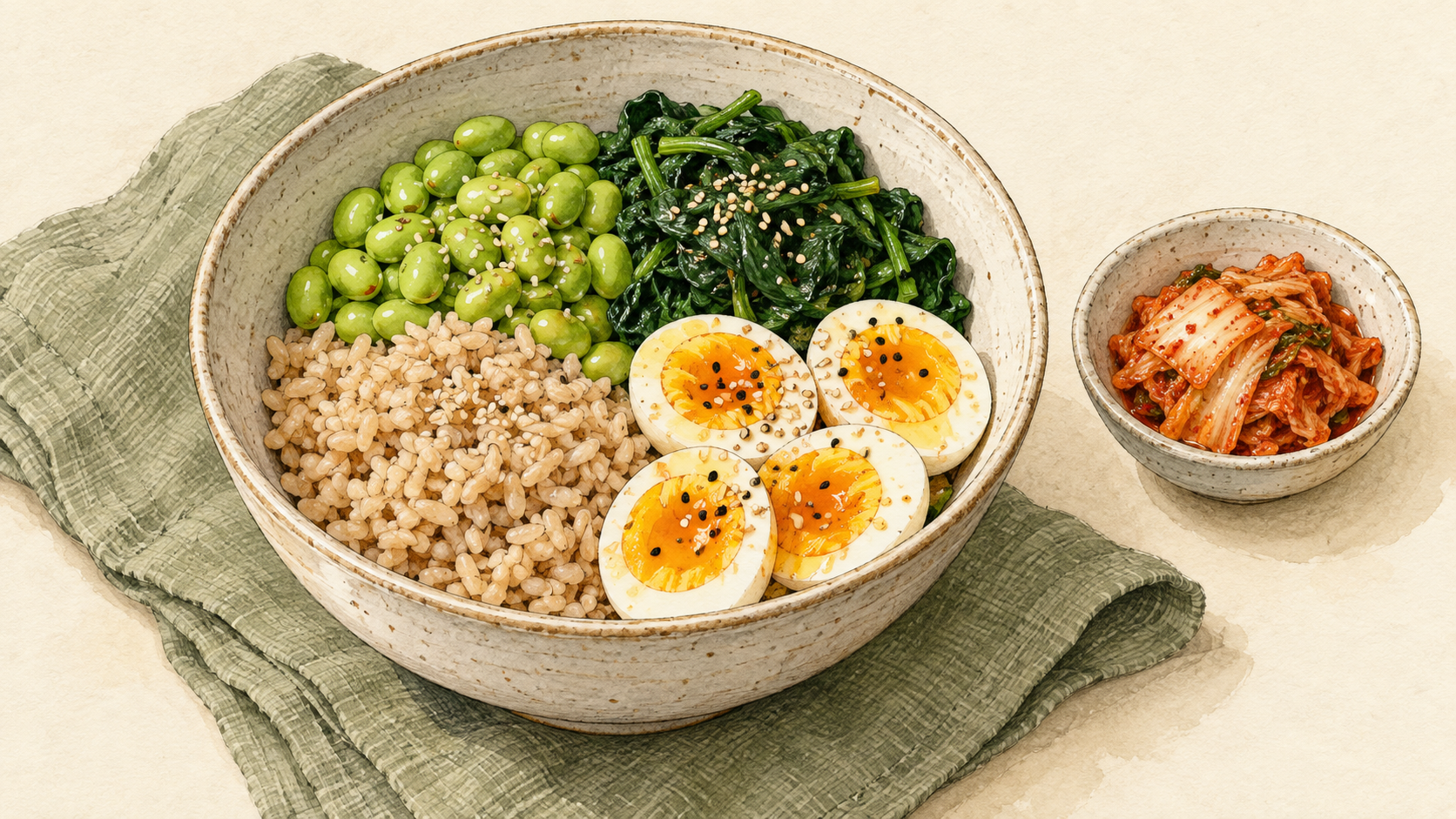
5. Korean-style egg and edamame rice bowl
About 29 g protein · 8 g fiber · 10–15 minutes with rice, edamame and spinach ready
Make it with: 100 g edible egg (roughly 2 large eggs), 100 g shelled frozen edamame, cooked according to the package and weighed after cooking, 100 g cooked brown rice and 50 g cooked, drained spinach.
Have rice left from dinner? Warm it with edamame and spinach, top with cooked eggs, and add a little kimchi if that's how you like your bowl. A few drops of sesame oil are lovely too. Kimchi, sesame seeds, oil and sauces are optional and aren't included in the numbers above. The eggs and edamame bring most of the protein; the warm rice makes this one feel like breakfast, not leftovers.
Make tomorrow morning easier tonight
Put a jar of oats in the fridge, save a portion of tonight's rice, or drain beans when you're already cooking dinner. Then breakfast is mostly assembly. Frozen berries, chia and oats are useful backups for the mornings when there is no plan at all.
If you change yogurt, tofu or tortillas, glance at the package: foods with the same name can have different protein and fiber amounts.
Want more quick morning options? See our high-protein breakfast guide for women over 40. This article adds fiber-rich ingredients and full-portion estimates to help you build a different kind of breakfast.
For context, the FDA lists 28 g of fiber as the Daily Value on a 2,000-calorie reference diet. That's useful when reading labels, but it isn't a breakfast quota.
Need something between meals? Browse our high-protein snacks with portions and packing tips.
Common questions
Do I need to eat 30 or 40 grams of protein at breakfast after 40?
Not as a rule for everyone. The right amount depends on the rest of your day, your appetite, activity and health context. These meals show what different portions can provide; none is a pass-or-fail breakfast. For more context, see our guide to how much protein per meal.
Which options are egg-free?
The yogurt bowl, overnight oats and tofu skillet are egg-free as written. The tofu skillet is also a plant-based option.
Can I do this without protein powder?
Yes. Every idea here uses food you can buy for regular meals: yogurt, eggs, tofu or edamame for protein, paired with berries, beans, oats, chia or whole grains for fiber.
Is Greek yogurt enough on its own?
It can be a handy protein base, but the plain nonfat Greek yogurt in our USDA reference has no dietary fiber. Berries, oats or chia are easy partners when you want both nutrients in the bowl.
What if a full serving of beans or chia doesn't agree with me?
Use less and build up gradually if that feels better. You can also choose one of the other combinations. If you have a digestive condition or a prescribed diet, get advice for your situation from your clinician.
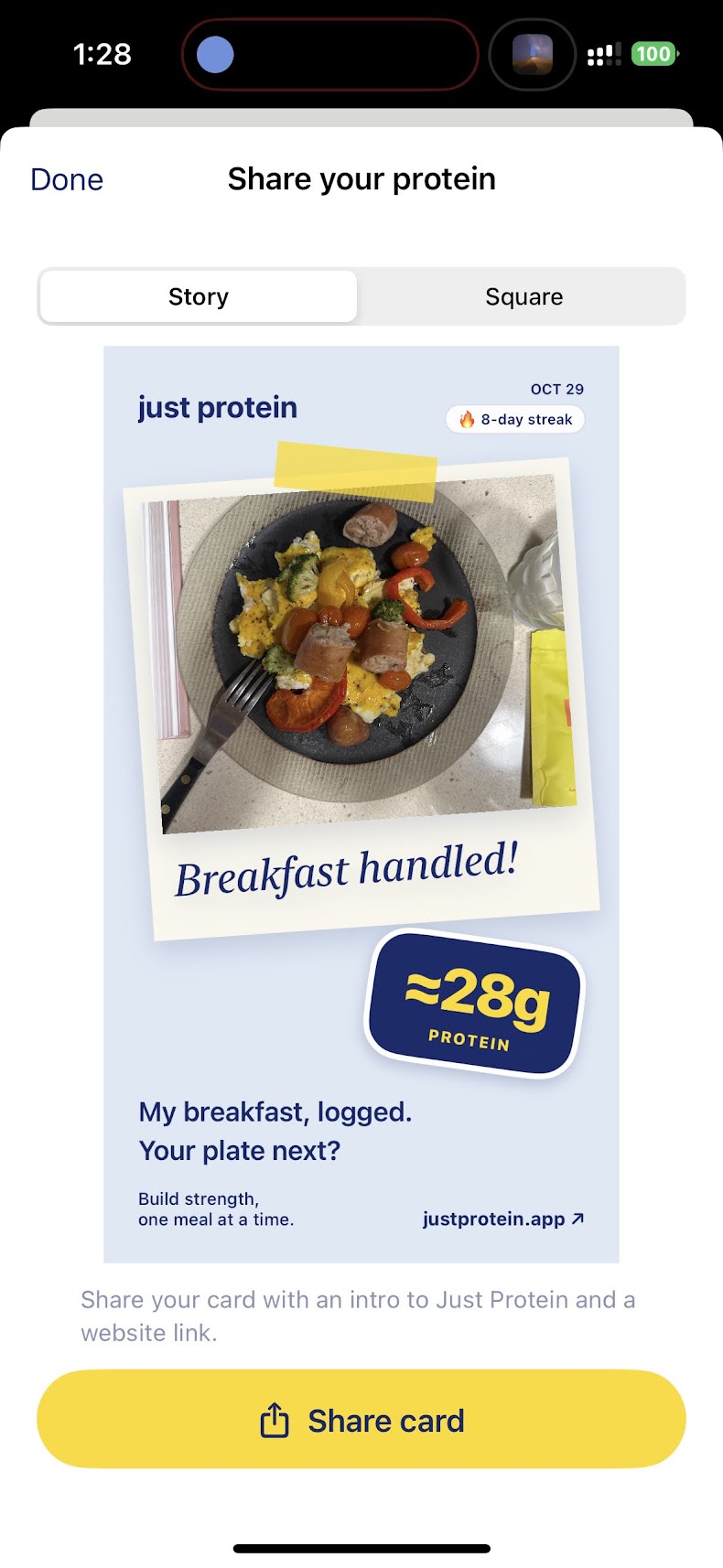
Your own breakfast, logged
These five ideas are a starting point. Here is a different, real breakfast shared from Just Protein.
Sources and calculation notes
- USDA FoodData Central, SR Legacy April 2018 dataset. The ingredient amounts above were multiplied by USDA values per 100 g and rounded to whole grams.
- USDA dietary fiber reference: prepared frozen edamame, 5.2 g fiber per 100 g.
- FDA Daily Values for Nutrition Facts labels (fiber 28 g on a 2,000-calorie reference diet).
This article is general nutrition education, not individualized medical advice.
Tags: