TL;DR
- Most weight lost on GLP-1 medicines is fat, but roughly a quarter to two-fifths of it was lean mass (which includes muscle, water and organs) in two body-composition substudies. DXA lean mass isn't a direct measure of muscle or strength.
- Start meals with the protein part, even when the meal is tiny.
- Aim for a protein range you've agreed on with your clinician. Needs vary with body size, activity, age, and health; a 2025 joint advisory offers 80–120 g a day as one practical option.
- Pair protein with strength training at least 2 days a week. The advisory says protein alone likely isn't enough.
- Pick from the 7 mini-meals below, each about 15–28 g protein.
Three bites into lunch and you're done. If a GLP-1 medicine has made meals feel too big, the question isn't just how much weight you might lose. It's how to make the food you can manage count. Start with a protein food, keep the portion manageable, and give your muscles a reason to stay through strength training. Here are the study findings behind that advice and seven small food ideas you can actually use.
What the trials found: GLP-1s, fat and lean mass
Most of the weight lost in these two body-composition substudies was fat. A smaller share was DXA lean mass, which includes muscle but does not tell us how much skeletal muscle or strength changed. The proportions differed between studies, and they are not a personal forecast.
Lean mass includes muscle, water and organs. These are descriptive shares of weight loss in the treated groups, not direct measures of muscle or strength; the studies used different populations and methods, so the bars are not a head-to-head drug comparison. STEP 1 · SURMOUNT-1
The semaglutide numbers come from a DXA body-composition substudy of STEP 1 (140 participants: 95 on the Wegovy dose of 2.4 mg, 45 on placebo; 76% women), with overweight or obesity and without diabetes. Fat mass fell 19.3% and lean mass 9.7%, while the share of body weight that was lean mass rose 3.0 percentage points. The tirzepatide numbers come from a DXA body-composition substudy of SURMOUNT-1 (160 participants: 124 on tirzepatide, 36 on placebo), where fat fell 33.9% and lean mass 10.9%, a fat-to-lean split close to the placebo group's.
Keep this in perspective: DXA lean mass is not the same as muscle, and neither substudy reported strength, so these aren't "muscle loss" figures. Still, after 40, when muscle is already harder to keep, it's worth protecting what you can.
(For the bigger picture on muscle in midlife, start with our guide to menopause muscle loss.)
How much protein on a GLP-1?
In 2025, the American College of Lifestyle Medicine, the American Society for Nutrition, the Obesity Medicine Association and The Obesity Society published a joint advisory on nutrition for people taking GLP-1 medicines. On protein, it says:
- The general adult RDA is 0.8 g per kg of body weight per day.
- Higher targets of 1.2–1.6 g/kg/day have been proposed during active weight loss.
- Using actual body weight can overestimate needs in people with obesity, so adjusted weight or lean mass may be better. There's no consensus yet.
- A simple absolute target of 80–120 g/day may be easier to stick with.
- Don't drop below 0.4–0.5 g/kg/day, and avoid prolonged intake at or above 2 g/kg/day.
The advisory treats protein as individual (it's unclear whether to base it on actual weight, adjusted weight or lean mass). Bring that range to your next appointment and decide on a number together; if you have kidney disease, ask before raising protein. For a starting estimate, try the Just Protein calculator, then see how to split protein across meals.
Protein first, in small portions
With a smaller appetite, order matters. The advisory suggests eating protein-rich foods first and leaning on low-volume options like fish, eggs, Greek yogurt, cottage cheese and nuts or seeds. Shakes and fortified foods can fill gaps; check the label for the grams.
What tends to help in real life:
- Eat the protein part of your plate before the rest.
- Many people find four or five small eating times easier than three full meals.
- Keep something soft, cold or sippable in the fridge for low-appetite days.
- On queasy days, cold and bland often goes down easier than hot and greasy.
7 small-appetite meals with 15–28 g protein
| Meal | Protein | What's in it | Time & fit |
|---|---|---|---|
| Yogurt and pumpkin seed cup | ~26 g | 1 container (170 g) plain nonfat Greek yogurt + 1 oz (28 g) pumpkin seeds | Cool, soft, 2 minutes · Honey and cinnamon if it tastes flat |
| Eggs with cottage cheese | ~24 g | 2 large eggs (100 g) + ½ cup (113 g) 2% cottage cheese | Warm, savory, 5–8 minutes · Soft-scramble the eggs; cottage cheese on the side with black pepper |
| Tuna and edamame bowl | ~26 g | 3 oz (85 g) light tuna, canned in water, drained + ½ cup (78 g) shelled edamame | No-cook, 5 minutes · Lemon and a little mayo or sesame oil; eat it cold |
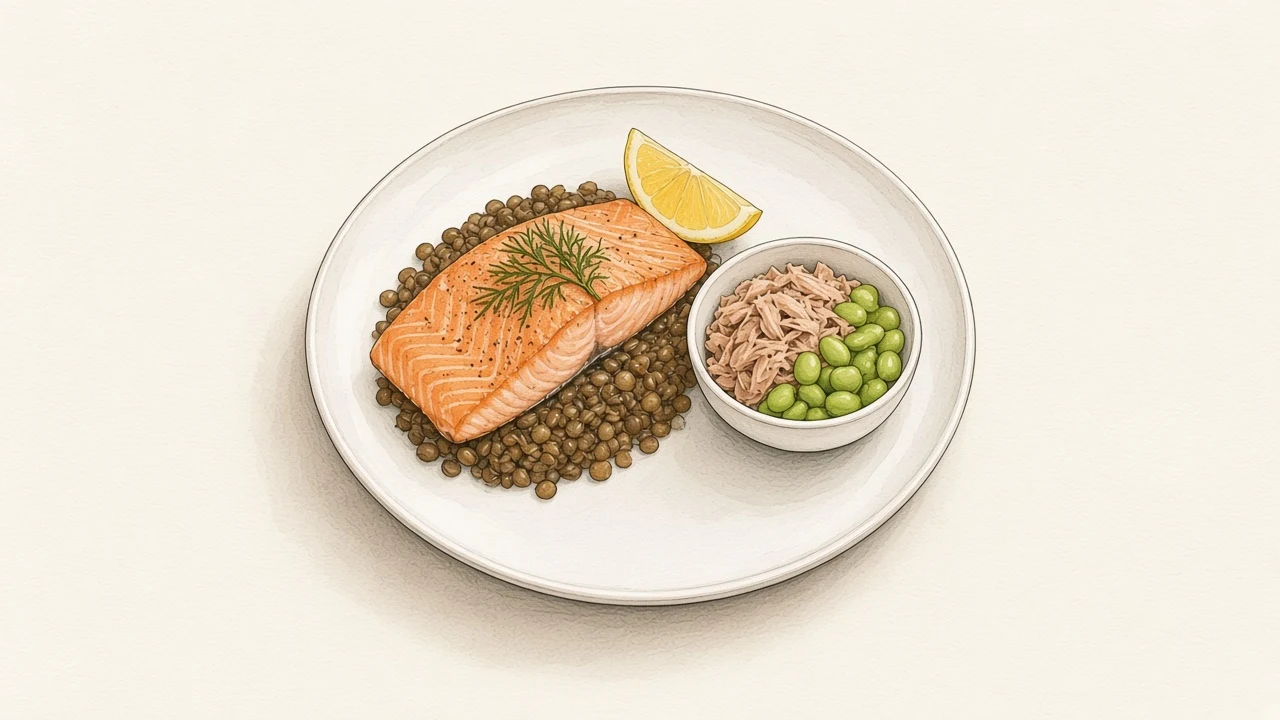
| Salmon over lentils | ~28 g | 3 oz (85 g) cooked Atlantic salmon + ½ cup (99 g) cooked lentils | Dinner, 15 minutes with cooked lentils · Dill or lemon; leftovers are fine cold next day |
| Tofu and edamame skillet | ~20 g | ½ cup (63 g) firm tofu + ½ cup (78 g) shelled edamame | Plant-based, 10 minutes · A splash of soy sauce and garlic; mild on queasy days |
| Chicken and quinoa mini bowl | ~26 g | 2½ oz (71 g) roasted chicken breast, sliced + ½ cup (93 g) cooked quinoa | 5 minutes with pre-cooked chicken and quinoa · Warm or cold; cucumber, lemon and a pinch of salt |
| Peanut butter milk shake | ~15 g | 1 cup (244 g) 2% milk + 2 tbsp (32 g) smooth peanut butter | Sippable, 2 minutes in a blender · Blend 1 cup milk, 2 tbsp peanut butter and 3–4 ice cubes until smooth; optional ½ small banana (~0.5 g more protein). Sip slowly |
Protein values are calculated from USDA FoodData Central (SR Legacy) per 100 g and rounded. Brands and portions change totals.
If you track meals in Just Protein, check the app’s estimate against what you actually ate and adjust the portion. For more ideas, see our high-protein snacks and plant-based meals.
Give your muscles a reason to stay: strength training
This is the part that's easy to skip. The joint advisory says plainly that increased protein alone is likely inadequate to support the preservation of muscle mass without structured strength (resistance) training, and that aerobic activity alone has a smaller effect on preserving lean mass during rapid weight loss. The U.S. Physical Activity Guidelines recommend muscle-strengthening activity on at least two days a week.
You don't need a gym. Sit-to-stands from a kitchen chair while the kettle boils, wall push-ups, a resistance band on the couch, a pair of light dumbbells: all of it counts. Start where you are and add a little each week. Our strength training guide for perimenopause has a simple place to begin.
Your own dinner, logged
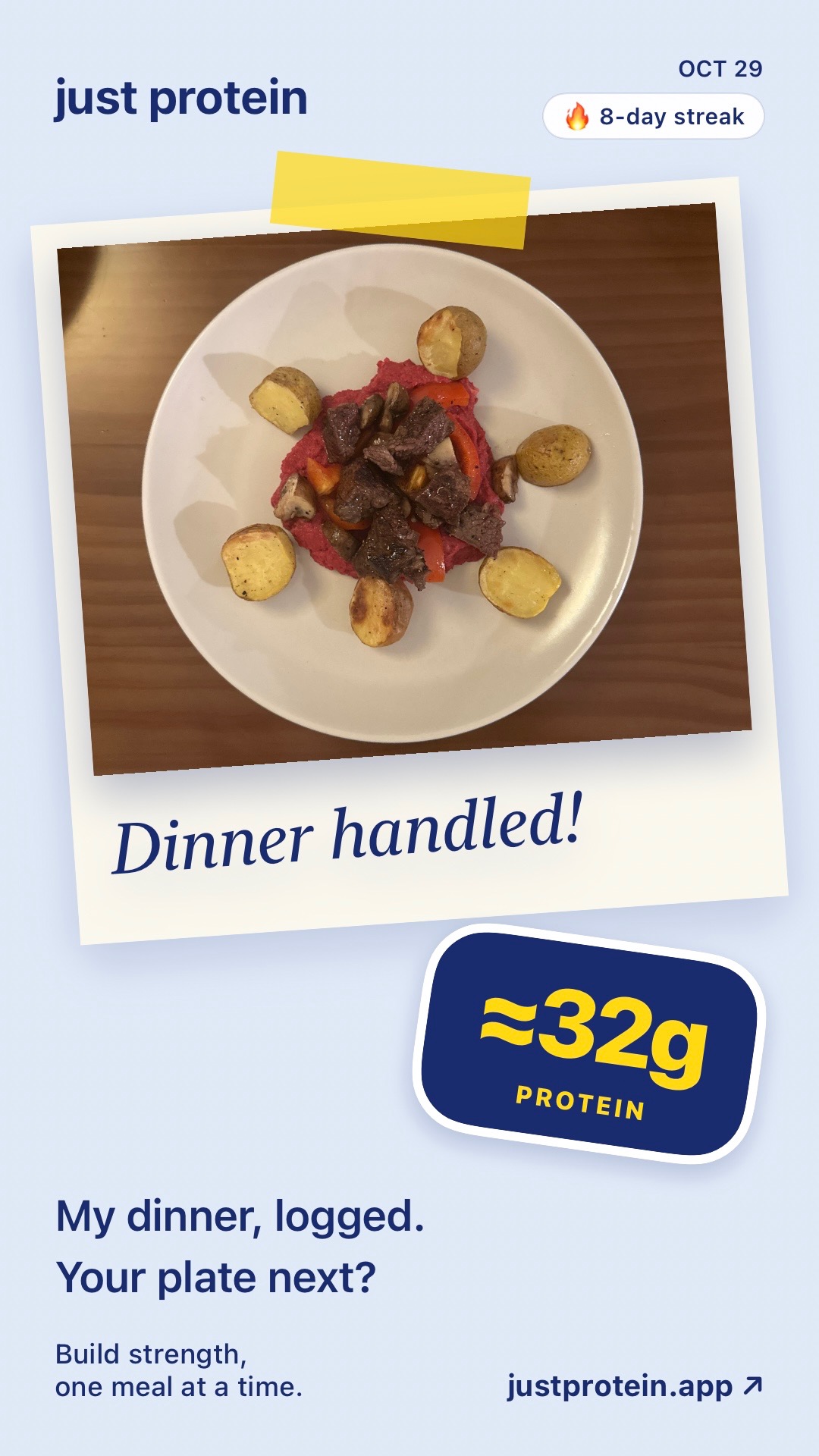
These seven food ideas are a starting point. Here is a different dinner shared from Just Protein.
IPHONE BETA
See your protein, meal by meal.
Snap a meal to estimate and track your protein.
Request an InviteCommon questions
Does Ozempic or Wegovy cause muscle loss?
Some lean mass loss is likely. Semaglutide is the drug in both Ozempic and Wegovy. The best body-composition data come from a STEP 1 DXA substudy (140 participants), which used the Wegovy dose (2.4 mg) in adults with overweight or obesity and without diabetes: roughly 40% of the weight lost was lean mass (which includes muscle, water and organs). That scan doesn't measure muscle or strength directly.
Do Mounjaro and Zepbound cause muscle loss too?
Tirzepatide is the drug in both. In a SURMOUNT-1 DXA substudy of 160 participants, about 75% of the weight lost was fat and about 25% was lean mass (which includes muscle, water and organs), a split similar to the placebo group.
How much protein should I eat on a GLP-1?
A 2025 joint advisory from four US nutrition and obesity groups notes that 1.2–1.6 g per kg of body weight per day has been proposed during active weight loss, and that a simple target of 80–120 g per day may be easier to follow. It treats needs as individual, says not to fall below 0.4–0.5 g/kg, and to avoid prolonged intake at or above 2 g/kg. Pick your number with your clinician.
Is protein enough to keep my muscle?
Probably not on its own. The same advisory says increased protein alone is likely inadequate to support the preservation of muscle mass without structured strength training. Think protein and strength training together.
What if I can barely eat?
Eat the protein part of your plate first, keep portions small, and lean on soft or sippable foods like Greek yogurt, eggs, cottage cheese or milk. Cold and bland often goes down easier than hot and greasy. The 7 ideas in this article are each a small-bowl, small-plate or one-glass portion.
This is general information, not medical advice. The studies above were in adults with overweight or obesity. Talk with your doctor or a registered dietitian before big changes, and tell them if nausea, vomiting or low intake is keeping you from eating enough.
Sources: STEP 1 body-composition substudy, SURMOUNT-1 body-composition substudy, ACLM/ASN/OMA/TOS joint advisory (2025), STEP 1 appendix, U.S. Physical Activity Guidelines, USDA FoodData Central.